



GUWAHATI
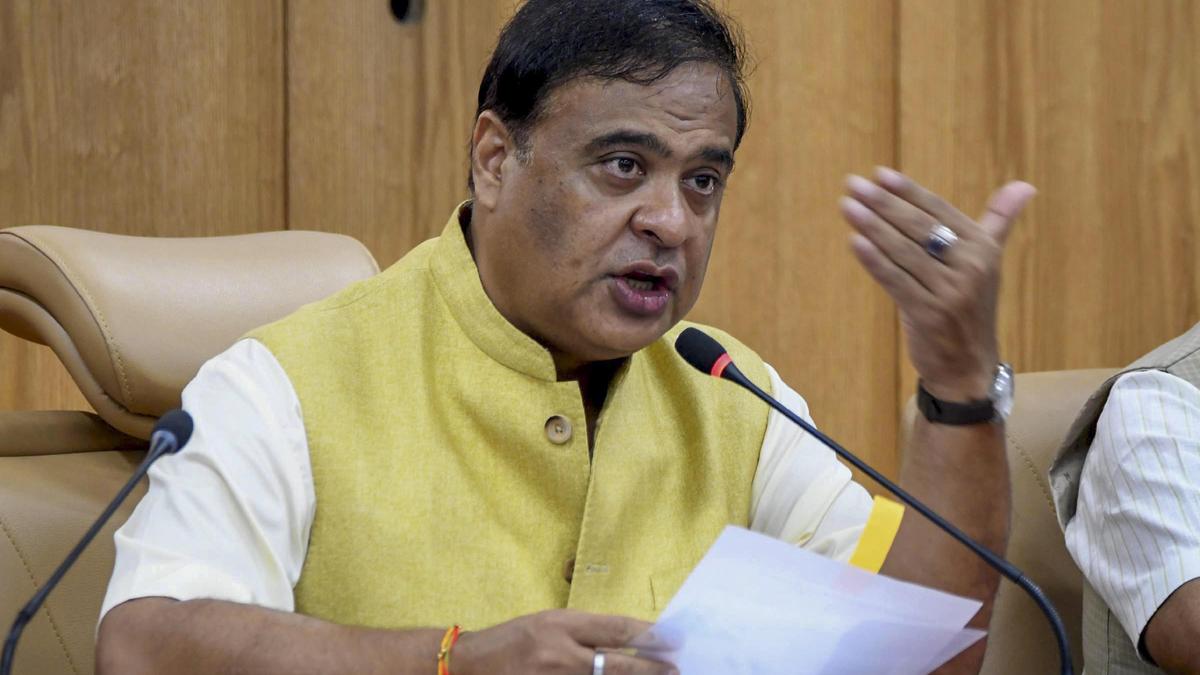
Assam Chief Minister Himanta Biswa Sarma said an unofficial judicial panel report on the election-related violence in 1983 would be tabled before the 126-member State Assembly.
The report of Justice (retired) T.U. , constituted by a civil society group, will be tabled along with the official Tribhuvan Prasad Tewary Commission on November 25, 2025 when the House sits for a five-day session.
“Placing a non-government report will be a first for the Assembly. We decided to table the Mehta Commission report on the 1983 election-related violence following a demand from the All Assam Students’ Union (AASU), which argued that the document should be made public so that people can get to know all sides,” the Chief Minister said after a Cabinet meeting on Sunday (November 23, 2025) night.
The Mehta Commission was constituted by Assam Rajyik Freedom Fighters Association to examine the Nellie massacre and other incidents of violence related to the controversial election in 1983 during the peak of the anti-infiltration Assam Agitation during 1979-1985, which culminated in the signing of the Assam Accord in 1985. The AASU had spearheaded the agitation along with other organisations representing indigenous communities.
Justice Mehta, who retired as the Chief Justice of the Himachal Pradesh High Court, headed the three-member panel that included retired IAS officer Ganesh Chandra Phukan, retired Professor Rayhan Shah. The panel conducted 36 sittings, examined 600 witnesses, and submitted its report in January 1985.
The Mehta panel report is said to have carried the viewpoints and testimonies of the agitators and citizens, apart from the victims of violence, during the movement.
More than 2,000 people were killed and about three lakh others were displaced during the elections held in February 1983. While the focus was on the killing of migrant Muslims in Nellie and 14 surrounding villages in present-day Morigaon district, many Assamese and Bengali Hindus were killed in Gohpur, Goreswar, Khoirabari, and other places across the State.
“Piece of history”
“Both the Tewary Commission and Mehta Commission reports are valuable documents and the youths of Assam must know about them,” the Chief Minister said, insisting that the Tewary Commission was “generally neutral” despite having been commissioned by a Congress government.
He said the Tewary Commission report was tabled in 1987 by former Chief Minister Prafulla Kumar Mahanta of the Assam Gana Parishad (AGP), but only one copy was submitted to the Speaker. “We will now provide copies to all MLAs and others,” he said.
The AGP was the political offshoot of the AASU and the Assam Gana Sangram Parishad, which were signatories to the Assam Accord with the Centre.
The Chief Minister criticised Congress for suggesting that the reports contain politically sensitive material. “Congress things the BJP (Bharatiya Janata Party) will gain politically, but there is nothing provocative in these reports. It is just a piece of history, which will be lost to time if the copies are not made public,” he said.
He slammed the Congress leadership for its “hollow and immature” opposition to the wider circulation of a report prepared under its own government. “The Tewary Commission report has some negative inputs on the AASU, but the student body supported its release. Hiding history is a crime against humanity,” he said.
Cautionary note
Prominent citizens have advised the Assam Government against turning the Tewary panel report on a 42-year-old incident of bloodshed into a political tool, warning that the selective use of its findings could stoke tensions rather than resolving the long-standing concerns over illegal migration.
They appealed to the government during a discussion organised by The Crosscurrent, a digital platform, which obtained the Tewary Commission report through the Right to Information Act. The report documented 8,019 incidents of violence across the State in 1983, leading to 2,072 deaths and the displacement of more than 2.26 lakh people.
Former Assam Chief Secretary Jyoti Prasad Rajkhowa questioned the inquiry’s structure, saying a judicial commission should have been appointed. He added that assigning the probe to “a Chief Secretary (Tewary)-level officer from outside the State remains a question even today”. He pointed out that the report does not clarify how such widespread violence erupted when Assam was under President’s Rule.
“Publishing the findings four decades earlier might have allowed some resolution of the problems,” he said.
Senior advocate Santanu Barthakur emphasised that immigration was the background of the Tewary Commission and warned that discussing isolated sections of the report could trigger “a seriously adverse reaction”. He said the government should focus on addressing public anxieties over illegal migration and implementing pending safeguards for indigenous communities under Clause 6 of the Assam Accord.
Clause 6, yet to be implemented, promises appropriate constitutional, legislative, and administrative safeguards to protect, preserve, and promote the cultural, social, and linguistic identity and heritage of the Assamese people.
Veteran journalist Bedabrata Lahkar, who reported on the Nellie massacre, observed that “the entire administrative machinery was preoccupied with conducting the elections” in 1983. “The report correctly noted that the violence lacked any specific communal character with the causes differing across the districts. Nobody really knew where and why violence was erupting,” he recalled.
The speakers felt that the Tewary panel report, resurfacing after four decades, should be used to inform policy and calm public concerns, not fuel political confrontation.
Published – November 24, 2025 03:25 pm IST