


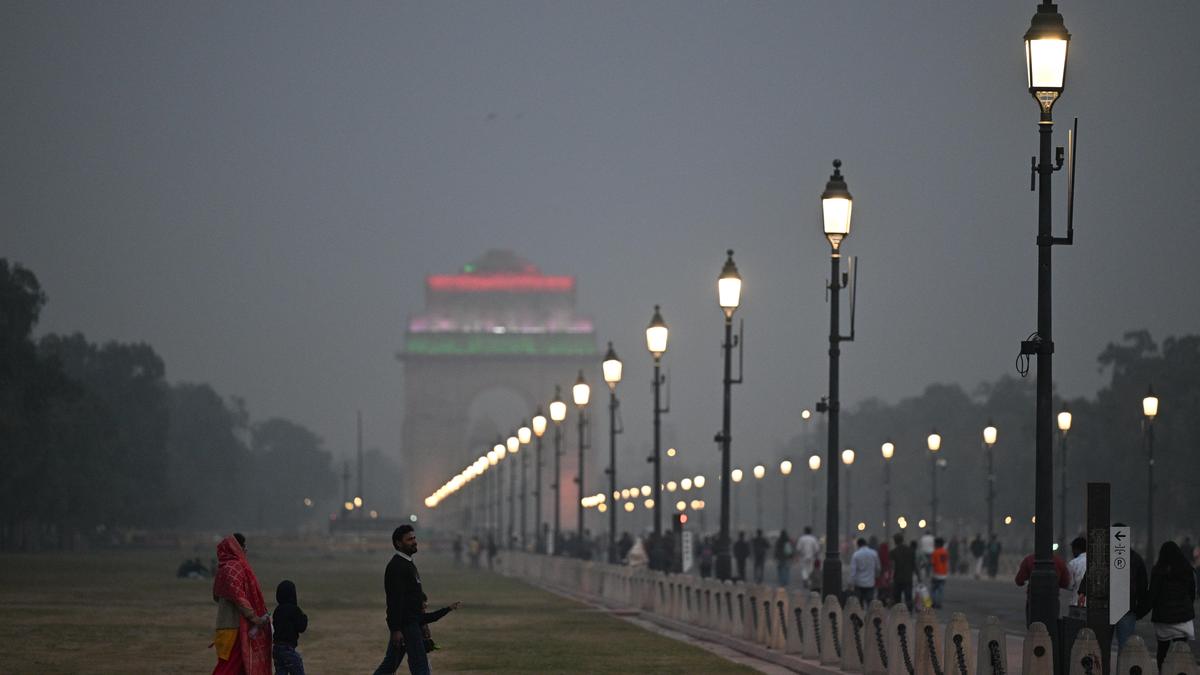

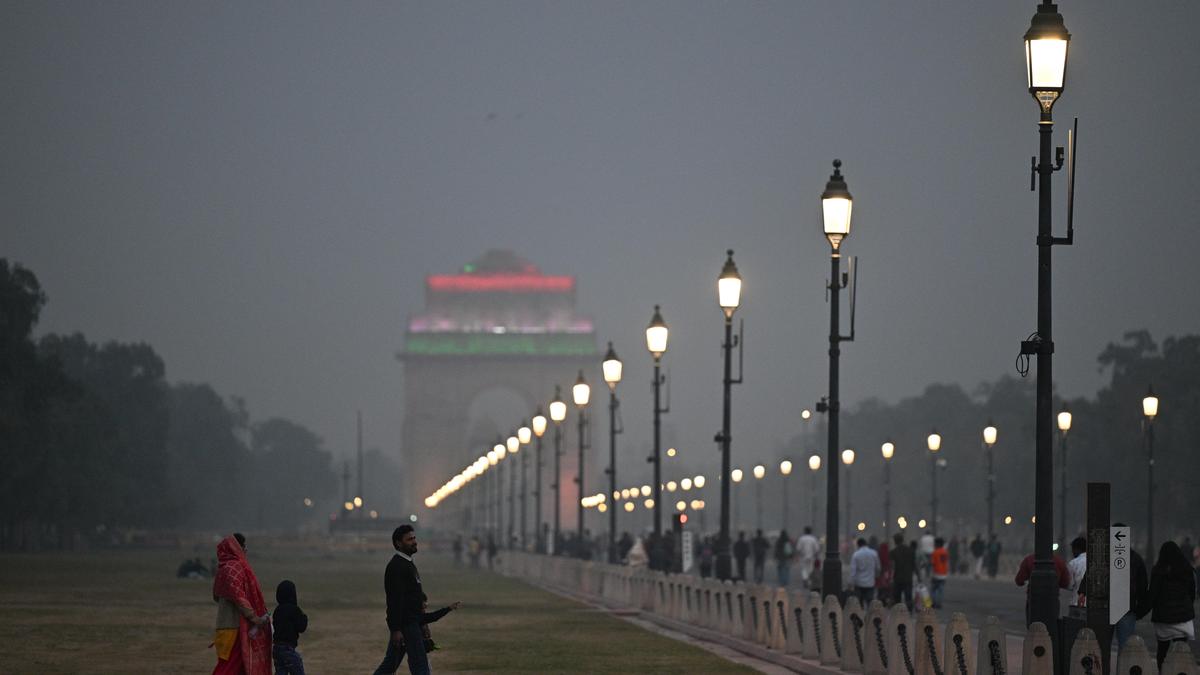
A thick layer of smog obscuring India Gate in New Delhi on Thursday.
| Photo Credit: SHASHI SHEKHAR KASHYAP
Environment Minister Manjinder Singh Sirsa said on Thursday that the Delhi government will install six new Continuous Ambient Air Quality Monitoring Stations (CAAQMS) to strengthen the Capital’s air quality monitoring network.
The Central Pollution Control Board (CPCB) currently uses data from 39 stations across Delhi to calculate the city’s average air quality. “By expanding our high-quality monitoring network, Delhi is building a stronger safety net around the national capital and moving towards cleaner air through evidence-based decisions,” Mr. Sirsa told reporters.
The six new CAAQMS stations will be set up at Jawaharlal Nehru University, Indira Gandhi National Open University, the ISRO Earth Station near Malcha Mahal, Delhi Cantonment, Commonwealth Sports Complex, and Netaji Subhash University of Technology (West Campus), covering key institutional and residential zones across south, central, and south-west Delhi. They are expected to be operational by January 15.
Mr. Sirsa said the stations will feature a comprehensive meteorological system to measure wind speed, wind direction, temperature, humidity, rainfall, and solar radiation, enabling the tracking of how pollution moves and disperses across the city.
‘Critical upgrade’
“Transparent, real-time public information is a key pillar of Delhi’s air quality strategy, empowering citizens, experts and agencies alike to respond swiftly during high-pollution episodes,” Mr. Sirsa said. From identifying hotspots to assessing the impact of interventions, the government aims to base all major anti-pollution decisions on robust scientific evidence, he said, adding that the government considers these six new stations a “critical infrastructure upgrade”.
Chief Minister Rekha Gupta said on Thursday that teams are working relentlessly on the ground to control pollution, with intensified efforts focusing on dust control, sanitation, and waste management. “This campaign of Delhi for pollution control is continuing with full determination,” she posted on X.
Meanwhile, offline classes resumed across Delhi on Thursday, a day after the Commission for Air Quality Management revoked all restrictions under Stage III of the Graded Response Action Plan after air quality showed slight improvement.
However, Delhi’s average air quality index at 4.30 p.m. on Thursday stood at 377, up from 327 recorded the previous day.
Published – November 28, 2025 01:29 am IST