





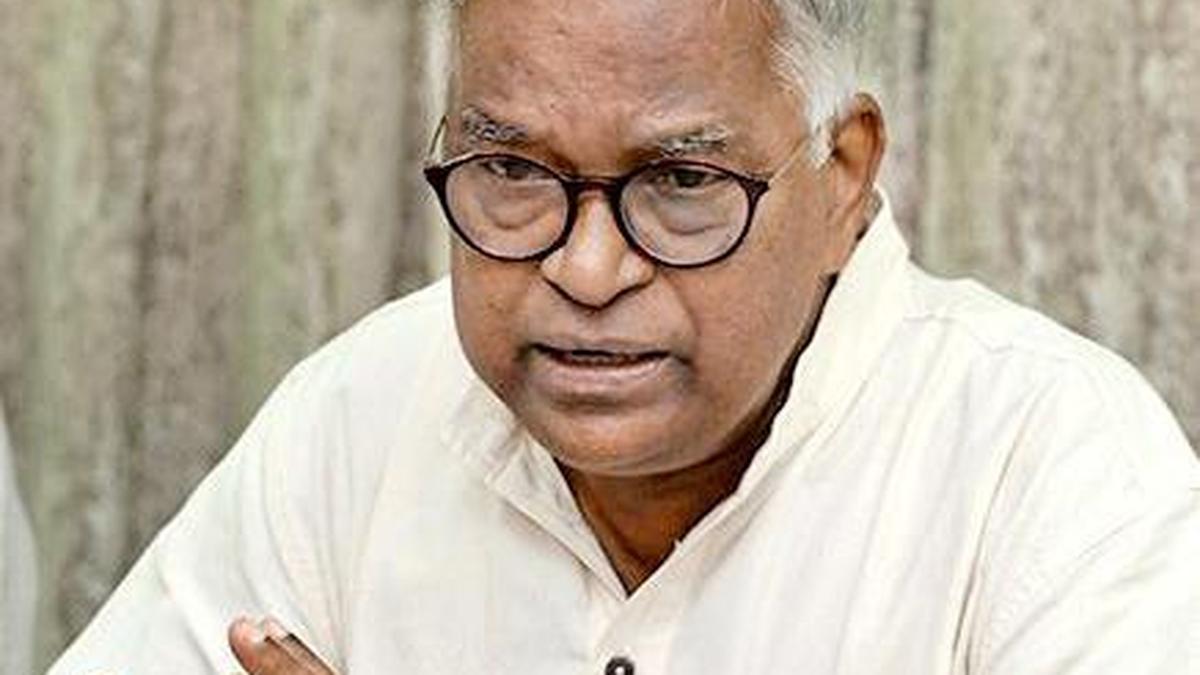

Purushottama Bilimale, chairman of KDA.
| Photo Credit: File photo
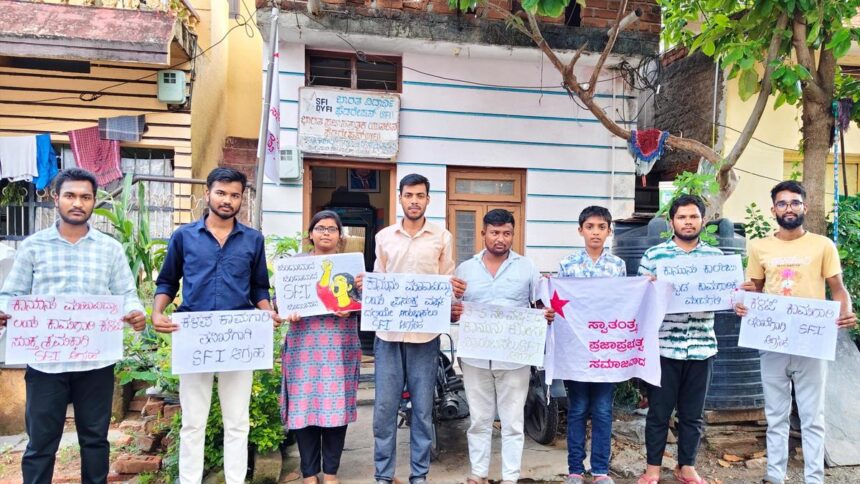
The Kannada Development Authority (KDA) has objected to the recent order issued by the Union Education Ministry making the study of three languages (R1, R2, R3) mandatory for class 9 and 10 in Central Board of Secondary Education (CBSE) schools with effect from July 1, 2026. The KDA further stated that it is against the Kannada Language Learning Act, which has been in force in the State since 2015.
Purushottama Bilimale, chairman of KDA, has written a letter to Minister of School Education and Literacy Madhu Bangarappa, urging the Union Government to withdraw and revise the order. He also demanded that a comprehensive revision of the No Objection Certificate (NOC) rules be initiated.
“Since education is a subject included in the Concurrent List of the Indian Constitution, the CBSE board has taken a unilateral decision on this issue without taking the State government into confidence, and this action of weakening the language laws implemented by the State or issuing orders against it is unacceptable,” read the letter.
“The Kannada Language Learning Act has made the learning of Kannada compulsory in all educational institutions in the State. It is imperative that every student choose Kannada as their first or second language. This action has been taken with the aim of preserving Kannada in the State, especially in the context of the increasing number of CBSE schools, where the School Education Department’s control is limited after issuing the NOC,” he stated.
”Any CBSE school functioning in Karnataka should immediately put an end to the system of keeping Kannada aside as the first or second language. As mentioned by the CBSE Board, the R1/R2 subject should be Kannada. Based on a comprehensive report on Kannada teaching, Kannada selection of students, Kannada teacher recruitment and language implementation, the NOC renewal system should be implemented. The recruitment of qualified Kannada teachers should be made mandatory in all CBSE schools in the State,” he said.
“There is a need to formulate legal control measures against educational institutions that violate the state’s language policy, and a parliamentary committee or an expert committee should be constituted in this regard,” Prof. Bilimale said.
Published – May 19, 2026 09:05 pm IST