






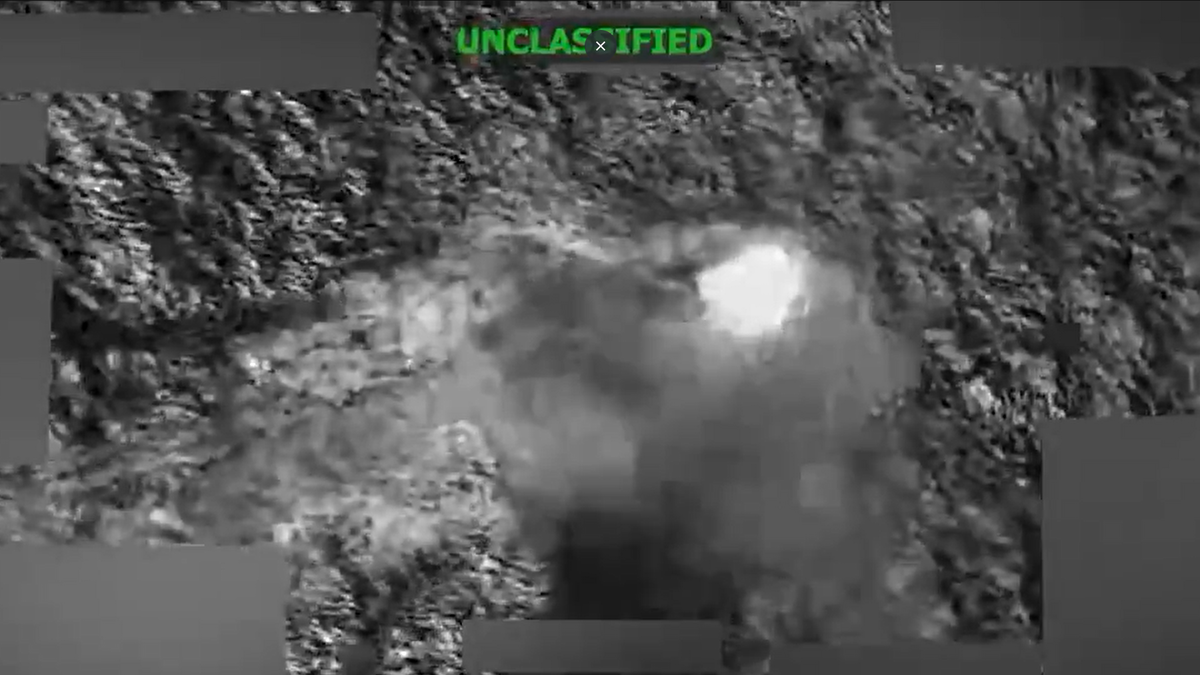


Screengrab from the video posted by the Southern Command of the U.S. military. Photo: X/@Southcom
The U.S. military attacked a boat accused of smuggling drugs in the eastern Pacific Ocean on Tuesday (June 16, 2026), killing one man and leaving two survivors, as the Trump administration continues its monthslong campaign against alleged traffickers in Latin America.
The latest attack brings the number of people who have been killed in boat strikes by the U.S. military to at least 208 since the Trump administration began targeting those it calls “narcoterrorists” in early September.

As with most of the military’s statements on strikes in the eastern Pacific Ocean and Caribbean Sea, U.S. Southern Command said it targeted the alleged drug traffickers along known smuggling routes.
The military did not provide evidence that the vessel was ferrying drugs. A video posted on X showed a boat travelling in the water before being hit by the strike and bursting into flames.
Southern Command said it “immediately notified U.S. Coast Guard to activate the Search and Rescue system for the survivors”.
President Donald Trump has said the U.S. is in “armed conflict” with cartels in Latin America and has justified the attacks as a necessary escalation to stem the flow of drugs into the United States and fatal overdoses claiming American lives.

But his administration has offered little evidence to support its claims of killing “narcoterrorists”.
Critics have questioned the overall legality of the boat strikes as well as their effectiveness, in part because the fentanyl behind many fatal overdoses is typically trafficked to the U.S. over land from Mexico, where it is produced with chemicals imported from China and India.
The strikes have drawn intense scrutiny from some Democratic lawmakers and military legal scholars. The U.S. military’s first strike in early September drew particular concern from some lawmakers and those who study military law.
Two men on the boat initially survived the attack that killed nine others, and they were clinging to the wreckage when the vessel was struck again, killing them.

The White House confirmed the follow-up strike, insisting it was done “in self-defence” to ensure the boat was destroyed and in accordance with the laws of armed conflict.
But some legal scholars said a second strike killing survivors would have been illegal under any circumstance, armed conflict or not.
The Pentagon’s watchdog said in May that it plans to look into whether the U.S. military followed an established targeting framework when carrying out the strikes.
However, the evaluation is focused specifically on what’s known as the six-phase Joint Targeting Cycle and not on the legality of the strikes, the inspector general’s office said.
Published – June 17, 2026 09:49 am IST