





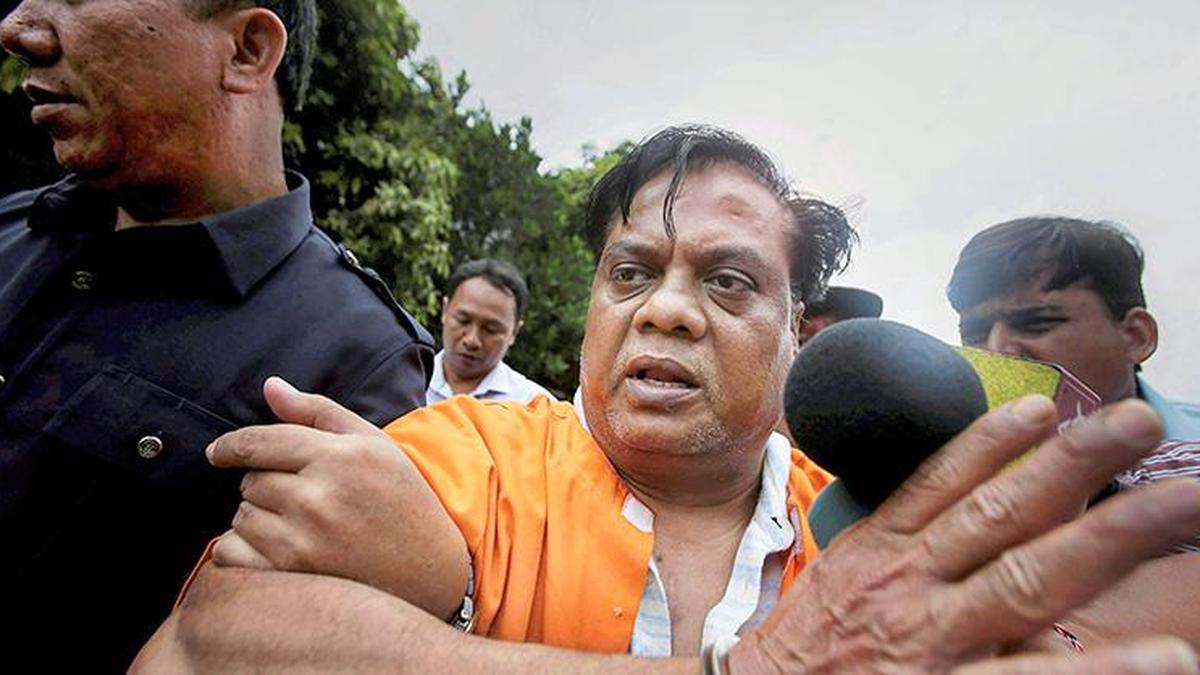

Long before biometric verification and digital databases transformed passport issuance, Mumbai underworld don Rajendra Sadashiv Nikalje alias Chhota Rajan obtained a genuine Indian passport from the Regional Passport Office (RPO) in Chennai in 1996 by creating a false identity backed by forged documents, fictitious references, and a fake residential address.
A judgment delivered by the Additional Chief Metropolitan Magistrate, Egmore, reconstructs how the gangster, then one of India’s most wanted fugitives, assumed the identity of ‘Vijay Kadam’, convinced passport authorities that he was a Chennai resident, and ultimately travelled to Bangkok using the fraudulently obtained passport. The court recently convicted him of cheating, impersonation, forgery, using forged documents as genuine, and violating the Passport Act.

How the passport was obtained
According to the prosecution, Chhota Rajan assumed the identity of Vijay Kadam, son of Ramakrishna Kadam. The passport application described him as a resident of No. 10, Kumaran Street, Ambattur, Chennai, even though his actual address was Tilak Nagar Colony, Chembur, Mumbai.
On February 16, 1996, the Regional Passport Office in Chennai received the passport application by registered post. It was accompanied by a ₹300 demand draft, a copy of a ration card, and a Transfer Certificate purportedly issued by Don Bosco Higher Secondary School, Perambur. These documents were submitted as proof of the applicant’s age and residence.

The application was processed in the normal course after being received by post. Since it was not submitted in person, there was no opportunity for passport officials to physically verify the applicant’s identity at the time. However, the application initially hit a hurdle.
As the mandatory police verification report had not been received, the passport file was placed before the then Public Relations Officer, M. Sivaraj, who directed officials to obtain the original Transfer Certificate and ration card before taking a decision. The RPO accordingly wrote to the applicant seeking the original documents.
Instead of producing the originals, ’Vijay Kadam’ wrote to the passport office on May 6, 1996, claiming that he had to travel to Singapore on business and requesting that the passport be issued without delay. Along with the letter, he enclosed notarised copies of the Transfer Certificate and ration card. The file was again placed before the Public Relations Officer, who recorded that attested copies had been produced and approved the issuance of the passport.
On May 16, 1996, the Regional Passport Office issued Passport No. A0930085 in the name of Vijay Kadam. It was dispatched by registered post to the Ambattur address on June 11, 1996. Ironically, the police verification report reached the passport office only on June 26, 1996, after the passport had already been issued and dispatched.

Years later, investigators discovered that almost every document supporting the passport application was fake.
Fraud unearthed
The fraud came to light after Chhota Rajan was shot by rival gang members in Bangkok in 2000. While he was admitted in hospital and in the custody of the Thailand Police, Mumbai Crime Branch officers travelled to Bangkok to interrogate him. During the interrogation, they examined a passport produced by the Indian Embassy. It was Passport No. A0930085, issued by the Chennai RPO in the name of Vijay Kadam. The CBI, Chennai, subsequently registered a case in 2002 against Chhota Rajan on charges including forgery, cheating, and impersonation.
Investigators later found that the Transfer Certificate submitted in the name of Vijay Kadam had never been issued by Don Bosco Higher Secondary School. The school’s headmaster informed investigators that the admission number mentioned in the certificate actually belonged to another student. The document also contained factual inconsistencies, including a reference to higher secondary education in 1976, before the system had been introduced across Tamil Nadu.

The investigation also revealed that the residential address and references furnished in the passport application were fictitious. A postman who attempted to deliver letters to Vijay Kadam and the persons cited as his references and conduct-certificate providers found that none of them existed at the addresses mentioned in the application. Every postal cover was returned with the endorsement: “No such person in this address.”
Mumbai Crime Branch officers testified that the photograph in the passport matched Chhota Rajan, whose real identity was confirmed through Mumbai police records. One of the officers also told the court that Rajan acknowledged the passport as his during the interrogation. The passport carried a Thai tourist visa, confirming that it had been used to travel to Bangkok.

After examining the documentary evidence and witness testimony, the Egmore court concluded that Chhota Rajan had fraudulently obtained the passport by impersonating as Vijay Kadam and submitting forged documents as genuine. The court held that the prosecution had proved the charges beyond reasonable doubt.
Published – August 01, 2026 07:00 pm IST