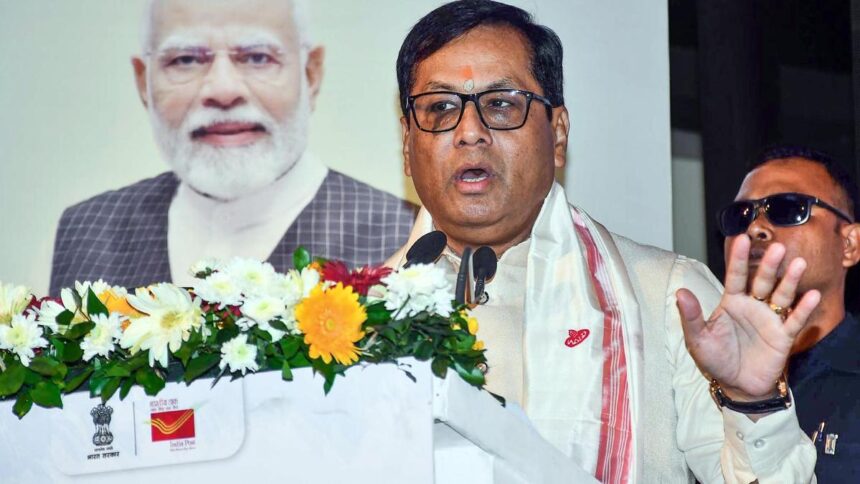



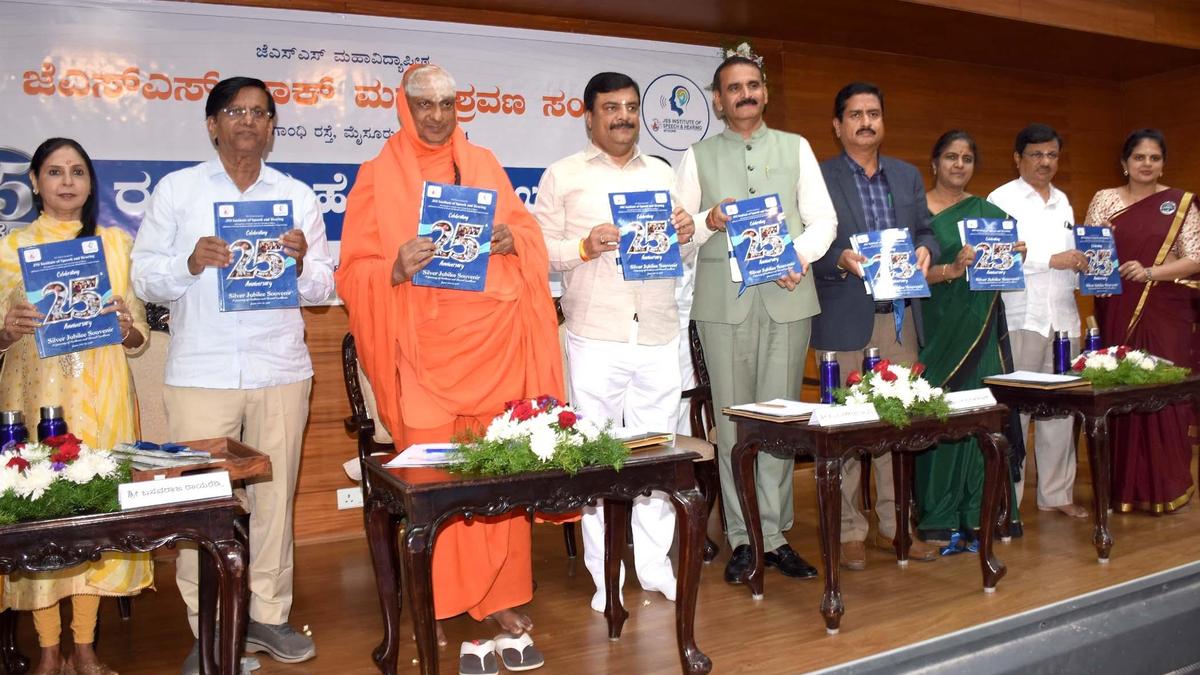


Higher Education Minister Basavaraj Rayareddi, Agriculture Minister P.M. Narendraswamy, Shivarathri Deshikendra Swami and other dignitaries at the silver jubilee celebrations of JSS Institute of Speech and Hearing in Mysuru on Tuesday (Tuesday 15).
| Photo Credit: M.A. Sriram
The silver jubilee celebrations of the JSS Institute of Speech and Hearing were held here on Tuesday (September 15).
Shivarathri Deshikendra Swami of Suttur Mutt attended, while Minister for Higher Education Basavaraj Rayareddi inaugurated the celebrations. Agriculture Minister P.M. Narendra Swamy presided over the programme.
University of Mysore Vice-Chancellor N.K. Lokanath was the chief guest. All India Institute of Speech and Hearing director Pushpavathi, KSOU Vice-Chancellor A.P. Gnanaprakash and other dignitaries were present.
In his address, Prof. Lokanath said the future agenda should focus on early identification and school screening, newborn and childhood hearing programmes, geriatric hearing care, community rehabilitation, awareness programmes and accessible tele-services, as many people continue to remain undiagnosed or receive services at a late stage.
“Speech and hearing problems are not restricted to urban populations or specialised hospitals. They exist in rural and tribal communities, low-income families, schools, workplaces and among older persons,” he said.
He said the JSS Institute of Speech and Hearing could play an important leadership role in connecting specialised knowledge with community needs.
“Disability is not only a medical issue; it is also a social inclusion issue. A person with hearing or speech difficulties may face barriers in education, employment, public services and social interaction — not necessarily because of the impairment itself, but because society is not adequately prepared to accommodate differences,” he said.
Therefore, rehabilitation must ultimately lead to participation and inclusion, he added.
“We should aspire for a society where a child with communication disability can learn alongside other children, where young people can enter higher education and employment without unnecessary barriers, and where older persons can remain socially connected rather than becoming isolated because of hearing loss,” Prof. Lokanath said.
Mr. Rayareddi and others also spoke on the occasion.
Published – September 15, 2026 07:49 pm IST