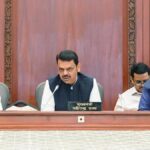





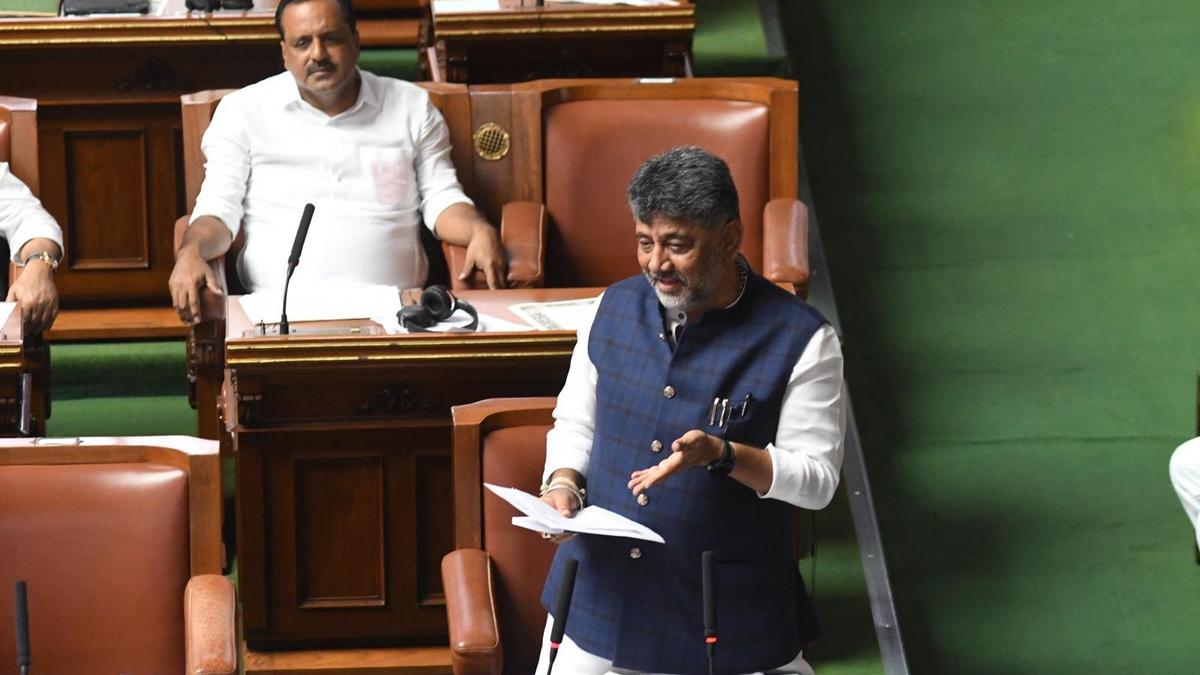


Chief Minister D.K. Shivakumar during the Assembly session in Bengaluru on September 22, 2026.
| Photo Credit: The Hindu
Setting the stage for a standoff between the Governor’s office and the Congress government in Karnataka, Governor Thaawarchand Gehlot has asked Chief Minister D.K. Shivakumar to reconsider the Government Order issued on September 8 restricting the rendition of national song ‘Vande Mataram’ to two stanzas.
The Governor has contended in his letter to the Chief Minister that restricting the national song to two stanzas at State functions was “contrary to the guidelines laid down by the Union Government and in violation of Prevention of Insults to National Honour (Amendment) Act, 2026.
Also Read: Vande Mataram and the challenge to multicultural nationalism
“The decision needs reconsideration in the light of Constitutional position, the Central government’s orders governing the national song, and the statutory developments during 2026. Such reconsideration would avoid unnecessary conflict between State government’s administrative instructions and the protocol prescribed by the Union government, and would also prevent avoidable Constitutional litigation on the respective executive powers of the Union and State,” the Governor said in a communication to the Chief Minister on Monday (September 21, 2026).

Outside State competence
“The subject matter falls outside the legislative competence of the State. The State Executive cannot, merely by executive instruction, assume an independent power to prescribe a contrary national protocol. The Central instructions leave no scope for a State government to prescribe a different or truncated version for State government functions. The issue is not merely one of administrative convenience but concerns conformity with national prescribed protocol governing national symbol,” he said.
While the latest amendment to the Act makes it mandatory for the rendition of all six stanzas, Karnataka government had issued an order on September 8 restricting it to two stanzas, subject to exceptions in the presence of Constitutional authorities such as Governor, President and Vice-President. Meanwhile, the Congress has reaffirmed rendition of two stanzas in its working committee.

On Monday (September 22), during the commencement of special session of the Legislature to discuss drought and K. Kasturirangan report, the Congress and BJP members clashed after only two stanzas were played in the Legislature. The Opposition BJP and JD(S) went ahead and rendered the whole song.
The Governor pointed out that the Ministry of Home Affairs has issued specific “orders relating to the National Song and National Anthem of India,” and has prescribed the official version of ‘Vande Mataram’ for purpose of rendition.
Statutory protection
Mr. Gehlot said that the statutory protection under Section 3 of the Prevention of Insults to National Honour Act, 1971, has been extended to Vande Mataram through the enactment of Prevention of Insults to National Honour (Amendment) Act, 2026. The amendment covers intentional prevention of the singing of the national song and intentional disturbance of an assembly engaged in such singing. He has referred to Article 73, Article 162, Article 256 and Article 257(1) to point out at State’s limitations in issuing the GO. He has also said that national song and the regulation of the official version are not expressly covered by the State list.
Also Read:Vande Mataram and the right to dissent
“It is therefore desirable that State executive action concerning rendition of the national song should be carefully harmonized with the Central statutory and executive framework rather than prescribing a divergent state-specific version.” He said that it may be constitutionally and administratively inappropriate for a State government to independently prescribe a truncated rendition of the national song for its official functions without first reconciling such decision with the applicable central framework.
Mr. Gehlot said that the Supreme Court has also recognised in the context of national symbols that the legal position must be examined with due regard to the statutory framework and constitutional freedoms involved.
Published – September 22, 2026 04:34 pm IST