





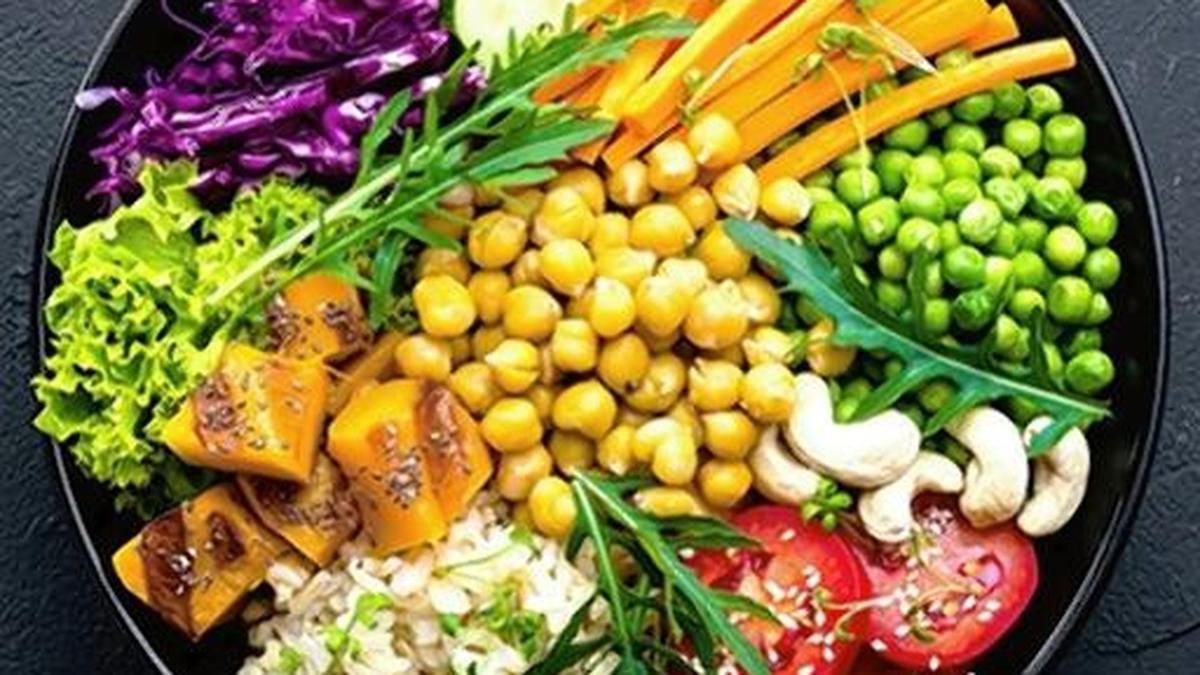


The study showed that adolescents identified colour, texture, presentation, shape, glossiness, balance, etc., as factors that made food images more appealing and memorable.
| Photo Credit: Representational Photo
Can an enticing image of a healthy snack persuade adolescents to give it a try? A new study by researchers at the ICMR-National Institute of Nutrition (ICMR-NIN) suggests it can. It found that visually appealing presentations of healthy foods can significantly increase adolescents’ willingness to consume them, highlighting a potential new strategy for nutrition communication in the digital era.
Researchers first created a pool of 150 images featuring both healthy and unhealthy foods. These images were pre-tested among 43 school-going adolescents, whose ratings helped select 15 final images for the study. The healthy food images included fruits, millets, pulses, dairy products, nuts and seeds, presented either in a simple format or in an enhanced, visually attractive style designed to maximise appeal.
The selected images were then shared on Instagram over a 15-day period with 203 adolescents aged between 13 and 19 years from across India. Participants viewed three categories of food imagery: visually appealing unhealthy foods, healthy foods presented in an attractive style, and healthy foods presented in a simple manner. Some participants were also provided brief nutritional information along with the images.
The findings revealed a strong association between visual appeal and willingness to consume a food item. Attractive presentations of healthy foods, particularly millet porridge and ‘chana’ salad, generated significantly greater interest than their more plainly presented counterparts.
In-depth interviews with 19 participants showed that adolescents identified colour, texture, presentation, shape, glossiness, balance, etc., as factors that made food images more appealing and memorable. One teenager observed that healthy food is often perceived as “boring”, making it important to present it in an appetising manner.
SubbaRao M. Gavaravarapu, who led the research team, said visually attractive presentations influence how adolescents imagine consuming healthy foods. While simply presented dishes are associated mainly with meals at home, attractively presented foods are more often linked to restaurants and social gatherings with friends.
Some participants reported trying foods they had previously disliked, increasing their intake of fruits and pulses, and experimenting with cooking and food presentation at home. Interestingly, adding nutritional descriptions to Instagram posts had little effect. Interviews revealed that adolescents paid far more attention to the images than the accompanying text, underscoring the power of visual communication on social media.
Although the researchers cautioned that the short-term study cannot establish sustained behavioural change, ICMR-NIN director Bharati Kulkarni said the findings point to the potential of visually appealing healthy food content as a nutrition-promotion strategy. Such approaches could be explored in social media campaigns, school canteens, cafés and restaurants, though larger and longer-term studies are needed to assess their impact on eating habits.
The study, titled ‘Foodporn for e-Priming Healthy Food Choices Among Adolescents: An Experimental Study Using Appealing Food Imagery’, was published in the journal ‘BMC Public Health’, said a release on Tuesday.
Published – September 22, 2026 07:33 pm IST