



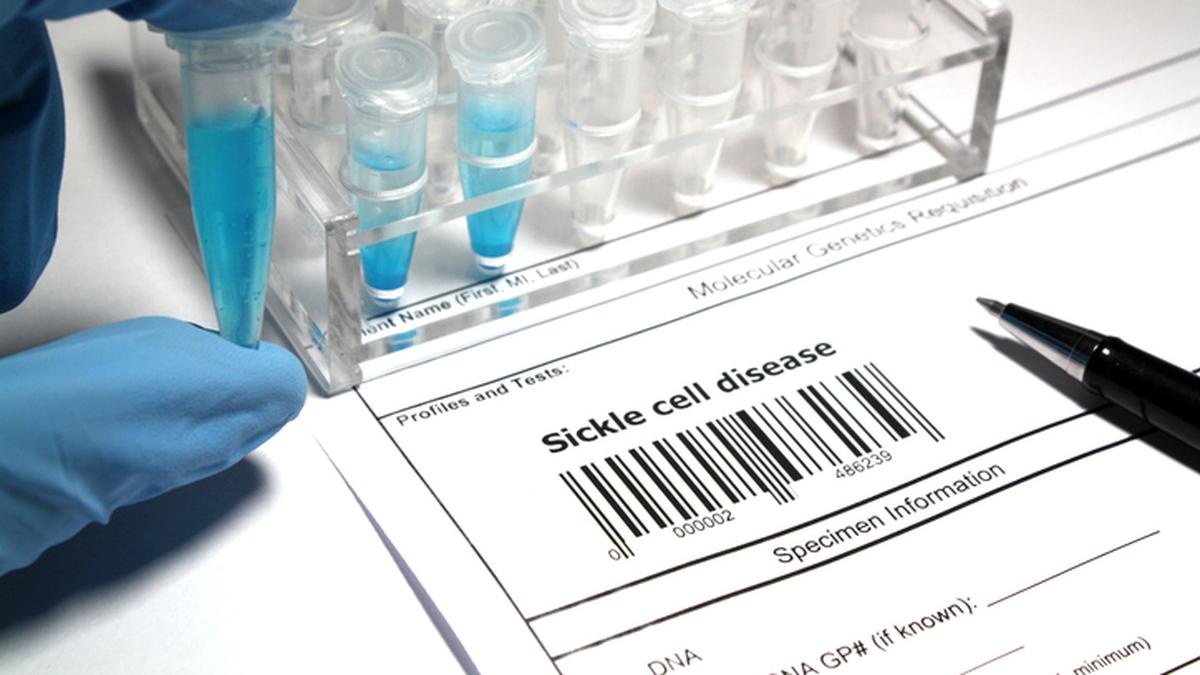

Malini (name changed) from Odisha’s Angul district did not have a conventional arranged marriage. Instead of matching horoscopes with her prospective husband, she and her family relied on the couple’s medical reports before agreeing to the marriage.
Malini, 42, has lived with sickle cell disease (SCD), a genetic disorder affecting red blood cells, since birth. Yet, she went on to have a successful marriage and is now the mother of a healthy 12-year-old son.

Asish, a manager with public-sector Mahanadi Coalfields Limited (MCL), was not as fortunate. Despite having a stable and well-paying job, he could not convince his girlfriend’s family that there was no harm in marrying her. Even a renowned haematologist tried to mediate, but the couple’s nine-year relationship eventually failed to culminate in marriage.
Odisha is among the 17 states with a high prevalence of SCD. According to available data, around 10.61% of the population screened in the state has either sickle cell trait (SCT) or sickle cell disease.

Asish, a Homozygous Sickle Cell Anaemia patient, said he could endure the excruciating pain caused by the disease, but found it far more difficult to overcome the stigma associated with it.
“Social stigma affects people with sickle cell disease more than the disease itself,” members of the newly formed National Alliance for Sickle Cell and Thalassemia Control (NASCETC) said at its first meeting held on the sidelines of the 16th annual congress of the Odisha Haematology Association here on Saturday (September 26, 2026). The voluntary forum has been formed to create a stronger support system for people living with SCD and thalassemia.
The Union government launched the National Sickle Cell Anaemia Elimination Programme (NSCAEP) on July 1, 2023, across 17 high-prevalence states, including Odisha, with the goal of eliminating SCD as a public health problem by 2047.
“The programme is one of India’s largest initiatives to control a genetic disease and is being closely watched internationally because of its scale and comprehensive community-based approach. Besides medical interventions, we also need to address the taboos and social stigma surrounding the disease. People living with SCD themselves must take the lead in creating awareness about the condition,” said Professor R. K. Jena, a renowned haematologist.
Experts, including Ruby Khan, Deputy Director of the National Health Mission, Madhya Pradesh, and Manoranjan Mohapatra, Head of the Department of Haematology at AIIMS, Delhi, advised patients and their families that people living with sickle cell disease can lead a healthy married life if their partner does not have either sickle cell trait (SCT) or sickle cell disease.
“Kundli milao ya na milao, lekin sickle cell reports milana zaruri hai (Match horoscopes or not, but matching sickle cell medical reports is a must). Pregnant women should also undergo prenatal diagnosis, while screening of family members should be carried out as a preventive measure,” said Dr. Khan.
Prof Mohapatra said that, unlike thalassaemia, people with SCD can lead normal lives and that, not every patient requires a bone marrow transplant.
“Not every patient will require a bone marrow transplant. Patients must follow the advice prescribed by their doctors and overcome their fears,” he said.
Although medicines such as hydroxyurea, which helps reduce the frequency and severity of pain episodes, are available at government hospitals, and haematology departments have been opened at several government and private hospitals, patients and their families continue to face social stigma associated with the disease.
“In Kandhamal district, where we are studying the social stigma attached to blood disorders, we have found that some people collect medicines from places far from their homes to conceal their condition from neighbours. Marriages also take place without families disclosing the medical condition of their sons or daughters,” said Debarpita Mohanty, a scientist at the ICMR’s Regional Medical Research Centre, Bhubaneswar.
Published – September 27, 2026 07:08 am IST