




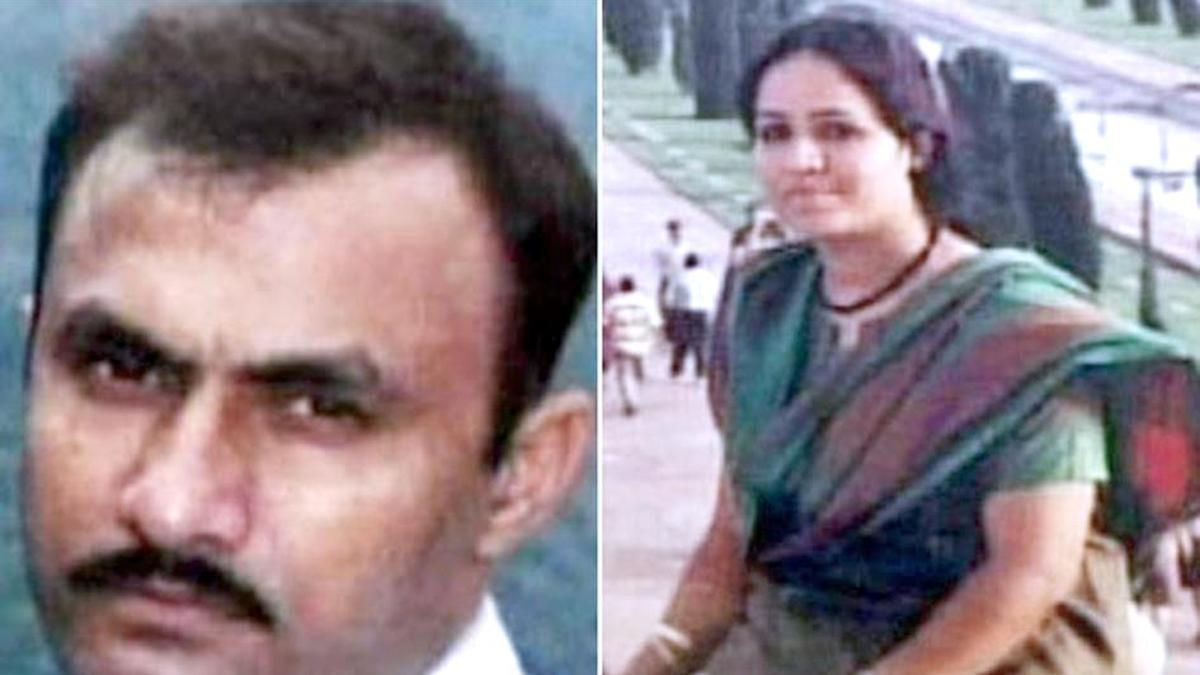

The story so far: The Supreme Court has decided to hear an appeal challenging the acquittal of 22 individuals, 21 of whom are police officials from Gujarat, Rajasthan, and undivided Andhra Pradesh, and one is a civilian. They are accused in the 2005 alleged fake-encounter deaths of Sohrabuddin Shaikh, his wife Kausar Bi, and associate Tulsiram Prajapati.
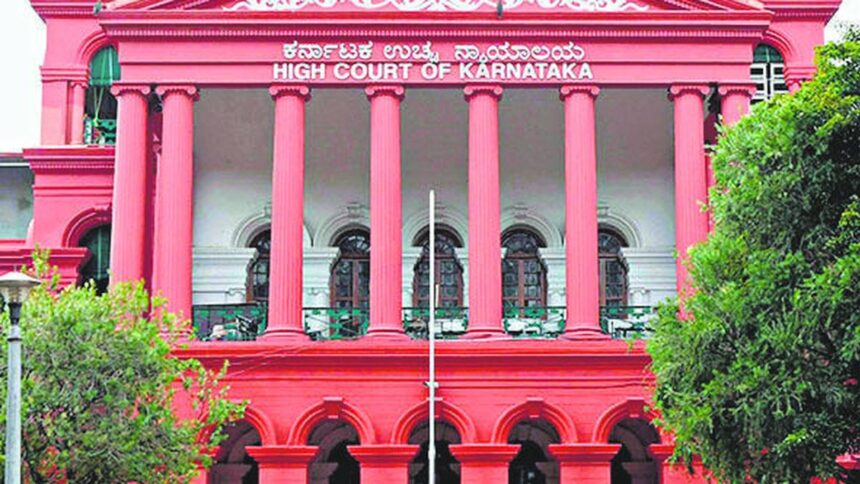
A three-judge Bench of Chief Justice of India (CJI) Surya Kant, along with Justices Joymalya Bagchi and V. Mohana, issued formal notices on a special leave petition filed by Rubabuddin Shaikh, brother of Shaikh, against a judgment of acquittal pronounced by a Bombay High Court Division Bench headed by its then Chief Justice Shree Chandrashekhar (presently a Supreme Court judge) and Justice Gautam A. Ankhad on May 7, 2026.
The Bench orally highlighted an interest in scrutinising the factor of 92 of the 210 witnesses who turned hostile during the trial by denying their statements supporting the prosecution’s version that the killings of Shaikh, Kausar Bi, and Prajapati in fake encounters were in furtherance of a criminal conspiracy between police officers and politicians.

The apex court, in an order passed on September 28, refused to entertain an intervention application filed by Maniar Kalpesh Kumar, a resident of Mumbai, challenging paragraph 43 of the High Court judgment, which confirmed the Special Court’s discharge of Union Home Minister Amit Shah in the fake-encounter case in December 2014 for lack of evidence. The High Court had said Mr. Kumar’s efforts to re-open the case against Mr. Shah were coloured by suppression, oblique motives, and political instigation. Mr. Shah was the Gujarat State Home Minister at the time of the case.
Dismissing the application, the top court Bench found Mr. Kumar’s application a “misconceived attempt… to reopen issues which have long since attained finality”.
The background of the 2005 encounter case
The case traces back to November 2005, when Sohrabuddin Shaikh, an alleged criminal with reported links to extortion networks, and Kausar Bi were intercepted while travelling on a luxury to Hyderabad for her medical treatment and Eid celebrations. Prajapati was accompanying them.
According to the prosecution, Shaikh was taken into custody by a joint team comprising officials from the Gujarat Police’s Anti-Terrorism Squad and the Rajasthan Police. Shortly after, on November 26, 2005, Shaikh was killed in what police initially claimed was an encounter near Ahmedabad. The prosecution alleged that Kauser Bi was killed hours after her husband, that her body was burnt near Ilol village in Gujarat, and that the remains were disposed of in the Narmada River.
Prajapati, a key witness to the abduction, was killed in another encounter near the Gujarat-Rajasthan border in December 2006. The police escort claimed he tried to escape by throwing chilli powder at them.
Following a public outcry and demands from Shaikh’s family members, the Supreme Court handed the investigation to the Central Bureau of Investigation (CBI) in January 2010. It also shifted the trial from Gujarat to a Special Court in Mumbai to ensure a fair trial.
Mr. Shah, who publicly declared his innocence, surrendered before the CBI. He spent over three months in jail before the Gujarat High Court granted him bail. The Supreme Court barred him from entering Gujarat to ensure the “integrity” of the investigation. He was allowed to return to Gujarat by the Supreme Court in 2012.
The course of trial:
Subsequent to Mr. Shah’s discharge, the CBI court similarly found no prima facie evidence against senior Gujarat and Rajasthan Police officers, including former ATS chief D.G. Vanzara and Rajkumar Pandian.

The trial attracted controversy following the death of one of the judicial officers, Judge B. H. Loya, who suddenly fell ill at a Nagpur guesthouse and died of a cardiac arrest on December 1, 2014. Petitions seeking an independent investigation into his death were rejected by a Supreme Court bench comprising then Chief Justice Dipak Misra and Justices A. M. Khanwilkar and D. Y. Chandrachud (both are now retired).
Although the Supreme Court had mandated that a single judge preside over the entire trial, four different judges heard the case. Justice J. T. Utpat was initially assigned before being replaced by Judge B. H. Loya, who served until his death. Judge M. B. Gosavi then took over and discharged Mr. Shah on December 30, 2014. Judge S. J. Sharma delivered the verdict of acquittal in December 2018.
The reasons given by the Bombay High Court for acquittal:
The May 7 High Court verdict authored by Justice Chandrashekhar on appeals filed by Shaikh’s brothers, Rubabuddin and Nayamuddin, reasoned that a pronouncement of acquittal cannot be interfered with in a casual or cavalier manner. It was not permissible in law to overturn the Special Court judgment only on the ground that another view was possible. The presumption of innocence was in favour of the accused persons. An acquittal should be overturned by a High Court only in exceptional circumstances in the interest of public justice to “correct manifest illegality or prevent gross miscarriage of justice”, the 50-page judgment said.
The High Court said the prosecution failed to establish a motive on the part of the police to stage a fake encounter, or even, for that matter, that Shaikh and Kausar Bi were abducted by the Gujarat and Rajasthan Police. It said there was no ground to infer that the trial was not conducted properly because 92 prosecution witnesses turned hostile.
What is the Supreme Court expected to examine?
The court has given liberty to the petitioner, Rubabuddin Shaikh, to place on record translated copies of the statements of the relevant witnesses and any other material documents he wants to rely on. The court orally stated that it would examine the aspect of the trial’s fairness in which 92 witnesses turned hostile. The Bench issued notice to the investigating agency, the CBI. It has scheduled a hearing for October 28, 2026.
Published – September 30, 2026 11:32 am IST