







If the West Indian – and Indian – bowling fraternities currently doing battle in the One-Day International series decide to go on strike, they will be greeted with empathy, sympathy and understanding. If one thought Sunday’s first game in Thiruvananthapuram was a tall-scoring affair – 595 runs in 91.4 overs, overall run-rate 6.51 – then how do you even begin to describe the massacre in Guwahati on Wednesday?
How often does a team boast three centurions and get beaten out of sight? If you said never, allow yourself a pat on the back. How often does a team rack up 405 and end by licking its wounds? If you said once before, another pat. Though, it must be said, each of these gentle pats will heap untold misery and psychological pain on the Caribbean bowling group.
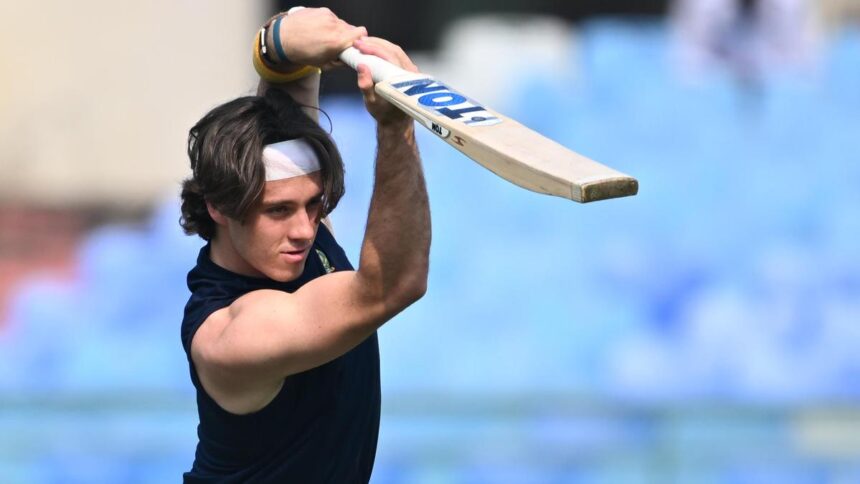
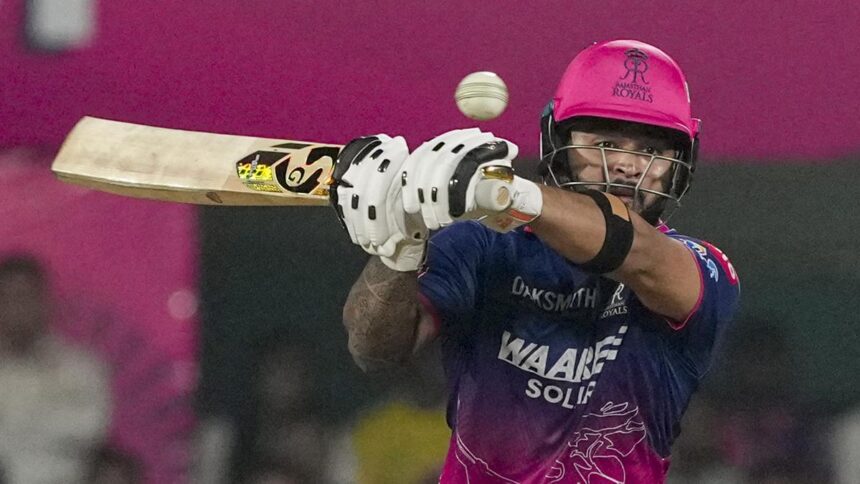
The thousands at the ground and millions watching on television must have wondered at the wisdom of Shubman Gill’s decision to stick the visitors in after West Indies rode on sparkling centuries from John Campbell, skipper Shai Hope and the free-flowing Amir Jangoo to amass 405 for seven. Only once before in the history of the game, more than a decade back, has a higher total been scaled down in ODI history. On that instance, South Africa rode on the incandescence of Herschelle Gibbs (175), and key contributions from Graeme Smith (90), Mark Boucher (50) and Johan van der Wath (35 off 18) to overhaul Australia’s 434 for four with one wicket and one delivery to spare. A tantalisingly close contest with the result in doubt till the very final ball.
Asense of the inevitable
But not so in Guwahati. There was a sense of the inevitable when India began their reply. To have to score at more than eight an over from the off was a massive ask, on the face of it. Never mind how flat the track, how small the boundaries and how inexperienced the bowling attack, to reel in 405? Not easy, you’d think. Not by a long way. Well, think again.
Gill, perhaps determined to prove that his call to chase was the right one, no matter the mountain ahead of him, raced away with a Formula One beast, engines screaming, rubber burning. At the other end, his predecessor as India’s captain purred along effortlessly, matching his partner for impact without resorting to the rambunctiousness that the man 12 years his junior was showcasing.
The artificial clouds of uncertainty that had been thrust above Rohit Sharma’s head disappeared in a flurry of boundaries at Lord’s some two and a half months back, when the right-hander produced his 34th ODI hundred. His subliminal 138 wasn’t enough to help India overhaul England’s 387 in the deciding game of the three-match series, but coming as it did just a day and a bit after BCCI secretary Devajit Saikia moved to quell speculations that Lord’s would be his swansong, it was a statement of great intent and import.
Rohit would be less than human if he hadn’t felt the heat going into Lord’s. Not because his bat had gone cold, but because the expectations were extraordinarily unfair and demanding, the scrutiny unforgiving, the dissection brutal if without basis. He knew he still had it; he had worked hard to become the fittest version of himself (possibly ever) and it must have rankled that, for all his staggering accomplishments, he was still being put on trial.
Not used to outlandish statements or prickly gestures, Rohit took everything in his stride, silencing wagging tongues and the motley band of critics with the Lord’s masterpiece. Only he can say if that effort freed him up mentally, but on Wednesday, Rohit was at it again, content to sail in Gill’s wake, happy to keep up his end of the bargain and using all his experience, wisdom and intelligence to not try to compete with the fireworks emanating from the other end.
One of the great virtues of having played internationally for 19 years and represented the country in more than 500 matches is that you know your game inside out. You quickly sum up the conditions, you figure out rapidly what works and what may not. You decide which bowlers to target, which areas to score freely in. Having spent 50 overs in the field chasing leather, Rohit knew that to hop on to the backfoot and play from there was a fruitful, productive, paying option. And that’s exactly what he did, hanging just that touch back and letting loose without ever trying to overhit or muscle the ball as he kept his tryst with three-figures.
A spectacle
Gill’s century was a spectacle, spanning just 62 deliveries and containing 10 fours and five sixes. It was as if he was batting on a different, stratospheric plane because that’s how effortlessly easy on the eye he is. But what about Rohit? When has he not been easy on the eye himself? Ever?
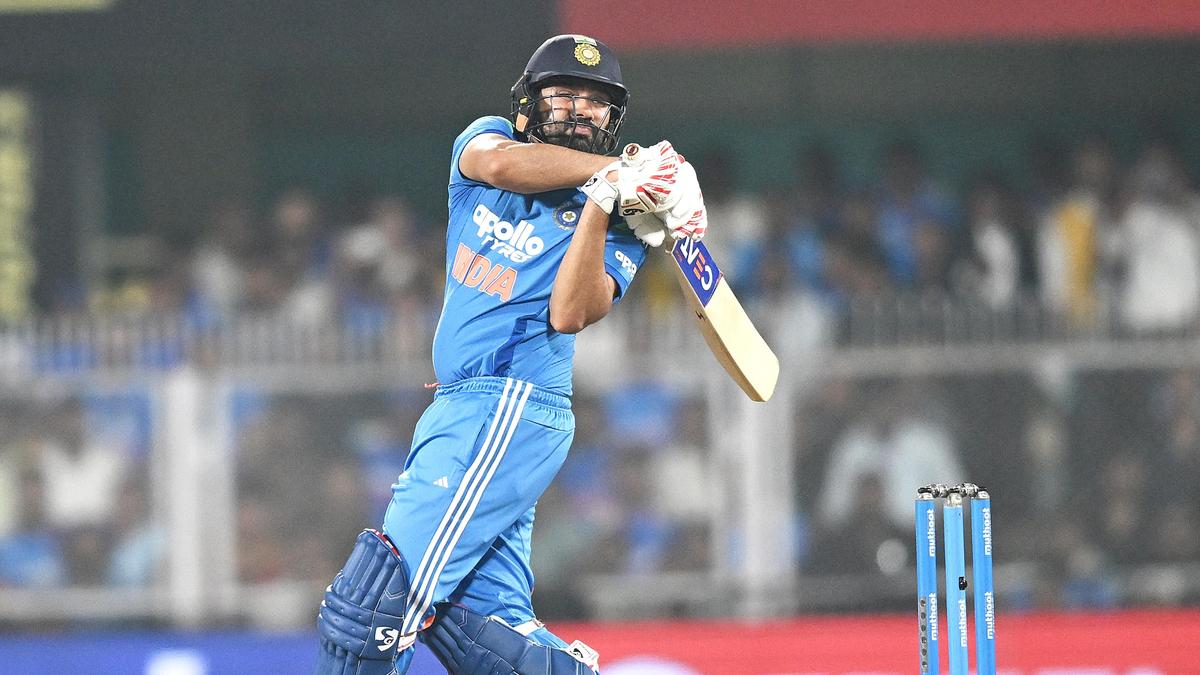
Rohit’s hundred came off 72 deliveries – stately it certainly wasn’t. Of those 72 balls, 10 disappeared to the boundary, six over it. On its own, it was a compelling effort, a glorious compilation of some of the prettiest shots you will see on the cricket ground. Gill’s luminescence eclipsed it a little, but only a little. When you set out in quest of 405, individual brilliance won’t cut it. If India managed in the end to scale it down with a massive 39 balls to spare — and with eight wickets in hand – put it down almost entirely to the opening salvo.
By the time Rohit fell leg before to Jayden Seales, he had breezed to 101, off 75 balls. More importantly, he had helped Gill put on 255, in just 158 deliveries. India were scoring at nearly 10 an over – pause, reflect and marvel – when the Mumbaikar exited the middle of the ACA Stadium off to rapturous applause. Nary an emotion, just another evening in the office, and not a feeling of a job half-done because Rohit knew what incoming No. 3 Virat Kohli was capable of, what the depth in the batting order could translate to, and what was going through his successor’s mind – stay till the finish, get the job done.
Rohit’s celebratory jig during the single that took him from 99 to 100 has been much discussed in the last several hours. When he was asked about that not long after the winning run was struck, he refused to rise to the bait, saying, “I’ll keep that celebration for myself. Some things are just meant to be with you and it’s not to be shared. So that was for me.” And why not? Why, when he had chosen silence to stave off sniping teeth and malicious gossip, did he owe anyone any explanation about his celebration? Why indeed?
Like Kohli had at the start of the series, Rohit also went public before the second ODI about his ambitions, about his quest for the elusive 50-over World Cup winner’s medal. The former boasts one of those, having played a significant role when Mahendra Singh Dhoni’s men created history a decade and a half back by becoming the first host nation to go all the way. Kohli had smashed a century on his World Cup debut in Mirpur against Bangladesh and weighed in with a crucial hand in the final in Mumbai against Sri Lanka. Walking in at a wobbly 31 for the loss of Virender Sehwag and Sachin Tendulkar as India chased 275 for the title and history, he helped current coach Gautam Gambhir put on 83 for the third wicket before perishing for 35.
Kohli was also the Player of the Final when Rohit hoisted the T20 World Cup trophy in Bridgetown two and a quarter years back, so he has the full set of white-ball winners’ medals, so to say. Rohit holds two T20 World Cup champion medals – on debut in 2007 and on his swansong in 2024 – but having heartbreakingly missed out on selection in 2011, slammed five centuries in 2019 and stumbled at the final hurdle, as skipper, in 2023, he is determined, if not desperate, to make his final chance a telling, successful one.
A year is still a long time in international sport and Rohit will be nearly 40 and a half when the World Cup gets going. But he is the latest shining example of age being just a number. Driven by a raging inner fire and happily immune to the goings-on around him, his goal is palpable, his focus narrow, his vision understandably blinkered. In New Zealand in November, when the final preparatory exercise will get underway, he will get five opportunities to refamiliarise himself with the conditions that can be expected to be on offer in Africa.
By his own admission, because he only plays one format internationally, he has the time to revisit his game and deep-dive into analysis, something that constant travel and the hectic hustle and bustle of non-stop cricket can sometimes preclude. Headspace has never been a problem with Rohit. He might have spent much of his career in Kohli’s shadow and was eclipsed by Gill on Wednesday, but Rohit isn’t the sort to dwell on these little things. He has the remarkable ability to always keep the larger picture in mind which, coupled with his experience, his nous and his hunger, make him a cherished teammate and a doubly dangerous opponent.