


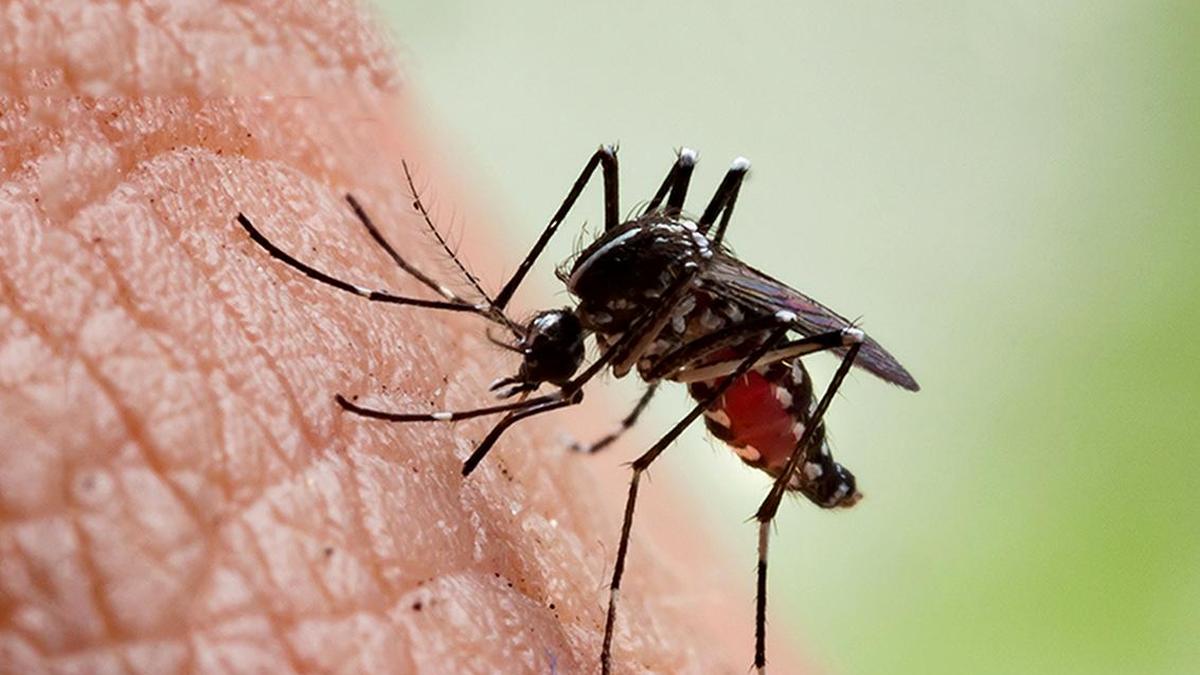


Surveillance measures to identify Aedes mosquito breeding pools are continuing, but the number of pools detected has started to decline as a result of source reduction measures.
| Photo Credit: iStockphoto
Tamil Nadu is recording around 200 cases of dengue a day. Fresh cases are being reported in places including Chennai and its neighbouring districts and cities such as Coimbatore and Madurai.
Officials of the Directorate of Public Health (DPH) and Preventive Medicine said the caseload remained steady and was not at outbreak proportions. A. Somasundaram, Director of Public Health and Preventive Medicine, said cases had not risen exponentially, with the numbers remaining broadly steady. “We are seeing nearly 200 cases a day. The numbers are not doubling or tripling, which usually happens in an outbreak. Right now, there is a static trend in the number of dengue cases, and we are expecting the cases to decline soon,” he said.
Cases are being reported across cities including the Chennai belt (Tiruvallur and Kancheepuram), Coimbatore, and Madurai. This could partly be due to a “natural bias” with these areas having more hospitals and testing facilities, Dr. Somasundaram said.
“We have specifically instructed staff to increase the number of tests for dengue for better surveillance and patient management. This is so we don’t miss a case, and when samples are tested, we can identify pockets of cases or clusters, which are likely to bring about an outbreak,” he said. There are over 4,500 government and private laboratories in the State, he added.
Surveillance measures to identify Aedes mosquito breeding pools are continuing, but the number of pools detected has started to decline as a result of source reduction measures. The mosquito density is slowly coming down, the official said. About 25,000 Domestic Breeding Checkers (DBC) have been engaged across the State, with 20 persons covering one block.
Dr. Somasundaram said while preventive measures had been intensified, they had been holding daily monitoring meetings with District Health Officers via video conferencing. “We are analysing the case trend, whether increase or decrease or static, and number of laboratory tests conducted. We are also monitoring fever triaging, patient management, and discharge policy. Patients are being categorised as having mild, moderate, or severe symptoms and treated appropriately. Right now, the severity of infections is less. Fogging operations and source reduction measures, along with work taken up by DBCs, are being supervised. We are also looking at creating awareness among the public,” he said.
With October and November being crucial months, he said, there could be intermittent or heavy rain and people should ensure that their household environment is clean. “Avoid storing water unnecessarily. If you have too, keep containers closed properly,” he added.
Published – October 02, 2026 10:03 pm IST