


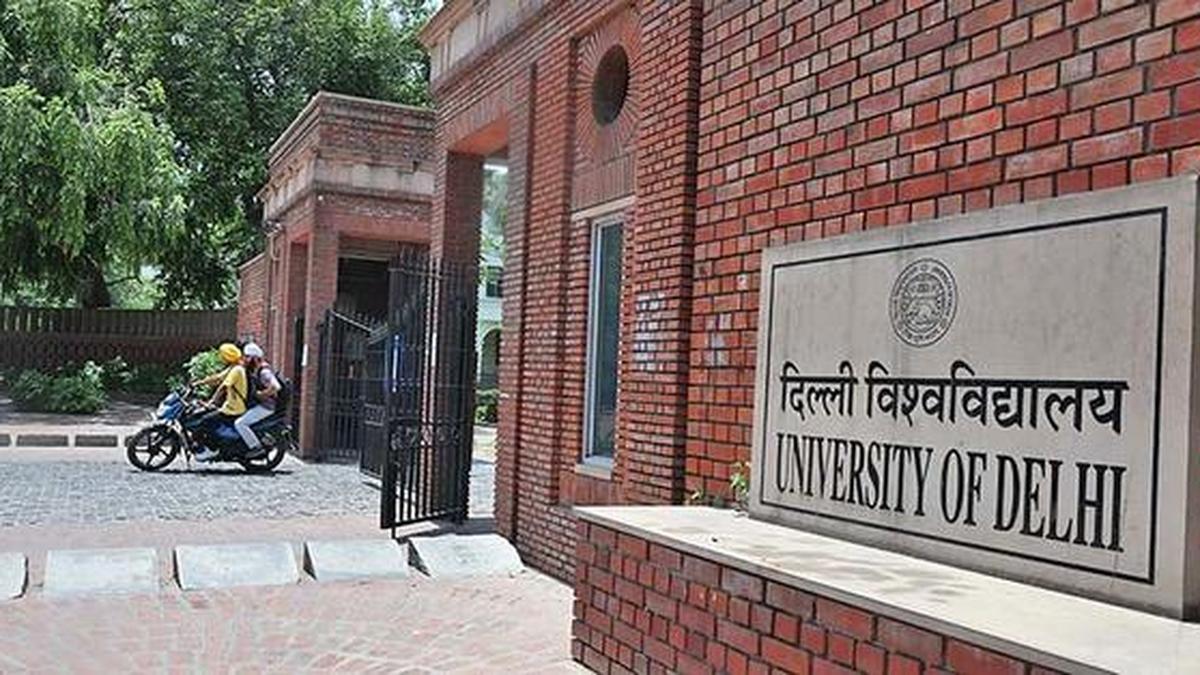

The collapse of a five-storey building in Satya Niketan on September 6 in New Delhi, in which several young students who were staying there as paying guests were killed, was a tragedy waiting to happen. Its genesis, however, lies in the inadequate hostel accommodation at the University of Delhi.
This author has been associated with the management of three postgraduate hostels at Delhi University — as Provost of Jubilee Hall and the P.G. Men’s Hostel, and as Resident Tutor of Gwyer Hall — which gave one the opportunity to understand the enormity of the issue.
While the University of Delhi has more than 80 constituent colleges, only approximately 10 of them have hostel accommodation. Most of these colleges are located in the main campus of the university such as Miranda House, St. Stephen’s, Hindu, Hansraj, Ramjas, Kirori Mal, the Shri Ram College of Commerce (SRCC), Daulat Ram, and the Indraprastha College for Women.
Outside the main campus, only Lady Shri Ram College has a hostel.
Also Read | DU to add 5.5K seats to existing hostel capacity of 7,210 over five years
The postgrad dilemma
Across all the postgraduate departments of Delhi University, there are only 7-8 hostels: Jubilee Hall, Gwyer Hall, PG Men’s and Women’s hostels, two International Hostels, and one hostel for students from the North East. The south campus of the university has only one women’s hostel.
The total accommodation provided by all the undergraduate and postgraduate hostels taken together is approximately 2,500, if not less, whereas the requirement runs into tens of thousands.
Moreover, only the old colleges, as mentioned above, have hostel accommodation. While 30 to 40 colleges were established under different political dispensations in Delhi, none of them have attempted to provide hostel accommodation on their campuses. The fault also lies with the University Grants Commission (UGC). It neither stipulates hostel accommodation for new colleges created with its funds, nor does it require that hostels be built alongside other infrastructure in colleges.
Also Read | High Court issues notices on plea seeking affordable, safe hostel policy for DU students
Who is to be blamed?
The University administration should share much of the blame for failing to provide adequate hostel infrastructure for its departments and colleges. The administration abhors creating hostels within the University, viewing them as managerial headaches and major trouble spots. Some of the top brass within the University administration brazenly oppose more hostels stating that it would lead to trouble.
The central government also has an equal share in the blame. Budgetary allocations have been substantially slashed for higher education. Even the education cess that you and I pay on our food bills and similar purchases has been largely diverted to other heads.
In the name of privatisation, there is no consideration for human suffering. Hence, tragedies galore.
Another problem bedevilling the hostel administration has been the problem of hostellers overstaying their stipulated tenure, particularly in postgraduate hostels. As Provost of Jubilee Hall, this author once had to seek police assistance to evict some overstayers; some had been there for 10-15 years. In one case, the next generation had come to stay in the same hostel.
Also Read | ‘Have gaushala, but no hostel’: Hansraj students rue absence of facility, expense of renting PGs
Preying on students
Due to such a shortage of hostels, the Paying Guest (PG) accommodations that proliferated around Delhi University and its colleges had a gala time, minting huge amounts of money from helpless students. Mukherjee Nagar, Hudson Lane, Vijay Nagar in the north campus, and Satya Niketan and others near the south campus are offshoots of DU’s shortage of hostel accommodation.
These PG accommodations are hellholes where helpless outstation students have to literally languish. The Satya Niketan tragedy is only the culmination of a life that should be called death in disguise. These modern-day Shylocks brazenly extract the pound of flesh from hapless students.
The way out is to create large-scale hostel accommodation on a war footing. Given the will and desire, this can be done. For example, the English and Foreign Languages University (EFLU), a central university in Hyderabad, created hostel accommodation for approximately three thousand students, both Indian and foreign, in less than three years.
Abhai Maurya is the founder Vice-Chancellor of the English and Foreign Languages University, Hyderabad
Published – October 05, 2026 12:54 am IST