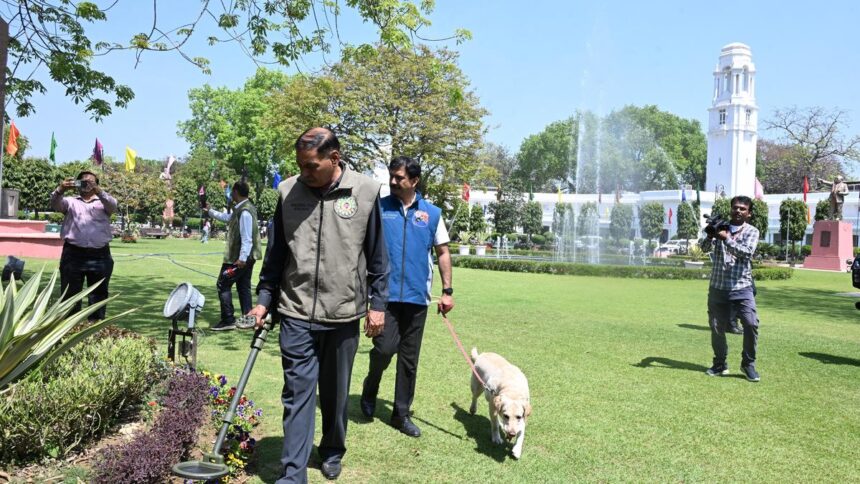





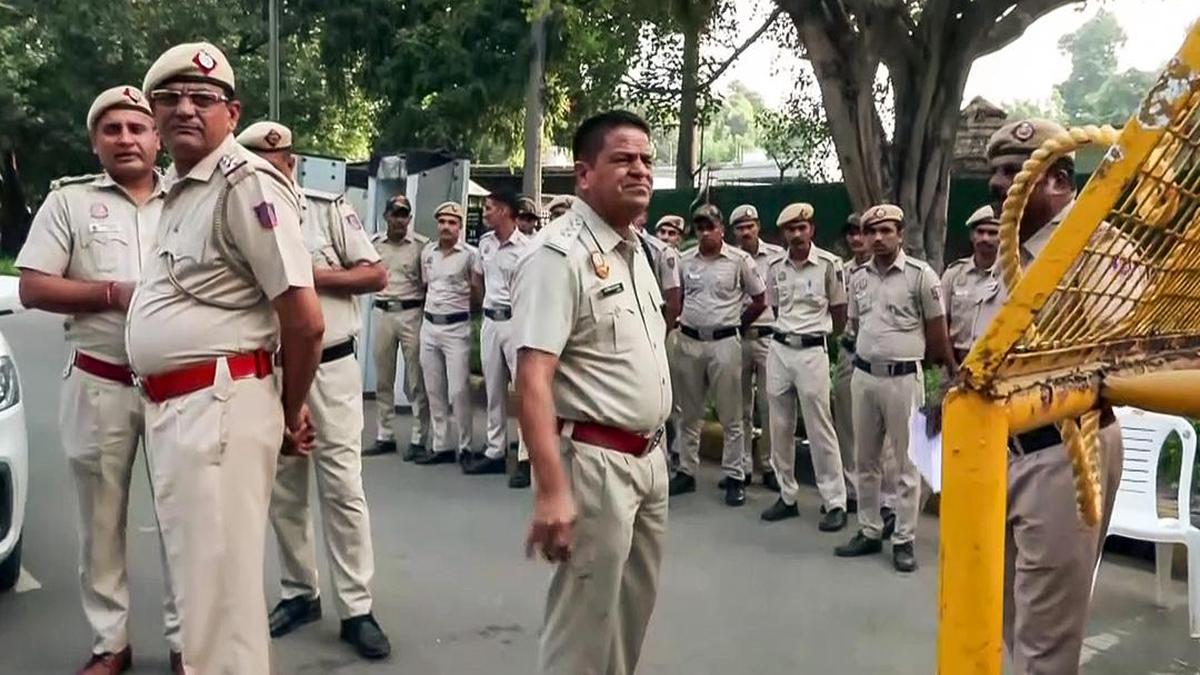


Police personnel stationed near Jantar Mantar on Wednesday.
| Photo Credit: ANI
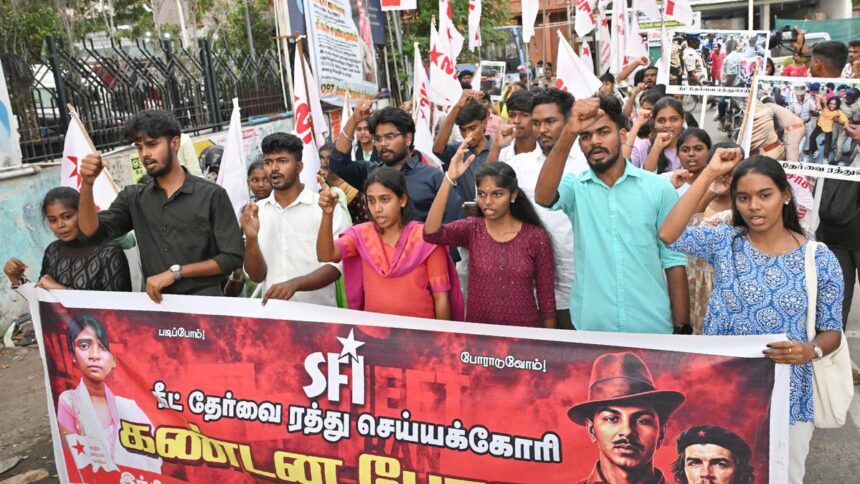
Over the past few weeks, several organisations — from anti-reservation groups to those opposed to the special intensive revision (SIR) of voter rolls — have sought permission to hold demonstrations at Jantar Mantar. Their requests have been denied amid concerns over “open calls” for protests, uncertainty over crowd size and last-minute requests, said officers familiar with the process. No demonstration has been allowed at the venue since the stir led by the Cockroach Janta Party (CJP) in July, they said.
On Wednesday, CJP co-convener Saurav Das submitted an “intimation letter” for a joint protest at Jantar Mantar on October 10 to highlight alleged irregularities in the SIR and demand Chief Election Commissioner Gyanesh Kumar’s resignation.
The organisers were asked to submit an undertaking, and their request is being assessed, a senior officer said. An intimation letter, however, is not treated as a formal application for permission, he added.
“Merely informing us about a proposed demonstration does not amount to seeking permission. Organisers are required to approach the office of the Deputy Commissioner of Police concerned 10 days in advance and provide details, including the date, time and agenda of the protest, along with the expected number of participants and other logistical requirements at the site. The request is then assessed,” said the officer.
The assessment takes into account the expected mobilisation, the organisations involved, the nature of the issue, the possibility of counter-protests, traffic implications and the manpower and equipment required. Whether other demonstrations are planned for the same day or time is also considered.
Limit on turnout
Jantar Mantar is a designated protest site with a stated capacity of up to 1,000 people. The uncertainty becomes greater when organisers issue an “open call” without indicating the likely turnout or who will be responsible for the gathering, the officer said. Under such circumstances, requests made close to the proposed date can be difficult to accommodate, given the need to make arrangements for crowd management, traffic regulation and public safety.
“An unplanned gathering can disrupt the movement of thousands of other people,” said a second officer, adding that prohibitory orders are currently in force in parts of central Delhi, restricting assemblies and processions.
Speaking about recent denials of permissions, the officer said requests had been denied for an August 21 demonstration called by Reservation Hatao Andolan and subsequent requests for the All India Students’ Association-led stir over “lapses” in the SIR.
“In each case where the organisers went ahead with the stir despite the prohibition, they were detained,” the officer said. Several attempted marches and demonstrations around Jantar Mantar since October 2 have also led to detentions, the officer added.
In a 2018 judgment, the Supreme Court held that protests at Jantar Mantar could not be completely prohibited. It directed the authorities concerned to balance the right to protest with the rights of residents and other users of the area. Delhi Police subsequently limited demonstrations at Jantar Mantar to gatherings of up to 1,000 people, with larger protests to be considered for Ramlila Maidan. Organisers whose proposed mobilisation exceeds Jantar Mantar’s capacity, or who approach the police too close to the proposed date, are allowed alternative venues such as Ramlila Maidan and Narela Ground, said the officer.
“The right to protest is recognised, but it has to be exercised within a framework that allows the police to manage the gathering and protects the rights of other citizens. If every group simply announces an open protest and expects permission at the last minute, it becomes impossible to plan for law and order,” the officer said.
Published – October 08, 2026 01:00 am IST