








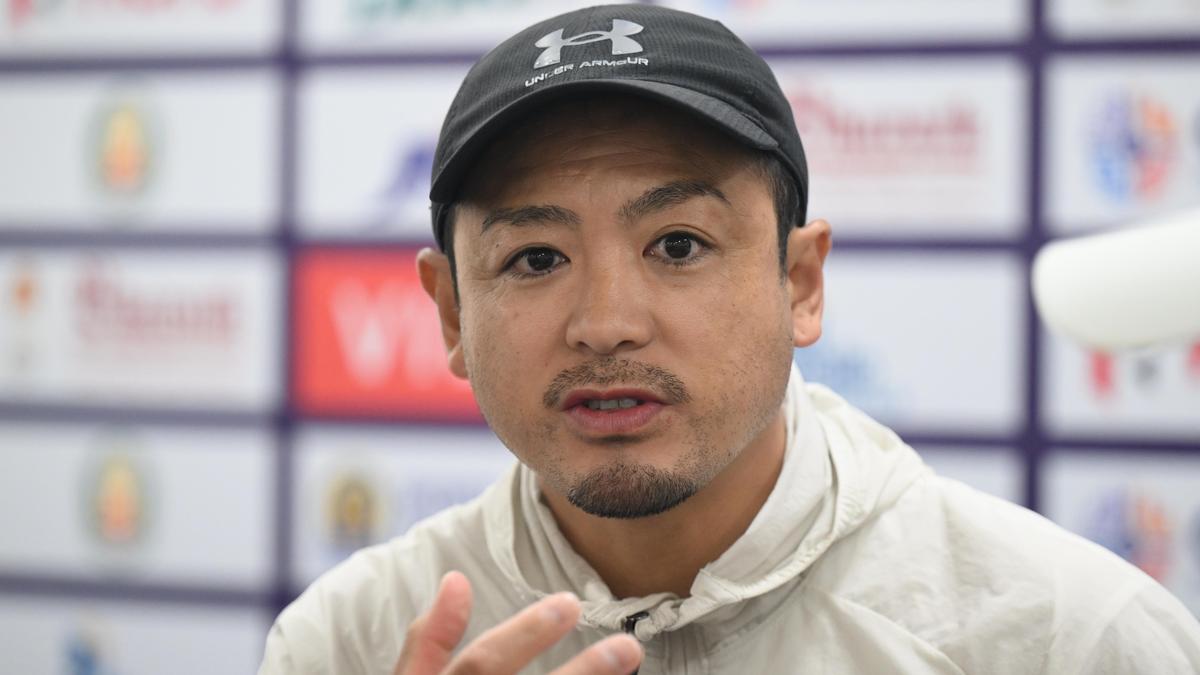
Yoshihiro Anai is in charge of Japan’s senior and junior men’s squads.
| Photo Credit: B. JOTHI RAMALINGAM
In international field hockey, it is generally considered a rule of thumb that senior and junior national teams should have different head coaches.
The demands of managing a senior squad — tactics, tournaments and process — rarely allow the same individual to simultaneously oversee a junior programme. The workload is excessive, and the developmental needs of under-21 players are fundamentally different.
Two nations competing at the ongoing junior men’s World Cup here have opted for the path less travelled. Japan and Oman have their senior and junior men’s squads being coached by Yoshihiro Anai and Mohammed Bait Jandal, respectively.
Anai acknowledges the intensity of the job.
“It’s tough schedule-wise,” he told the The Hindu. “But it’s good for us. We can teach the same hockey principles to u-21 boys and to the senior team.”
For Anai, the biggest advantage of this model is continuity. “Having one coach removes the wall — real or imagined — between the seniors and juniors,” he said. “We can bring young players into the senior team smoothly.”
Japan’s campaign in Chennai, however, proved frustrating. The team led 2–1 at half-time against New Zealand before slipping to a 2-3 defeat in heavy rain on Monday, a loss Anai attributed to inexperience.
“After the break, our players lost the plot due to lack of experience. We have eight debutants,” he said.
His next target is clear: guiding the senior men to the podium at the 2026 Asian Games on home soil. “It won’t be easy with top sides like India, Pakistan and Malaysia,” he added.
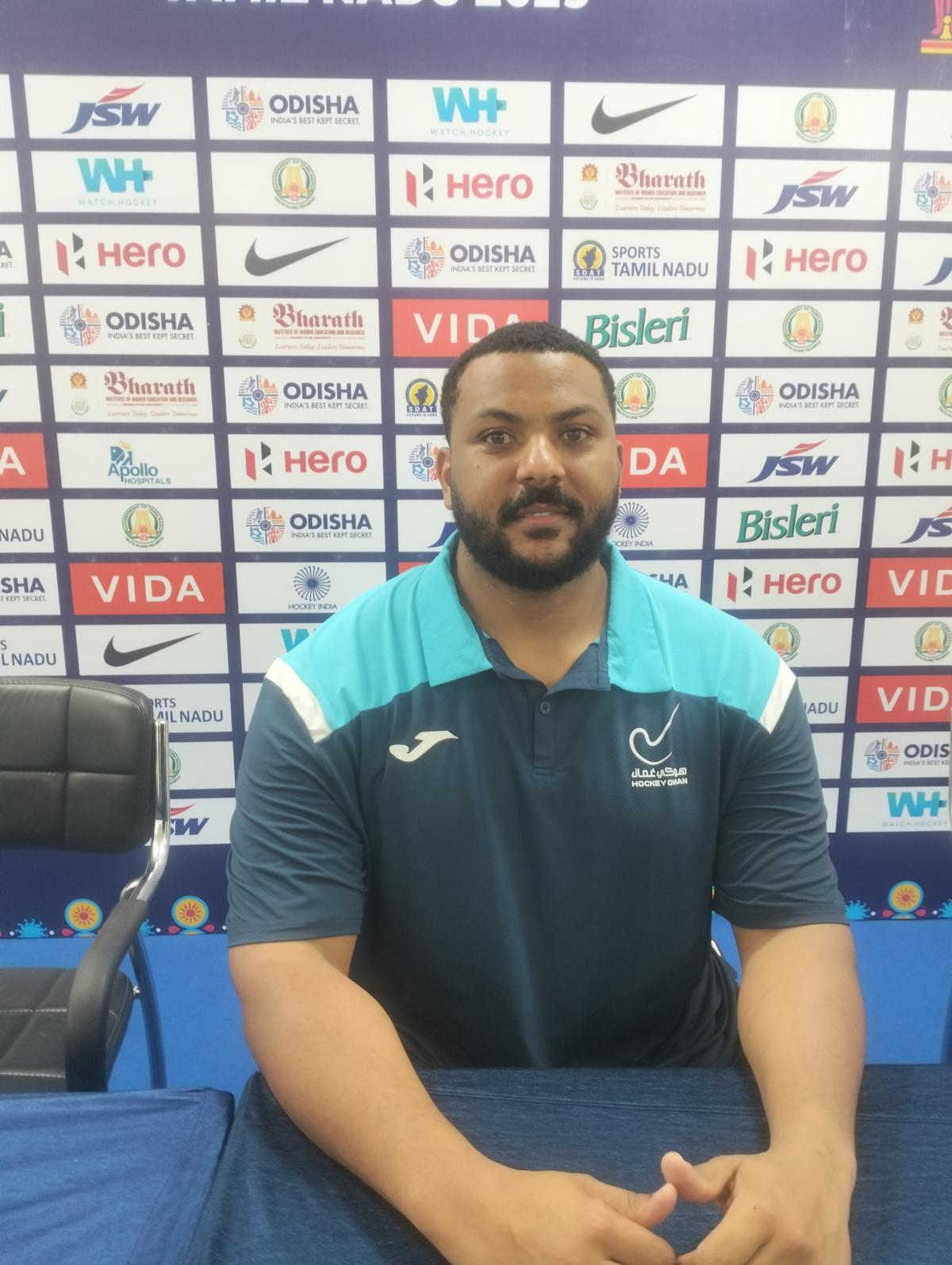
Mohammed Bait Jandal handles both the Oman senior and junior teams.
| Photo Credit:
K. Keerthivasan
The 36-year-old Jandal, who handles Oman — a developing hockey nation, considers the structure practical and even necessary.
“Our schedule is not like the top teams with full-time camps and coaches,” he explained. “We work as a group with many coaches. We share knowledge and experience.”
Both Oman and Japan finished at the bottom of their respective Pools (B and C), but for two nations building their teams, the global competition might have offered a better understanding of what it takes to compete at the highest level.
Published – December 02, 2025 05:59 pm IST