




In the present day, a lower CIBIL score can ruin your loan application. In the pre-database era, loan defaults would not show up against your name on the computer screen. Yet, such bad debt-clearing history had the potential to haunt the defaulter many years later as this case establishes.
In 1973, K. Ponnusamy was working as a Lecturer at a Government Arts College in Tamil Nadu. He availed of a ₹13,000 crop loan from the Bank of India but failed to repay the loan. The bank moved the court and collected the amount.
Madras HC orders release of former Minister K. Ponnusamy’s seized properties
Subsequently, in 1985, he borrowed ₹5,000 from a colleague R. Palanivelu, after executing a promissory note. He defaulted on this loan too. The lender had to file a suit on which a decree was passed. Even then, the money was not repaid. Eventually, the decree amount was recovered from his salary.
In later years Mr. Ponnusamy’s personal fortunes were on the upswing. He had become a familiar personality in Tamil Nadu in 1991, when he was elected to the Assembly from the Marungapuri constituency on an AIADMK ticket. Riding on a sympathy wave triggered by former Prime Minister Rajiv Gandhi’s assassination, J. Jayalalitha (as her name was spelt then) became the youngest Chief Minister of Tamil Nadu. She appointed Mr. Ponnusamy Deputy Speaker of the Assembly on July 3. Two years later, on May 17, she inducted him into her Cabinet and allotted the Education portfolio. He held the post till May 9, 1996, when the AIADMK was thrown out of power following a strong anti-corruption wave.
The new M. Karunanidhi government registered corruption cases against Jayalalithaa, her confidante Sasikala Natarajan (now V. K. Sasikala), former Ministers and others. It also established three Special Courts in Chennai to prosecute the accused.
That is when Mr. Ponnusamy’s troubles began. The Directorate of Vigilance and Anti-Corruption registered a case against him, his wife Prabavathy, daughter Mala, nephew Venkatesan, brother K. Rajappa and an auditor V. Jayaraman. The agency accused Mr. Ponnusamy of amassing wealth to the tune of ₹77.49 lakh during his tenure as Minister, disproportionate to his known sources of income. The movable and immovable assets were acquired in the names of his wife and daughter. Ms. Prabavathy was a housewife earning a small agricultural income. His daughter was only a student.
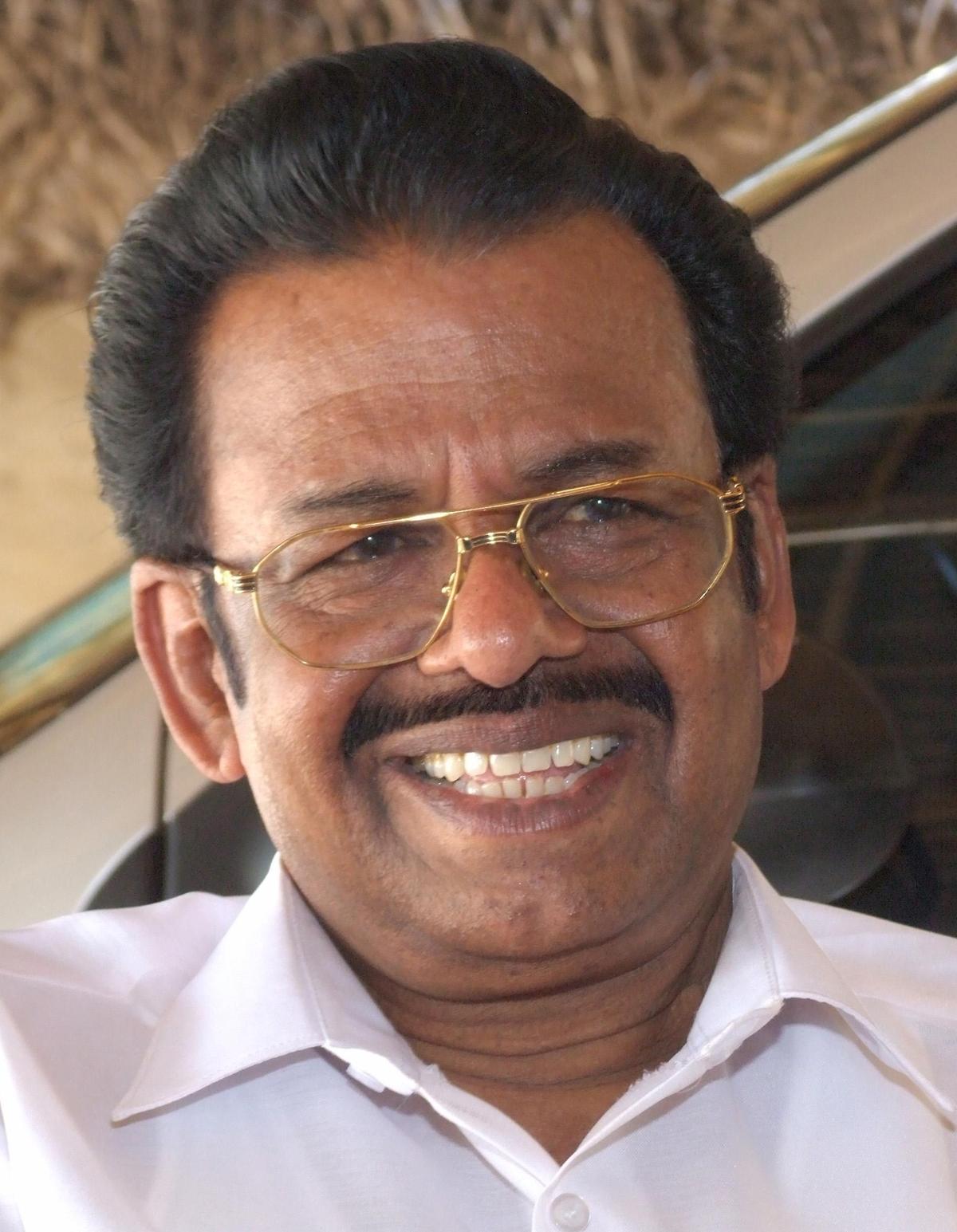
A file image of K. Ponnusamy
| Photo Credit:
The Hindu
The former Minister contended that he had derived income from properties.
During the trial in the Special Court II, the prosecution wanted to establish that Mr. Ponnusamy was not financially well off till such time he became the Education Minister. For this, the prosecution dug up his past and produced evidence of him having defaulted on the crop loan and personal borrowing. His colleague Mr. Palanivelu appeared in court as a prosecution witness and let in evidence about the struggle he faced in recovering ₹5,000 from the former Minister.
This proved to be a turning point in the case and eventually led to Mr. Ponnusamy’s conviction in August 2000, more than a quarter of a century after he first defaulted in repaying a loan.
The judge V. Radhakrishnan noted in his verdict: “Till he became the Education Minister, Mr. Ponnusamy’s financial position was not sound. It appears that he had to borrow money to make both [sic] ends meet, and he could not repay the loans and execution proceedings had to be initiated against him for recovery of loans by the creditors. Even as a Deputy Speaker and MLA, he was not in a position to discharge the debts. So the story that he had a lot of income from landed properties cannot be accepted.”
The former Minister had also taken the defence that the properties were acquired through funds given “out of love and affection” by Mr. Venkatesan to his sister and niece (i.e. Ms Prabavathy and Ms Mala).

K. Ponnusamy handing over the South Asia Federation Games (S.A.F.) flag and torch received from Dhaka, to former Tamil Nadu Chief Minister Dr. J. Jayalalitha at Secretariat in Madras on December 31, 1993. File. Photo: Special arrangement
However, the judge rejected this theory saying it was unbelievable. The court pointed out Mr. Ponnusamy had not offered any acceptable explanation in respect of the assets standing in the names of his wife, daughter, his brother and Mr. Venkatesan. The conduct of the four accused and the circumstances “unerringly and clearly indicated” that only by utilising the funds of Mr. Ponnusamy, “which could not be accounted for”, pecuniary resources in the their names were acquired. “These accused were only name lenders or benamidars,” it held.
The judge then sentenced the former Minister to undergo three year rigorous imprisonment (RI) and pay a fine of ₹1 lakh. While acquitting the auditor for want of evidence, the court awarded one year RI and imposed a fine of ₹10,000 on each of the other four accused, who were found guilty.
All five of them appealed in the Madras High Court challenging their conviction. In April 2001, the High Court upheld Mr. Ponnusamy’s conviction alone, while acquitting his family members. The court said there was no proof they had intentionally aided Mr. Ponnusamy in committing the offence. Also, there was nothing to establish that his wife and daughter knew that ill-got money was being used for purchasing property in their names.
Mr. Ponnusamy then moved the Supreme Court seeking relief. A Bench of Justices S. N. Vairava and K. T. Thomas dismissed his petition in July 2001 holding: “Both the trial court and the High Court were right in convicting the appellant.”
Thus, Mr. Ponnusamy became the first former Minister from Tamil Nadu to be convicted by the highest court of the country in a corruption case and serve his sentence.
Postscript: The case was not over yet. It took a curious turn in March 2019. Passing orders on an appeal from Mr. Prabavavathy and Ms. Mala, the Madras High Court directed the State government to release properties worth ₹77.49 lakh and 1,000 grams of gold ornaments seized from them since they stood acquitted in the case. What’s more interesting was that the order was passed though the two women remained unrepresented in the appeal either in person or through their counsel.
Published – December 03, 2025 05:30 am IST