




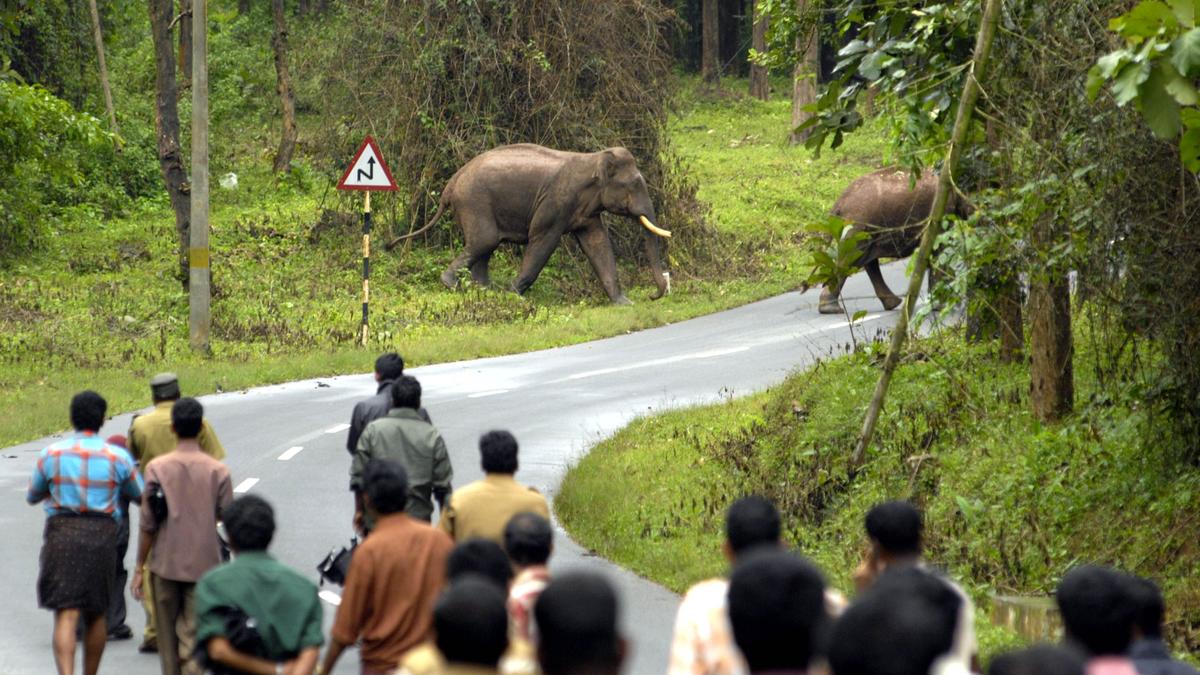

India’s countryside continues to witness a deepening crisis of human-wildlife conflict, with increasing instances of wild animals straying into farmland and towns that often results in deaths of both wildlife and people and calls to ‘contain’ animal numbers.
In many parts of Assam, Odisha, Karnataka and other States, farmers now regularly report herds of wild elephants entering paddy, sugarcane or banana fields during the night. The result: ruined crops, damaged fences, frightened families — and tension between survival and co-existence. According to a report by the World Wide Fund for Nature and the UN Environment Programme (UNEP), this kind of human-wildlife conflict has become “one of the main threats to the long-term survival of many emblematic species in India.”

As India’s infrastructural footprint expands — with roads, mines, urban sprawl and agriculture — natural habitats shrink and become fragmented. That fragmentation forces animals to cross into human-dominated landscapes in search of food or migration routes, raising the odds of conflict.
About 186 elephants were killed after being hit by trains across India between 2009-10 and 2020-21, according to the Ministry of Environment, Forest and Climate Change (MoEFCC).
As per the data furnished by the Project Elephant Division of the Ministry, Assam accounted for the highest number of elephant casualties on railway tracks (62), followed by West Bengal (57), and Odisha (27).
“Within a human lifetime, we have witnessed extraordinary and unprecedented changes to our planet,” warns Margaret Kinnaird, Global Wildlife Practice Leader at WWF Global. “Human–wildlife conflict, in tandem with other threats, has decimated species that were once common — and pushed rarer ones to the brink.”
Agriculture near forest fringes — especially water-rich, high-calorie crops such as banana or sugarcane — further draws elephants and wild herbivores into human fields, intensifying damage and retaliatory conflict.

Villages in the vicinity of several tiger reserves in India have seen instances of crop raids by nilgai, deer and bison, prompting calls by angry locals to declare these species as ‘vermin,’ which translates into a temporary licence by wildlife authorities to have them killed. India’s wildlife protection laws group several of these animals in the ‘Schedule 1,’ a category that accords them the highest degree of protection from hunting and slaughter.
Meanwhile, sensitive scavengers such as vultures suffer silently. Once numbering in the tens of millions across South Asia, several vulture species have seen catastrophic declines — over 95% in some species — driven by a combination of habitat disruption, poisoning from veterinary drugs, and disturbance around their traditional carcass-feeding sites. While numbers have stabilised in recent years, livestock and cattle wellbeing are far more prioritised and the vultures continue to live on the edge.
Editorial | Wild and safe: On growing human-wildlife conflict
Without vultures to dispose of animal carcasses, rural India has witnessed a rise in rotting carcasses, stray dogs, and associated public health risks. Some studies suggest this collapse may have contributed to increases in disease transmission and even human mortality.
National-level strategy
Recognising the urgency, the Government of India has rolled out a national-level strategy. The National Human-Wildlife Conflict Mitigation Strategy and Action Plan seeks to address key drivers of conflict — habitat fragmentation, damaged corridors, and retaliatory killing — by promoting mitigation measures, data-driven monitoring, and stronger habitat protection.
Also read: Waking to the call of the wild
Under such schemes, States have begun to restore traditional migration corridors, instal elephant-friendly fencing, improve community compensation for crop losses, and set up rapid response teams to manage conflicts when they occur. Conservationists emphasise that only integrated, landscape-level planning — combining habitat protection, community engagement and wildlife-safe farming practices — can arrest the downward spiral.
As India moves ahead with infrastructure and population growth, the pressure on its wild spaces deepens. The fate of elephants, vultures, and other species depends not only on protective laws — but on choices made by farmers, developers, and policymakers alike. Only by balancing human needs with ecological realities can India hope to safeguard its natural heritage — and ensure that the forest’s silence doesn’t become permanent.
Published – December 03, 2025 10:03 pm IST