




More than 1,500 academics have expressed grave concerns and held demonstrations in Kolkata to protest a Central government plan to repeal the Indian Statistical Institute (ISI) Act, 1959 and replace it with a Bill that, opponents say, will significantly alter the functioning of the institute “severely stripping it of its academic autonomy”.
The Kolkata-based ISI, founded by P.C. Mahalanobis and considered the gold standard of statistical research in India, is an institution that has pioneered novel approaches to population surveys and methods of statistical analysis. It is an Institution of National Importance, and offers undergraduate and postgraduate degree programmes in Statistics, Mathematics, Quantitative Economics, Computer Science, Library and Information Science, Cryptology and Security, Quality Management Science and Operations Research. With about 1,200 students across its centres, the ISI plays a key role in advancing India’s leadership in the statistical sciences and allied fields. It has centres in other parts of India.

The petitioners, in a written appeal to Rao Inderjit Singh, Minister of State, Ministry of Statistics and Implementation, have said that the proposed move “…disturbs the spirit of cooperative federalism” and “violates [the] basic spirit of the agreement between [the] Society and the government”.
The petition was drafted on November 12 but has not been reported about yet.
They argue that changes had been introduced without discussion with the faculty, and there had been no explanation as to why the current bylaws and governance framework required replacement.
The petitioners further warn that the Bill severely undermines academic autonomy as it enables the Board of Governors to override the decisions of the Academic Council, the current statutory authority on academic matters. Reducing this body of Professors and faculty representatives to a mere advisory group is seen as a direct threat to academic freedom.
Concerns have also been raised over the potential disruption of the ISI’s institutional identity and heritage. The Bill allows the headquarters to be relocated away from Kolkata — the institute’s historical location, tied to founder P.C. Mahalanobis — which the petitioners say may erase legacy and violate federal principles regarding the structure and governance of the ISI’s regional centres.

Financial provisions in the Bill also raise alarm, particularly the emphasis on revenue generation through student fees, and the commercialisation of research that “undermined” the ISI’s long-standing mission of public good, which includes free education with stipends that enable socio-economic inclusivity. Petitioners feared that such reform would dismantle the equitable access model and hamper long-term academic inquiry.
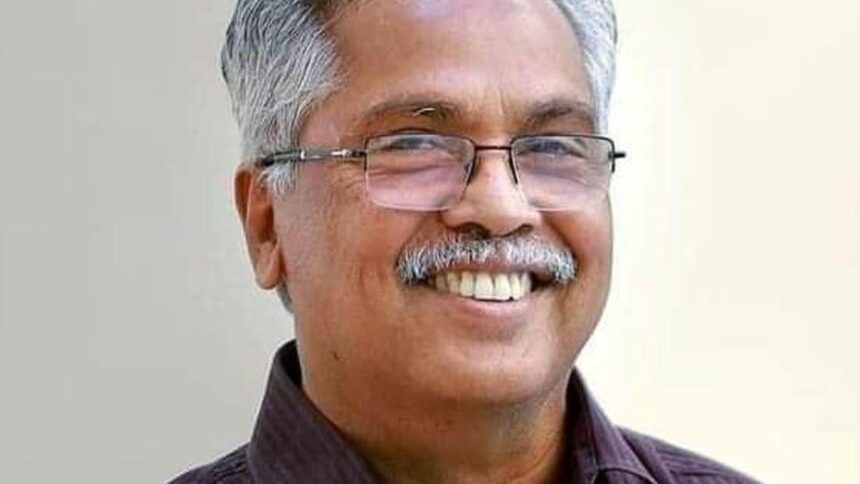
“A couple of days ago, about a thousand of us organised a street march in Kolkata, and we have been organising meetings protesting the Bill, but to no avail…the government seems hellbent,” Partha Majumder, geneticist, ISI Professor and founding Director of the National Institute of Biomedical Genomics, West Bengal, said. “The government wants to remove the autonomy of the institute and replace it with an autocratic regime,” he said.
The timing of the Bill’s introduction — amidst an ongoing leadership transition with no permanent Director — was “destabilising” for an institution engaged in major, ongoing developmental processes. The Bill also introduces, the petition said, a new process to appoint Directors, giving complete control to the government, bypassing established search-cum-selection mechanisms, and risking a politically influenced leadership.
The Bill is still open for public comments on the website of the Union Ministry of Statistics and Implementation, though it has undergone some “cosmetic changes”, Prof. Majumdar said. The Bill was first uploaded on the site on September 25.
Over the years, four review committees have examined the functioning of ISI, a press statement from the Ministry states. The most recent, chaired by R.A. Mashelkar in 2020, recommended “major reforms” to strengthen governance, expand academic programmes, and make the ISI globally competitive. The committee recommended that the ISI must “reimagine, reinvent and reposition itself to regain its leadership position and remain relevant in changing times as it reaches its centenary year in 2031”.
Published – December 03, 2025 10:47 pm IST