




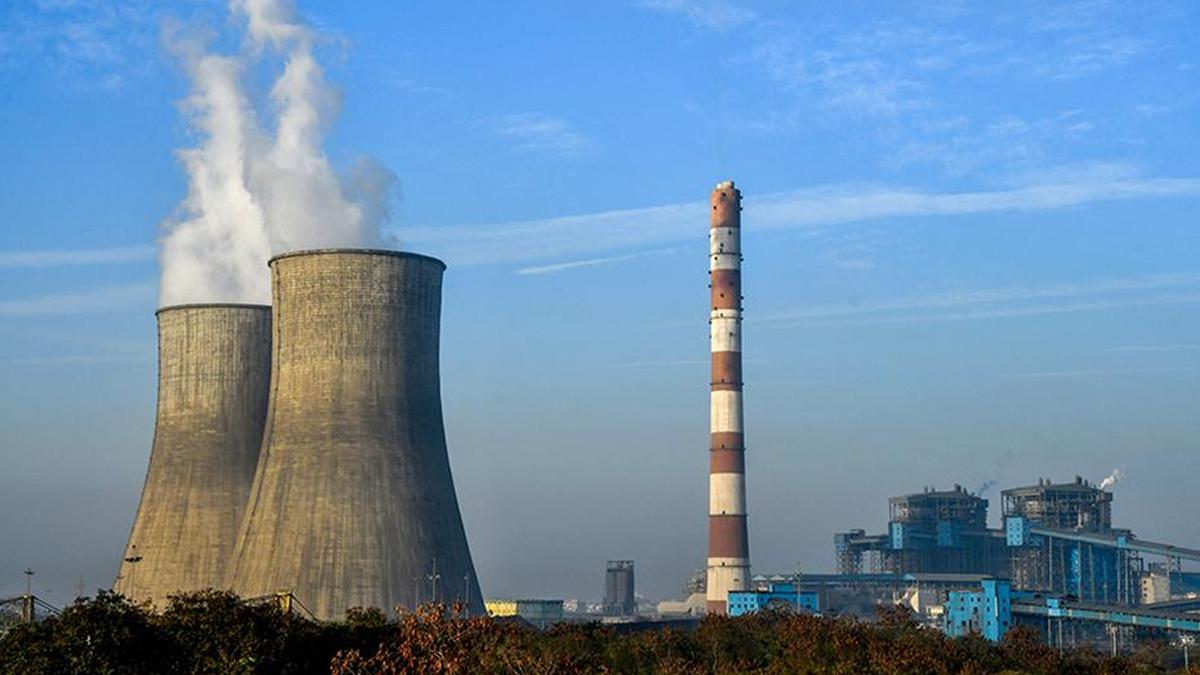

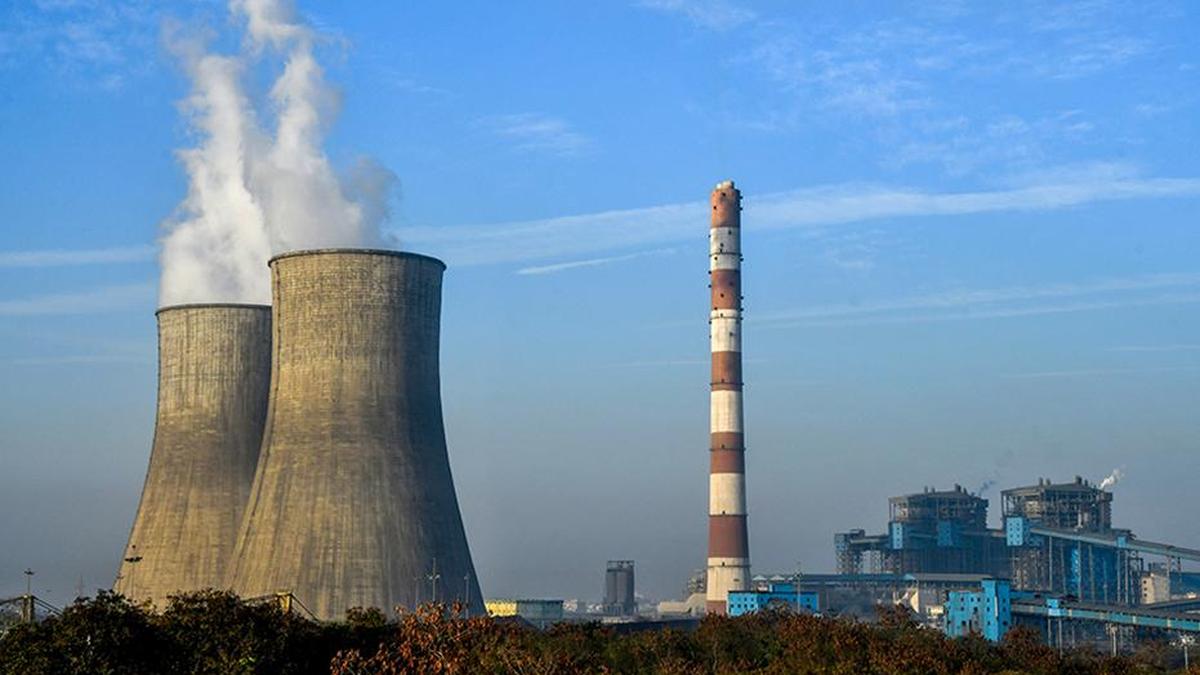
A thermal power plant releasing fly ash. File
| Photo Credit: NAGARA GOPAL
An effective strategy for distribution of fly ash is the need of the hour as effective utilisation avenues are already established, commensurating with the fly ash generation, says N. Kalidas, secretary, Institute for Solid Waste Research & Ecological Balance (INSWAREB).
In a letter to Chief Minister N. Chandrababu Naidu on Wednesday, Mr. Kalidas referred to the call given by the former for ‘effective utilisation of fly ash’. None of the Thermal Power Plants (TPPs) has dry ash collection system, commensurating with 100% of the demand. Transporting vehicles were being made to wait for prolonged periods at every TPP, killing the enthusiasm for production of ‘eco-friendly’ fly ash bricks.
He also alleged that the TPPs were indulging in mismanagement of fly ash deliveries to create ‘artificial scarcity’ with ulterior motives. He said that a good number of fly ash brick plants have been closed or slowed down their activity because of perennial hardships in fly ash supplies.
He sought that fly ash should be made available ‘as easy as clay’ to facilitate clay brick manufacturers to switch over to fly ash brick activity.
“Against the installed capacity of 7,010 MW in Andhra Pradesh, about 10 million tonnes of fly ash is generated, which can be consumed totally by the brick segment alone, if conducive delivery mechanism is ensured,” he said.
There are an estimated 8,000 clay brick kilns with an annual production of approximately 9.3 billion bricks in the State. This means even at 50% of penetration, 6.97 million tpa (tonnes per annum) of fly ash can be consumed at the rate of fly ash input of 1.5 kg per brick, only in the brick segment. If fly ash is available hassle-free, this can go up to the extent of 11.62 million tpa atthe rate of 2.5 kg per brick.
Fly ash brick can be manufactured with a strength of 30 MPa, which means it is as good as concrete. If infrastructure activities such as pavements, canal lining adopt fly ash bricks, 5.5 million tonnes of fly ash can be consumed additionally.
The cement industry is adding 20% to 25% of fly ash in cement as against the codal provision of 35%, for which insufficient fly ash availability is one of the reasons, he said.
Mr. Kalidas noted that INSWAREB was ready to assist the government in streamlining the above issues with a suitable action plan. Fly ash brick activity can be brought under one window to trade carbon credits to the tune of millions of tonnes with European or American States, he added.
Published – December 04, 2025 11:54 am IST