

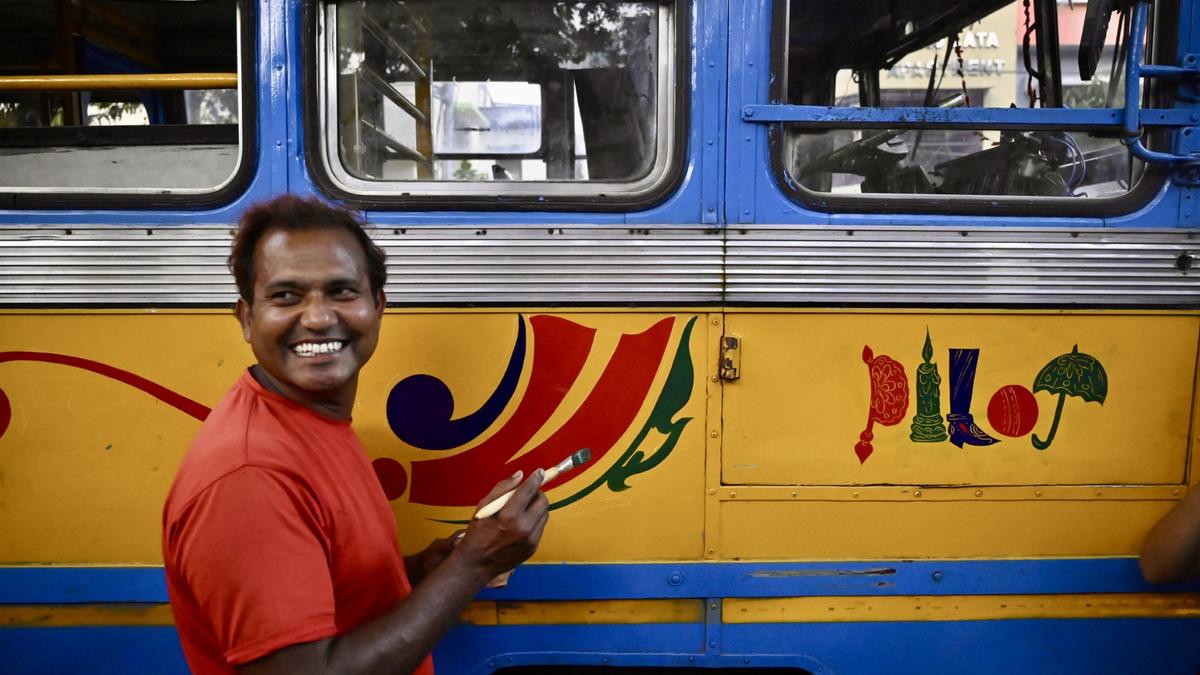

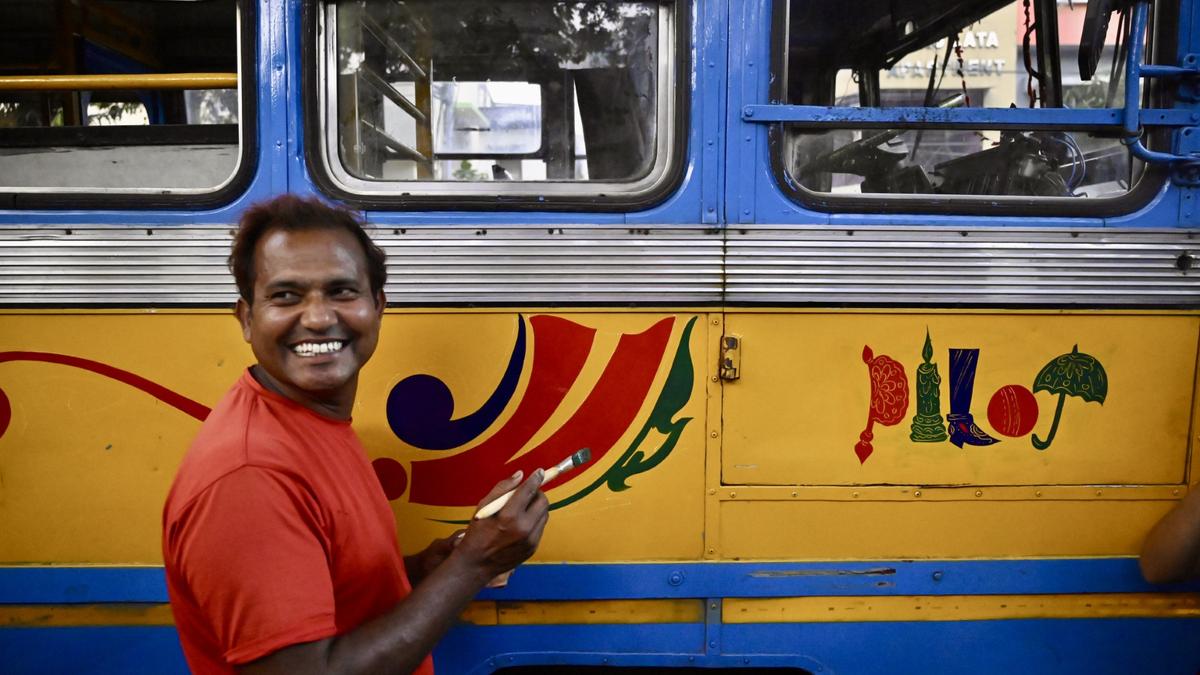
‘The City as a Museum’, which is into its fifth edition this year, will celebrate this humble mode of transport by converting the bus into a mobile installation and parking it at the different sites that will be part of this festival, organised by art company DAG to be held on December 6-15.
| Photo Credit: Special arrangement
While the tram and the yellow taxi often find mention in reels and writings depicting quintessential Kolkata, not much thought is spared for the blue and yellow bus that effectively forms the backbone of public transport in the city.
An annual event that sees the confluence of art and heritage, called ‘The City as a Museum’, which is into its fifth edition this year, will celebrate this humble mode of transport by converting the bus into a mobile installation and parking it at the different sites that will be part of this festival, organised by art company DAG to be held on December 6-15.
“Unlike private cars that signify privilege, the bus embodies shared motion, connecting diverse bodies and neighbourhoods within a single, continuous movement across the city — it collapses distinctions between elite and subaltern spaces. Artists, conductors, workers, and passengers all contribute to its visual and social identity. The ‘vehicular art’ painted across its body is not just decoration but a mode of popular communication and resistance, where marginalised voices make themselves visible within the bourgeois urban order,” Maitrayee Paul, one of the DAG volunteers associated with the bus event titled ‘Dekho Magar Pyaar Se’ (see, but with affection), said.
“The bus is metaphor of access — it allows entry, participation, and representation to those otherwise excluded from formal narratives of the city. Its routes thread through margins and centres alike, turning mobility itself into a democratic right to the city. Like many other cities in the world, the Kolkata bus is a performative archive — the painted slogans, literary references, apotropaic symbols, which transform the vehicle into a moving text, carrying fragments of political humour, poetry, and public sentiment through the streets,” Ms. Paul said.
According to Sumona Chakravarty, Vice-President (Museums) of DAG, the interior of the bus will be transformed into a travelling bioscope by artist Pavel Paul and his collaborators. Instead of focusing on monumental views of landmarks, however, the multichannel video installation will engage with the complex and sometimes forgotten histories of eight sites that the event will move to, including Kalighat, Victoria Memorial, and Sealdah Station. The exterior, she said, will bear satirical images and handbills created by Sumantra Mukherjee and his fellow artists, commenting on the contemporary experiences of the city with “playful and acerbic humour”. The DAG held a workshop on bus art during the 2023 edition of The City as a Museum and that, she said, was the starting point of this idea for a mobile installation.
“The Kolkata blue and yellow bus is by now almost as iconic as its yellow taxi, but what sets it apart is the way in which it has always been used as a canvas for tongue in cheek commentary on everyday life through painted images and texts. This project was specially commissioned to celebrate the milestone fifth edition of The City as a Museum festival. The bus will accompany us as we travel to eight iconic landmarks over 10 days, and invite the people we encounter across the city to step inside and explore Kolkata through fresh perspectives,” Ms. Chakravarty said.
Published – December 04, 2025 06:38 pm IST