




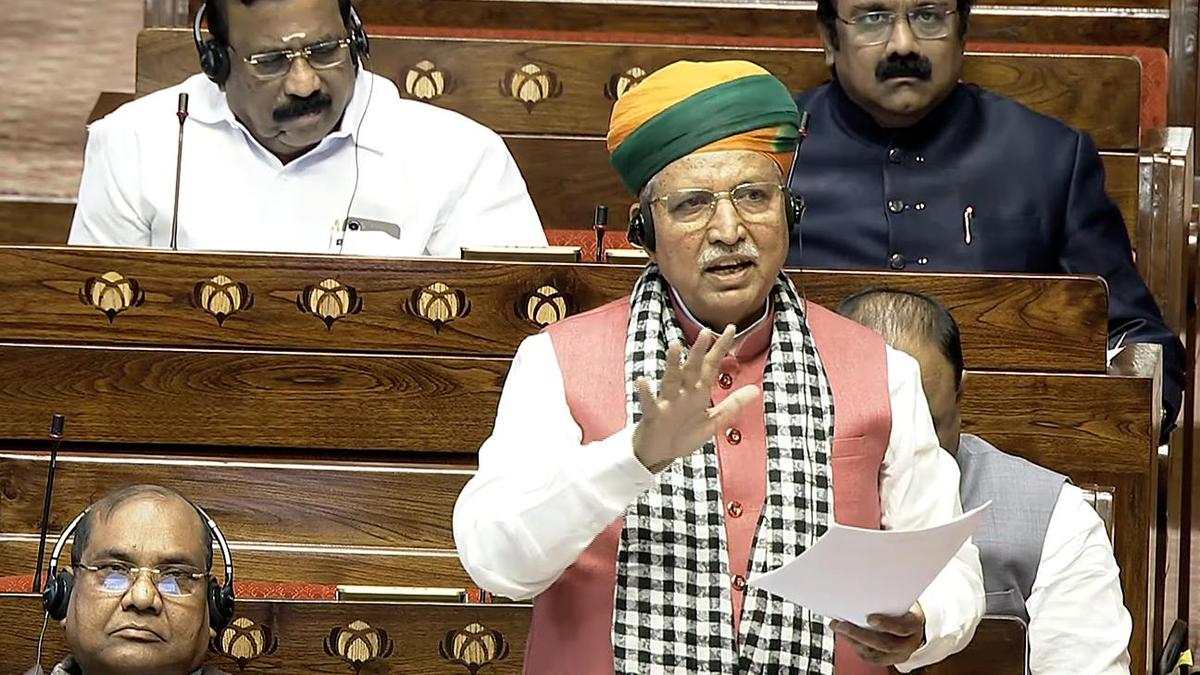

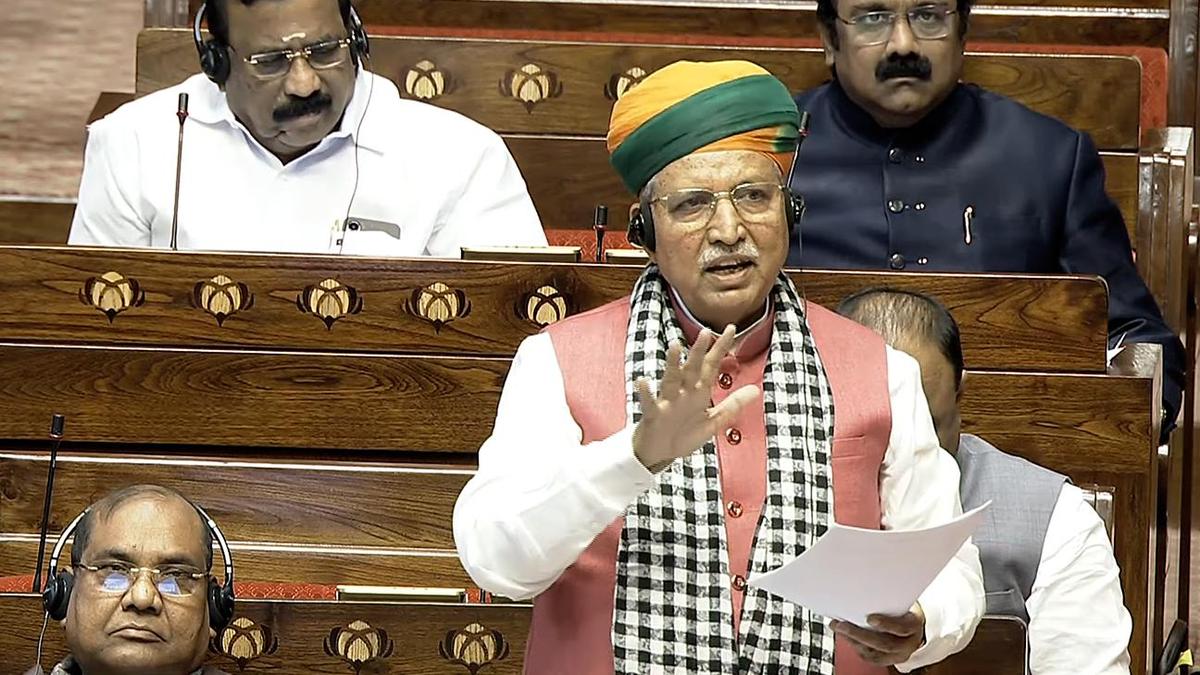
Union Minister Arjun Ram Meghwal speaks in Rajya Sabha during the Winter session of the Parliament, in New Delhi on Thursday, December 4, 2025.
| Photo Credit: Sansad TV/ANI Video Grab
Law Minister Arjun Ram Meghwal said on Thursday (December 4, 2025) that rapid urbanisation and frequent migration were the likely causes of irregularities in the voter roll.
Mr. Meghwal was responding to Shiv Sena (UBT) MP Sanjay Raut, who asked if the government had taken cognisance of allegations of large-scale voter roll irregularities, including duplicate, deleted and fake entries reported in states like Karnataka, Maharashtra and Bihar. The MP also asked about steps being taken by the Election Commission (EC) to verify, update, and audit electoral rolls to ensure accuracy and prevent manipulation before the upcoming elections.

Details were also sought about the verification mechanism to enhance transparency in the voter list revision process and measures being implemented to ensure electoral integrity, data security and accountability of officials involved in voter roll management and election preparedness.

Additions and deletions
In a written reply, Mr. Meghwal said, that according to the EC, significant changes have occurred in the electoral roll over the last 20 years due to additions and deletions on a large scale.
“Rapid urbanisation and frequent migration to pursue education, livelihood, and for other reasons, are now a given. Some electors obtain registration in one place and then shift their residence and register themselves at another place without getting their names deleted from the electoral roll of the initial place of residence. This has led to an increased possibility of repeated entries in the electoral roll,” the Minister said.
He added that this warranted an intensive verification drive to verify each person before enrolment as an elector. Therefore, the Commission had ordered Special Summary Revision starting from Bihar, which has now been extended to other states.
Mr. Meghwal said political parties are being involved in the process, and the electoral roll has been shared at the draft publication and final publication stage.
The EC is also inviting claims, and objections from the public and a system of supervision and checks to maintain the quality of the rolls is in place. The guidelines also mandate the display of claims and objections on the Electoral Registration Officer’s (ERO) notice board and Chief Electoral Officer’s website along with a detailed schedule of press notes and advertisements published during the revision process for public awareness.
“The First Appeal against any decision of the ERO is placed before the District Magistrate; and the second appeal before the Chief Electoral Officer,” the Minister said.
Published – December 04, 2025 09:28 pm IST