


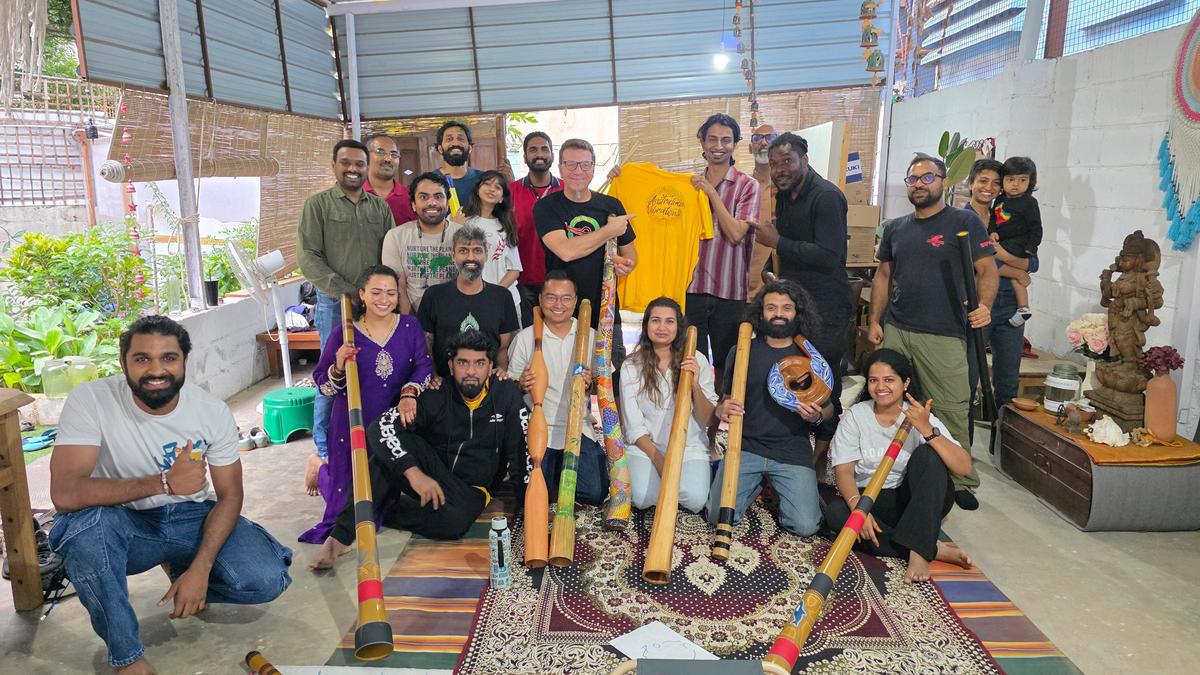

Recently, the Bangalore Creative Circus at Yeshwantpur held a Sound Healing Session featuring instruments such as the didgeridoo and Tibetan singing bowls. While guitars and pianos are commonly taught, there are many unusual and lesser-known musical instruments that artistes, teachers and communities in the city perform with. A look at a few of them:
Digeridoo
A didgeridoo is a cylindrical or conical wooden tube that produces sounds of different frequencies when played. It was originally developed by the Aboriginal peoples of northern Australia more than a thousand years ago. Didgeridoo India is a community space founded by artistes Brandon Colaco and Akash Dayal. Brandon, who has been playing and crafting the instrument for 15 years, says, “We initiated this program in 2020 to bring together those who play or have an interest in learning the didgeridoo.”
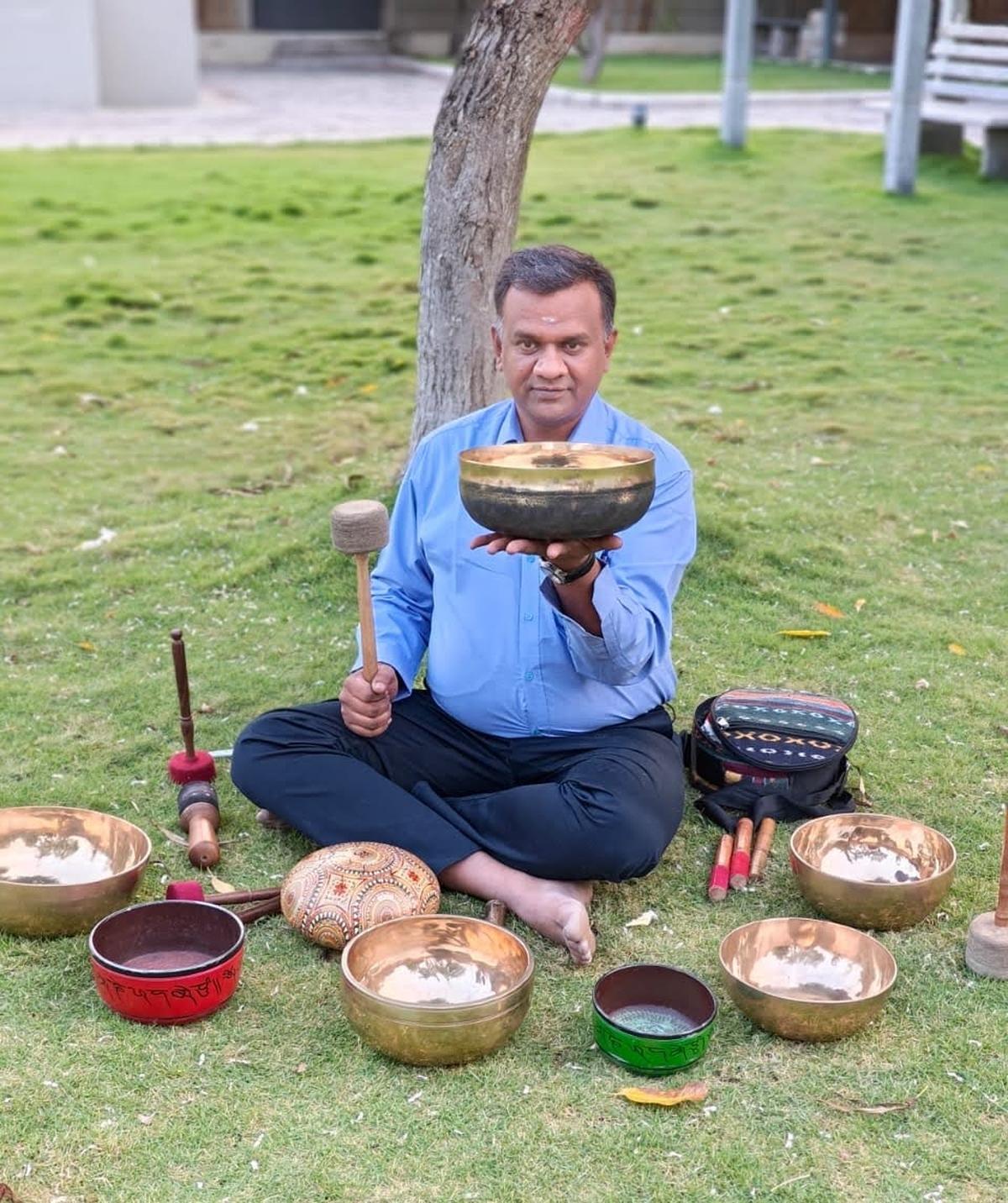
Tibetan singing bowls
| Photo Credit:
Special Arrangement
The platform hosts didgeridoo artistes from around the world through both online and offline sessions, workshops and community gatherings in Bengaluru, Goa and Pondicherry. Brandon says, “Bengaluru has the highest number of people who show up with their own didgeridoos. These community gatherings are open to not only didgeridoo players, but also those interested in the instrument.” The community gatherings also serve as a unique space that caters to learning to play the didgeridoo through interaction and participation.
The group can be contacted through their official Instagram page Didgeridoo India
Harmonica
Also known as the mouth organ, the harmonica has a long history, starting in China. One need only blow across the reed wind instrument to produce sound and it is one of the easiest and most affordable instruments to pick up. Uttunga Guru who is currently pursuing her CA articleship plays the harmonica as well the melodica. “I started playing the harmonica in sixth grade during a summer camp in school. Within two to three classes, I was able to play nursery rhymes, so it is not that hard to play.” There are different types of harmonicas such as the tremolo and chromatic, and can be used in different genres such as the blues, Carnatic, jazz and rock.
Bengaluru has a few options in Bengaluru where one can learn the harmonica. Saitejas Chandrashekhar is a full-time harmonica artiste who takes both online and offline harmonica classes throughout the week. The classes are open to anyone above nine years; however offline classes at Vidyaranyapura are not open to beginners.
Saitejas who has been playing the harmonica for the past 30 years says learning to play the harmonica can be quite beneficial for those learning classical Carnatic vocal.
For more details, contact: 9880590084
Another place to learn the harmonica is the Geetanjali Harmonica Institute of Music. With branches in HSR Layout and Electronic City, one can avail of harmonica classes on Saturdays.
For more details, contact, 9880247496
Handpan
The handpan is made of two conclave steel shells which produce musical notes when struck, and are usually used during sound healing sessions. Founded by former software engineer Chirag Vaitheeswaran, Chirp Handpans crafts and conducts various handpan workshops in Bengaluru. Chirag says, “When I saw this instrument for the first time in 2013, I wanted one for myself but it was extremely hard to source. So I took it upon myself to fill this gap and make this instrument more available and accessible.”
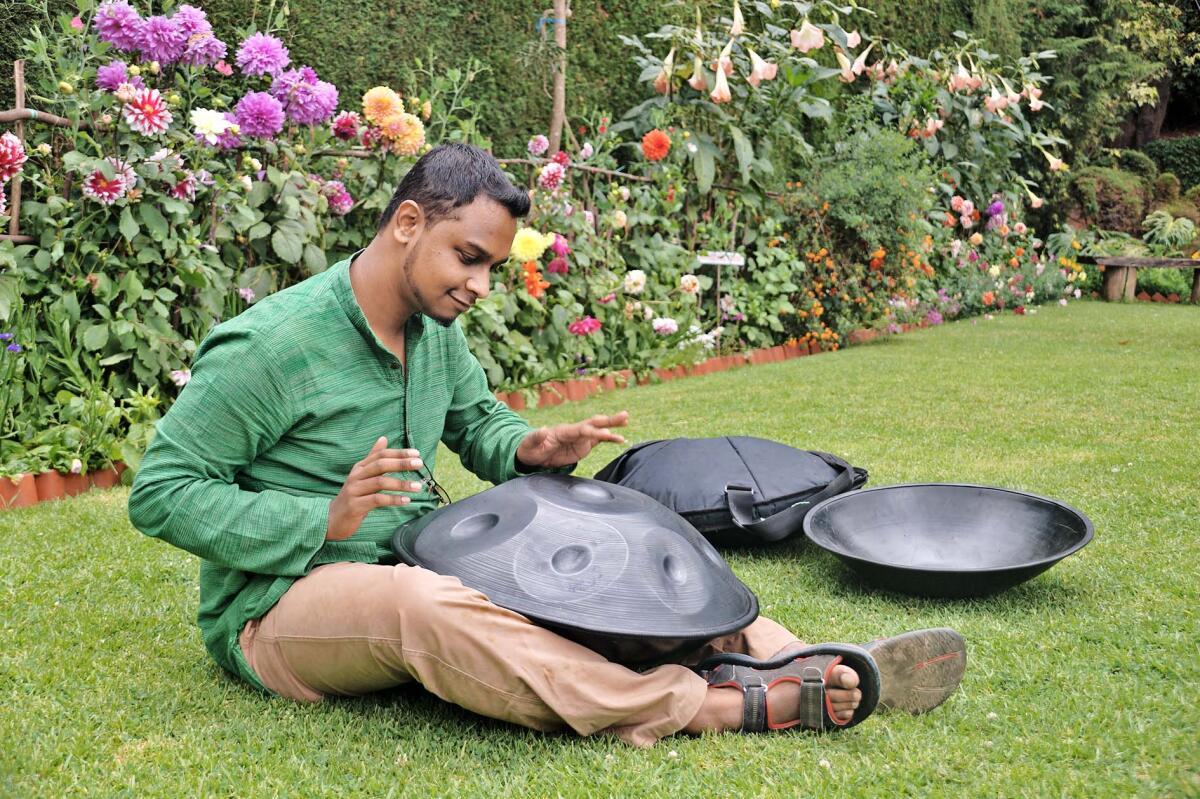
Chirag Vaitheeswaran with his handpan
| Photo Credit:
Special Arrangement
Chirag now crafts handpans as a full-time job and organises workshops where the instrument is taught at various locations in the city. While they are organised at Sabha Blr in Sivaji Nagar and Ojas Yoga Academy in Rajarajeshwari Nagar, more often than not, they take place at the Studio Beat Roots in Jayanagar. Music festivals are also held to provide an immersive experience of this instrument.
He adds, “The handpan is one of the easiest instruments to learn. Unlike the guitar or keyboard where there are notes and scales you need to learn, the handpan is fretless — one does not need to know the position of notes because it is in a single scale. All you need is a basic sense of rhythm.”
There are no age restrictions to participate in these workshops. For more details visit their Instagram page chirp.handpans or contact: 96327 85544
Harmonium
One of the first reed-organs that arrived in India was the harmonium. With keys and an air-pumping apparatus, the harmonium is both a stringed and percussion instrument. Sudheeksha Easwar learnt to play the harmonium on her own since she already knew how to play the keyboard. She says, “If you are a beginner, I would suggest taking either offline or online classes to learn faster.” Many centres in Bengaluru such as the Geetanjali Harmonica Institute of Music in HSR Layout, Sangeetha Dhama in JP Nagar and First Chord Music and Art School located in Banaswadi, teach the instrument.
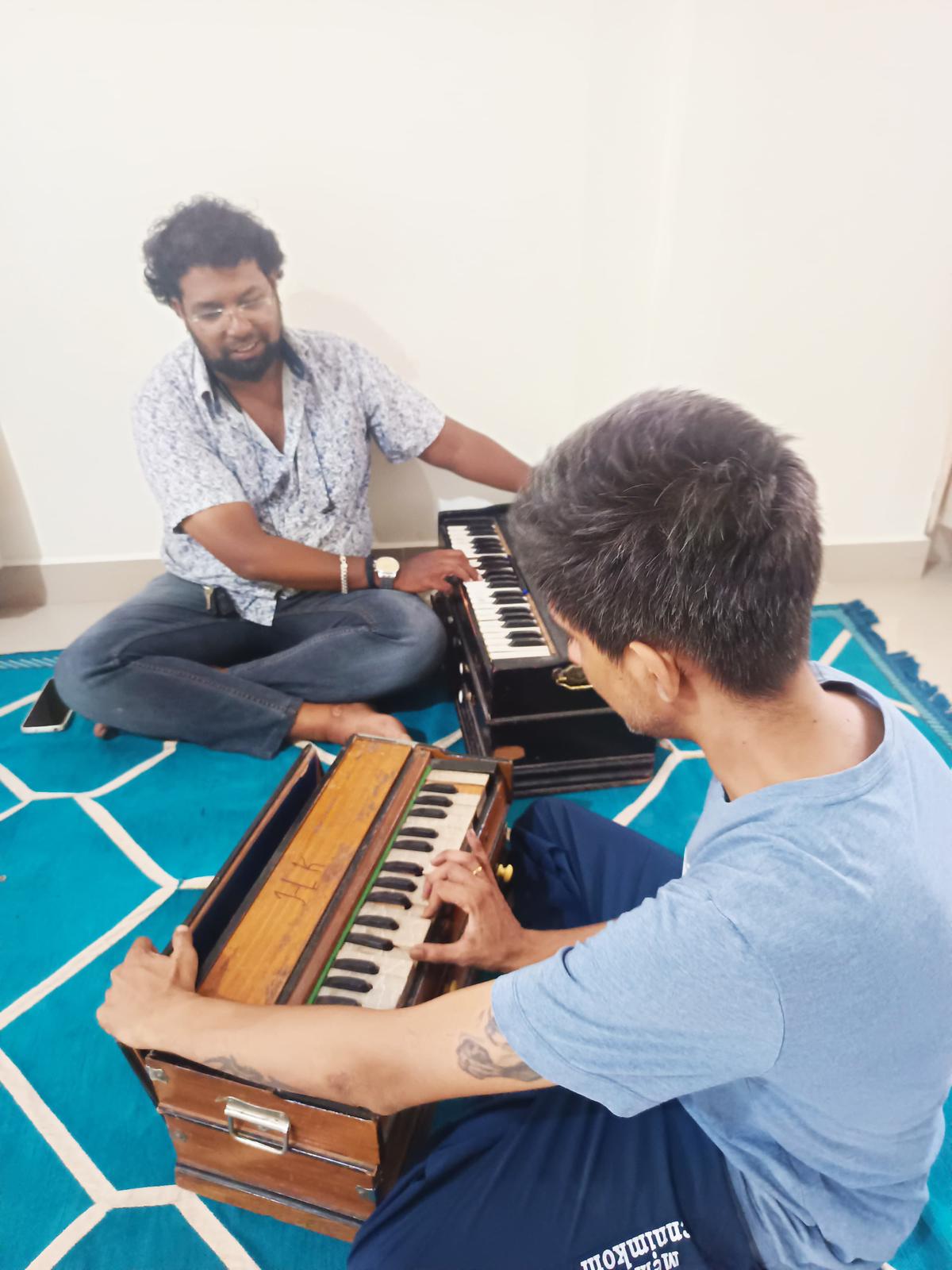
A student learning the harmonium
| Photo Credit:
Special Arrangement
Melody makers
Tibetan singing bowls: Traditionally spotted in Buddhist monasteries, Tibetan singing bowls are a set of brass bowls of different sizes and thicknesses. They are used in sound therapy sessions owing to the calming sounds the bowls produce when their rims are rubbed or struck.
Sea rattle: The sea rattle is another unusual instrument. Much like a ghungroo, it is made of made of kohl seeds which are the pods of a climbing vine that grows in tropical rainforests.
Asalato: This West African percussion instrument is made of two hollow shells connected by a string. Traditionally it is made with gourds. They are filled with pebbles and this creates an unusual sound when shaken.
Published – December 05, 2025 02:00 pm IST