




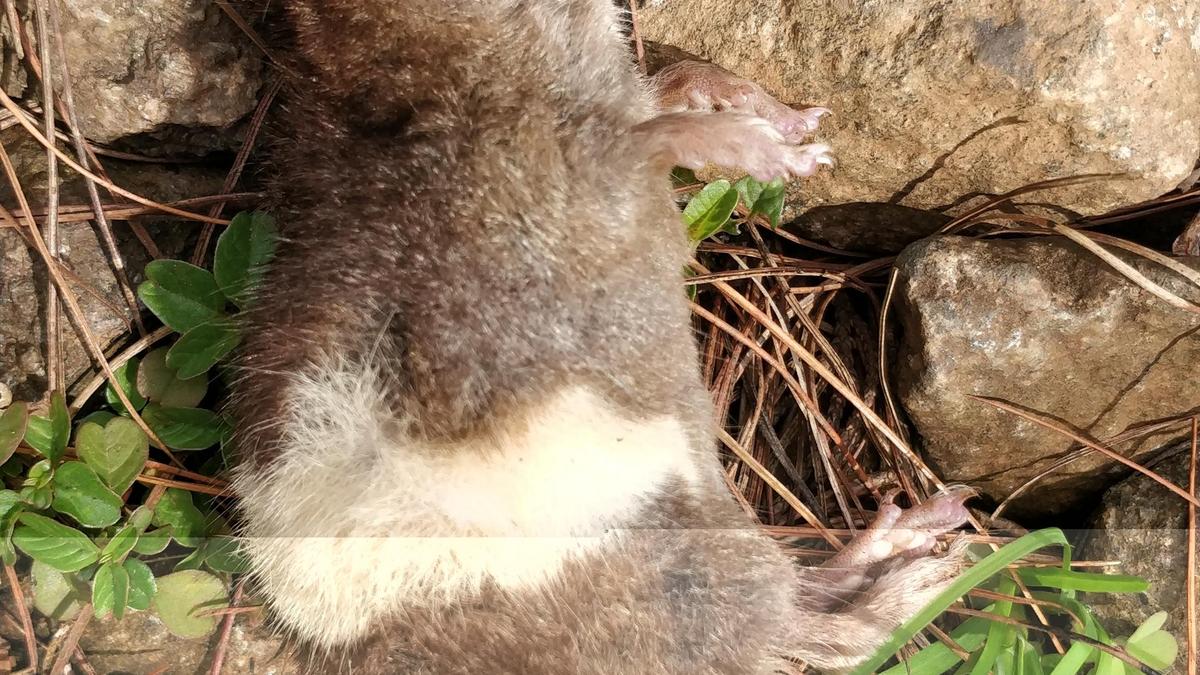


The dead shrew phophotographed near the Ooty Lake in Udhagamandalam was morphologically distant from the other shrew species encountered in the region, such as the Asian highland shrew, the Asian house shrew, the Indian highland shrew, and the Kelaart’s long-clawed shrew.
| Photo Credit: SPECIAL ARRANGEMENT
A chance photographic record of a shrew species in the Nilgiris, which was thought to have been extinct, has stoked enthusiasm among local wildlife biologists in trying to “rediscover” the species.
The Sonnerat’s shrew (Diplomesodon sonnerati) was described in 1813 near Puducherry by French naturalist Pierre Sonnerat. So far, no specimen of the species has ever been collected; only Pierre Sonnerat’s description of the species attests to its existence.
On October 1, 2022, wildlife biologists and researchers working in the Nilgiris photographed a dead shrew near the Ooty Lake in Udhagamandalam. It was morphologically distant from the other shrew species encountered in the region, such as the Asian highland shrew, the Asian house shrew, the Indian highland shrew, and the Kelaart’s long-clawed shrew.
“The individual exhibited silky grey fur with a transverse white band across the mid-body and a stout, stubby tail consistent with the description of a female D. sonnerati,” said authors N. Moinudheen, A. Samson, M. Shahir, A. Abinesh, and R. Brawin Kumar. Their record was published in the open-access, peer reviewed scientific journal Iranian Journal of Animal Biosystematics. It was titled, “Rediscovery of an ‘extinct’ endemic mammal Sonnerat’s Shrew in Nilgiris, Tamil Nadu.”
The researchers shared images of the shrew with experts like Anthony Cheke, who in turn sought expert opinion from Paula Jenkins of the Natural History Museum in London. Both Cheke and Jenkins noted that the pelage patterns of the specimen were unique and were unlikely to have been caused by partial leucism.
Despite the findings, the researchers failed to collect the specimen, meaning that its “rediscovery” cannot be confirmed. Repeated attempts to find more individuals have proved unsuccessful. They said that as the individual photographed was around 350 km away from where it was first described, they had not ruled out that it could have been accidentally transported from a lowland habitat.
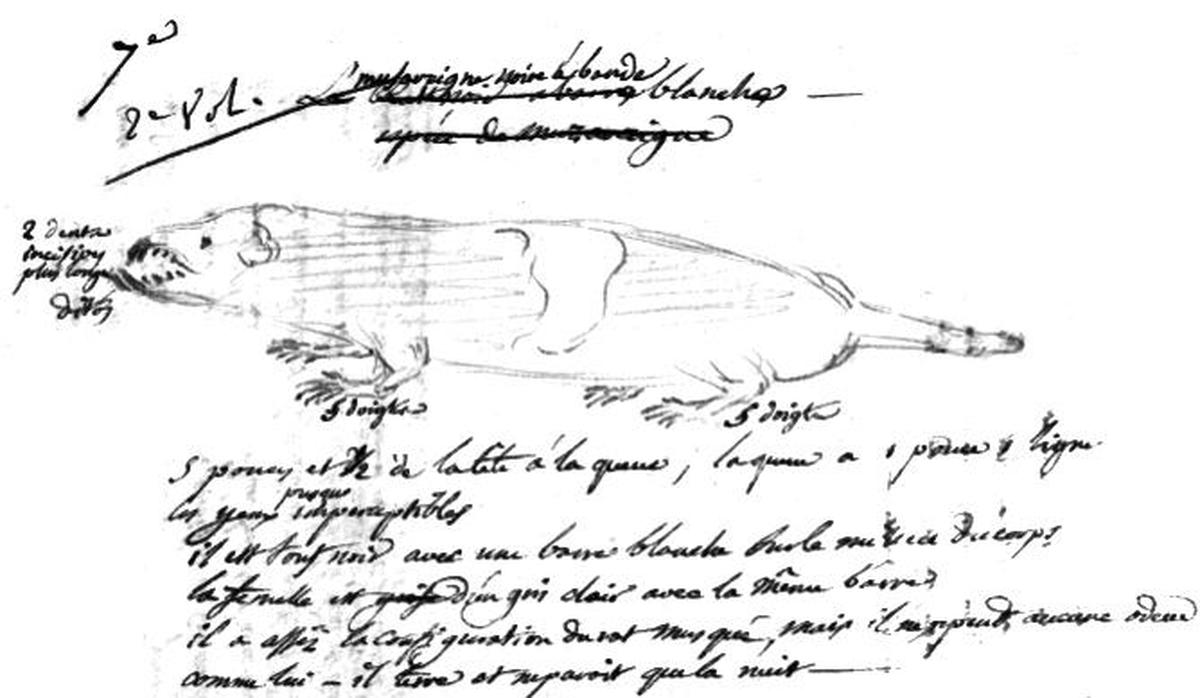
The Sonnerat’s shrew was described in 1813 near Puducherry by French naturalist Pierre Sonnerat. So far, no specimen of the species has ever been collected.
| Photo Credit:
SPECIAL ARRANGEMENT
“The possible rediscovery of the species in the Nilgiris could indicate a broader, under-documented range, reflecting the very little understood habitats of the species. Suitable habitats for the shrew could occur in the Eastern Ghats and the Nilgiris foothills, suggesting potential dispersal corridors. Focused trapping efforts in these regions across multiple seasons, combined with genetic analysis, are needed to confirm the rediscovery of the species,” Mr. Moinudheen said.
“Though this is not a taxonomic revision or molecular confirmation, it is a high-confidence photographic record which has been reviewed by experts from across the world. They agree that it does not resemble any known Indian species… Yet, its significance is undeniable — a creature thought gone forever could persist in the wild,” he added.
“This is the first credible scientific evidence of Sonnerat’s shrew in more than 200 years. The distinctive pelage pattern seen in the Nilgiris specimen does not match any known Indian shrew, which is why international experts consider it a high-confidence record. The finding also highlights a significant biogeographic gap between Pondicherry and the Nilgiris, suggesting that the species may have a wider, previously undocumented range. Confirming its identity will require genetic samples, and our team has initiated expanded surveys across the Nilgiris, the Eastern Ghats, and the historical type locality,” said Samson Arockianathan of the Bombay Natural History Society.
Published – December 05, 2025 08:13 pm IST