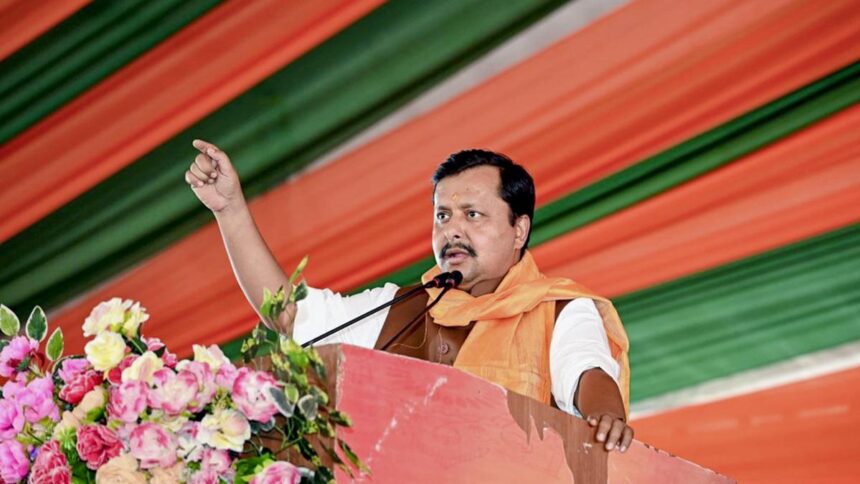


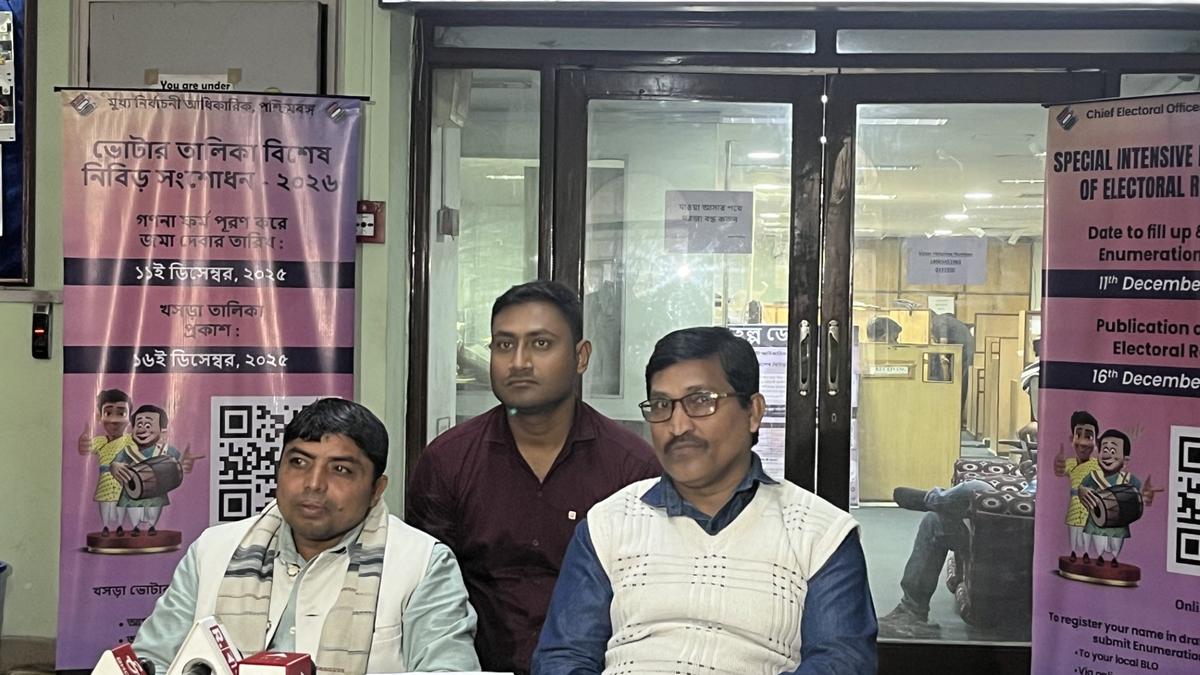

Mrityunjoy Mallick and other activists of the Scheduled Caste Federation at the office of the Chief Electoral Officer of West Bengal in Kolkata on Saturday.
| Photo Credit: Moyurie Som
Representatives of marginalised communities appealed to State election officials for the simplification of rules of the ongoing Special Intensive Revision (SIR) of electoral rolls for around people belonging to scheduled castes, scheduled tribes, Matua and other deprived communities who are at risk of losing their electoral rights for the lack of identification documents.

“The scheduled caste vote in the State is roughly 34%. Of them, there are over a hundred sub-castes. Nearly 30 to 40 lakh people from marginalised communities, we believe, will be unable to produce any documents to prove their rights as electors. So we have appealed to the Governor and to the election officials to simplify the rules of SIR for these communities,” Mrityunjoy Mallick, national president of the Scheduled Caste Federation, said at the office of the Chief Electoral Officer of West Bengal in Kolkata on Saturday (December 6, 2025).

He added that they came to demand the protection of the rights of marginalised people on Mahaparinirvan Diwas, observed on December 6 every year for the death anniversary of Dr B.R. Ambedkar.
In a letter to the Chief Election Commissioner, the organisation appealed for marginalised people to be able to link themselves to any relative across their extended family whose name is present in the electoral roll of 2002. For context, during SIR, electors who can trace their own names or the names of their parents in the 2002 list would automatically qualify for the draft voter roll.
“We have demanded that for marginalised people, if any familial connection through grandparents, aunts, uncles, cousins, etc, is found in the 2002 list, their electoral rights be protected as long as they are alive. Especially for people like the forest-dwelling Adivasis, the Rajbanshis, the nomadic Bede community, the sanitation workers, the cremation workers, for whom resources and documents are sparse,” Mr Mallick said.
He added that many people from marginalised communities are born inside homes and lack birth certificates.
“The list of 12 indicative identification documents also includes caste certificates, domicile certificates, land deeds, etc. We urge the Election Commission to organise camps so that marginalised people who do not have these documents can get them done,” the activist said.
In their letter, the Scheduled Caste Federation has also appealed for consideration towards married women whose surnames might not match their names in the 2002 list, and towards people who have been displaced across West Bengal, especially due to embankment breaches.
“There have been various instances of displacement and socioeconomic deprivations that have led to people from marginalised communities not possessing or losing their identity documents. These people are in a perpetual fight to secure their lives and livelihoods. They haven’t had the time to think about documents all this while,” Mr Mallick said.
He added that the voters who are living and have cast their vote between 2002 and 2025 towards the formation of the current Union government and State government, “must be protected.”
As of December 6, 99.43% enumeration forms from 7.66 crore electors have been successfully collected and digitised. On Saturday, the number of ‘uncollectable’ forms of dead, shifted, duplicate or absent voters crossed 55 lakhs.
Published – December 07, 2025 01:40 am IST