







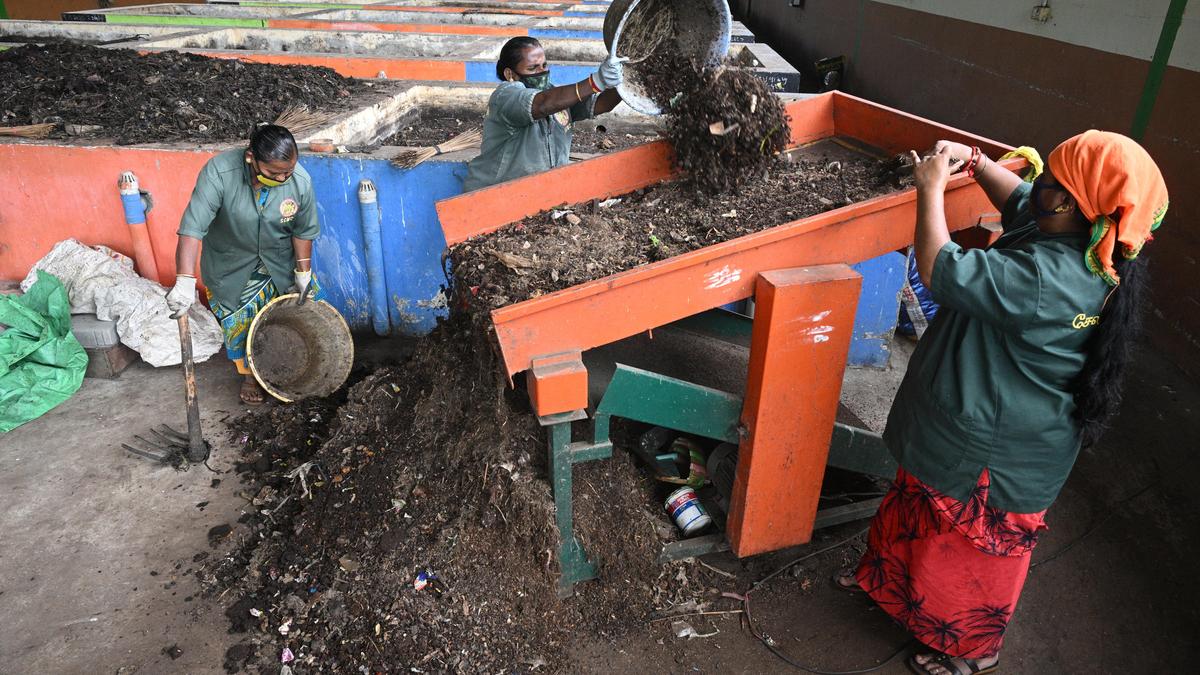

The monsoon brings life to our gardens, but can also leave compost bins waterlogged. Residents on how not to compost during the monsoon
‘Do not give any chance for water to enter the bins’
The adoption of waste management initiatives in a community depends on how they are implemented, perceived and sustained. That is lesson from The Summit, a 30-flat apartment complex at 1st Avenue in Sastri Nagar, Adyar.
In 2019, Latha Mahalingam spearheaded an initiative to ensure no wet waste leaves the gates of the apartment by persuading the association to invest in in-situ composting.
“It was around the same time that Greater Chennai Corporation was insisting that communities (those that came under the bulk waste generator category) take care of the waste they generated, so that gave a huge impetus to my campaign,” says Latha, secretary of The Summit Apartment Owners Association.
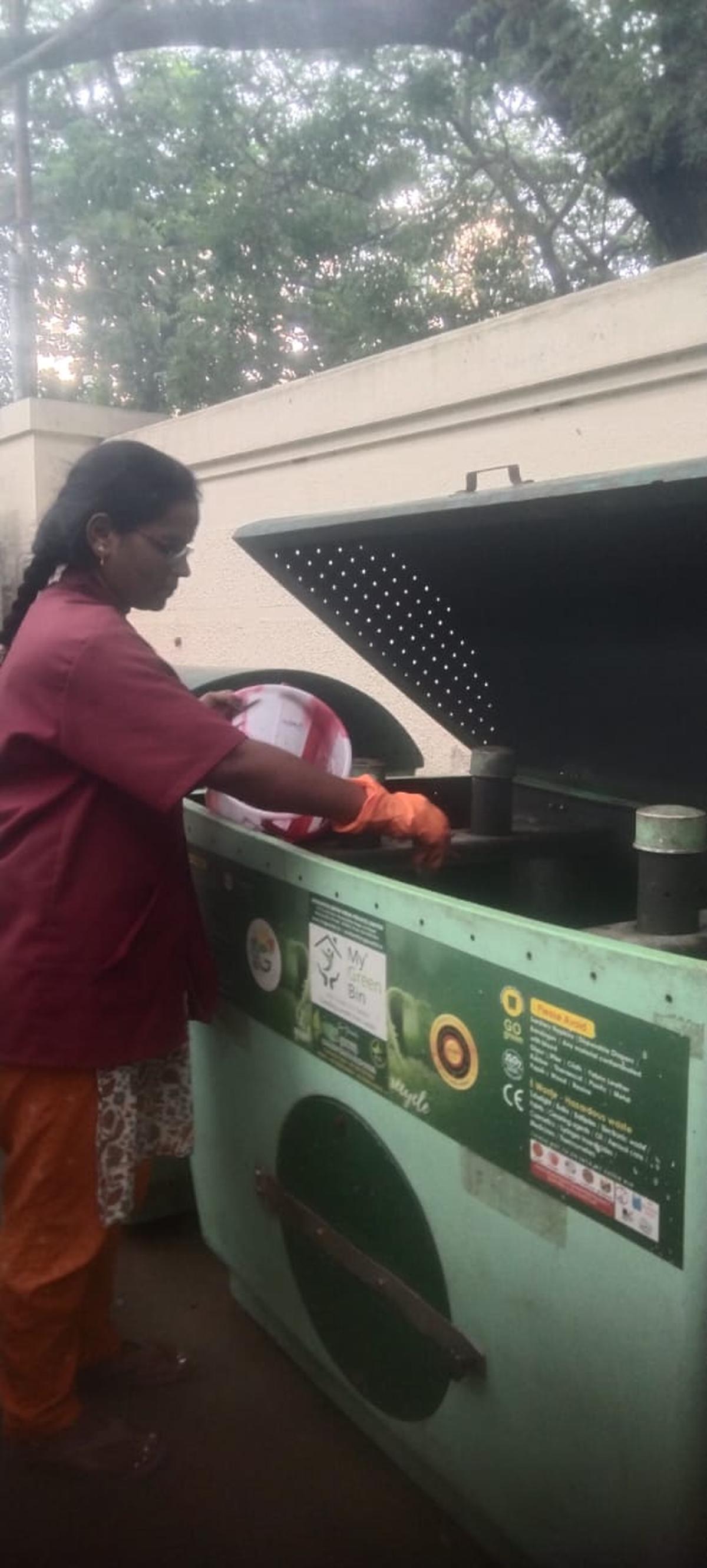
After carrying out a study of apartments in Adyar where composting was adopted, two 800-litre My Green Bins were bought to the community. From flyers to messages on the WhatApp group, segregation of waste was emphasised strongly. The housekeeping team was trained on steps they needed to take once waste was collected.
The community has been religiously composting waste; even during pandemic and heavy rains they never gave the bins a rest.
The apartment is at a higher level than the road, so even during floods they never faced an issue. The bins on wheels are kept at a height, ensuring no water enters them.
Latha says regular maintenance and follow-up are reasons the initiative is still going strong. The compost bins are cleaned after every cycle.
During monsoon, The Summit’s housekeeping team ensures the harvested compost is used. “Earlier we used to take it to the terrace and dry it. Now, we empty it directly on the ground or give it to the plants,” she says.
Another golden rule they follow is ensuring the lid is closed tight and giving no scope for water to enter. The bins do not even have a roof over their head.
“Now I have relinquished my position from this and the facility manager, Chenniangiri K takes care of everything. It about setting every in place for the right culture to set in,” she says.
‘Used mud pots can do wonders’
For Deephika S. and her extended family residing in Perambur, composting during monsoon does not pose any additional challenge due to various strategies they have adopted over the years.
Besides the kitchen waste that is generated from the independent house, the family composts dog poop from its two pets and vegetable waste received from two pushcart vendors who conduct business in the area.
A 4×2 feet pit dug on the ground and closed with a wooden plank serves as the bigger compost pit, but this is only put to use when the mud flower pots, six to seven of them, that are used as compost ‘bin’ are full.
“During rains, we ensure there is no soil erosion from the pots so an extra layer of soil is added,” says Deephika, a Chartered Accountant by profession.
The family’s experience from their own backyard shows that composting is quicker during monsoon as long as there is no water stagnation. “Moisture is a friend of composting, so the process happens as in other seasons; only that we need to ensure the right balance,” she says. On slightly sunny days, remove the cover to let the compost breathe. Proper aeration prevents the compost from becoming soggy and supports effective decomposition. The family members also ensure the drainage holes in the compost bin are clear to let excess water escape. This prevents the compost from becoming soggy. The pots are under a shade and layered with cocoa peat and kept for breakdown. “We did not find much success with readymade bins sold in the market, which sometimes leaves behind a smell. I find the red pot the best bet for composting as it has a lot of moisture content and air circulation is also good,” says Deephika adding that they grow a variety of greens, brinjal, tomatoes and lemon. The ‘black gold’ generated after a month goes back to their own plants. “We noticed the quality of compost being good when it is made with fruits and vegetable waste alone,” she says.
What the experts say:
‘Maintain the right ratio’
One key factor to keep in mind while composting this time of the year is to ensure carbon and nitrogen ratio is 30:1. Most of the waste that we generate at home contains more of carbon, so add nitrogen supplement either through cow dung slurry or urea (depending on the kind of composting you are following). If your site is in an open space, ensure it is covered but do leave it open at times when it is slightly sunny. Smell is a challenge most people complain during monsoon, so make sure there is no water stagnation as leachate leaves a foul smell.
Having a compost heap of one metre height is ideal to kill pathogens and it helps in the decomposing process.
E. Parameswari, professor in Environmental Science, Tamil Nadu Agriculture University
‘We make sure water does not stagnate in compost pits’
Water does not generally enter the compost pits kept in Greater Chennai Parks mainly because how they are placed. In rare instances, water from these pits are diverted to sponge parks or outside. We should monitor and prevent water stagnation in the compost pits, as it affects the composting process and may lead to anaerobic conditions, making for a foul smell.
N. Nireshkumar, Superintendent of Park, GCC
Published – December 08, 2025 02:22 pm IST