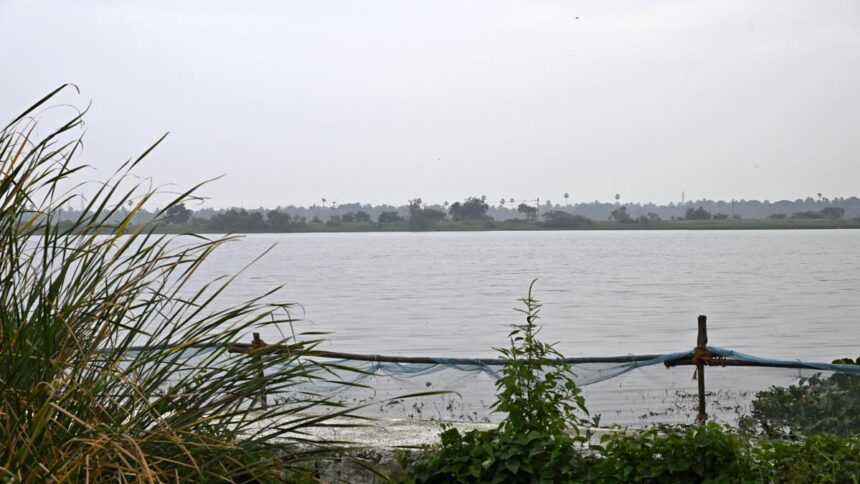



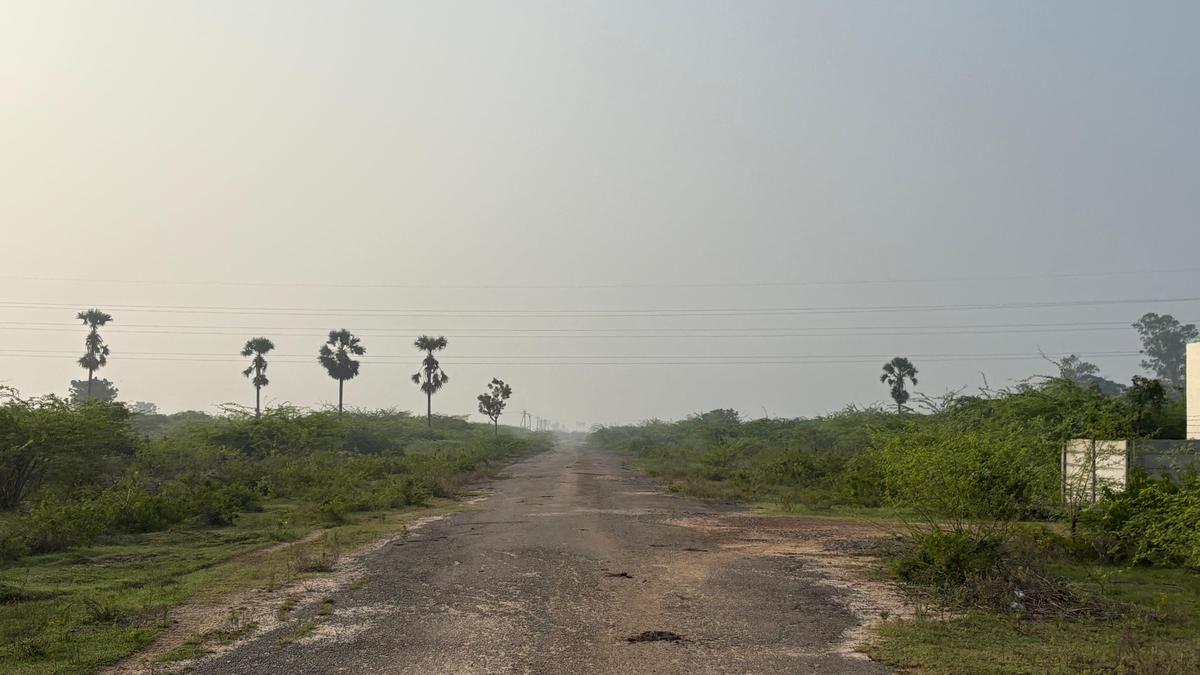

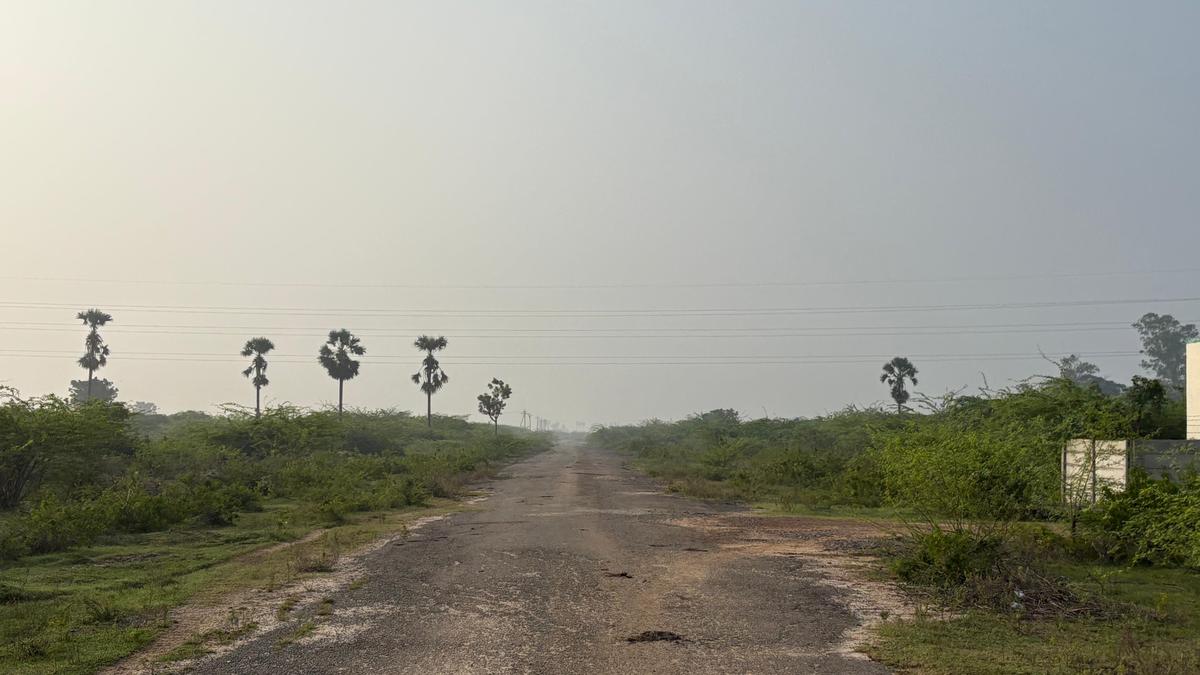
Inside the 597-acre PIPDIC industrial area at TR Pattinam in Karaikal, which remains largely under-utilised.
| Photo Credit: Special arrangement
The Industrial Growth Centre promoted by the Puducherry Industrial Promotion Development and Investment Corporation (PIPDIC) in TR Pattinam, Karaikal has evoked a lukewarm response from entrepreneurs and industries, primarily due to to poor infrastructure.
The centre at Polagam was once conceived as a flagship industrial hub but decades later, only a fraction of this potential has translated into functioning units, even as the surrounding region continues to grapple with unemployment, outward migration and shrinking non-farm opportunities.
M. Nagathiyagarajan, MLA for the Neravy constituency, termed the estate “virtually stagnant” despite large-scale land acquisition. “Nearly 600 acres were taken over from agriculture and converted into industrial land, but key projects such as chemical units, solar plants and other industries have not taken off. Productive farm land has been acquired, yet local people have not gained commensurate benefits. Puducherry still does not have an effective single-window clearance system, and this discourages genuine investors,” he said.
Mr. Nagathiyagarajan said the government must first address “basic deficits” before talking of new investments. Water supply, sanitation, street lighting, internal and approach roads, and reliable power supply were still inadequate, he said. “PIPDIC itself needs to be restructured. Lower-level officials should be empowered and made accountable so that Karaikal can truly become a good industrial area on the lines of Puducherry,” he added.
Former Minister R. Kamalakannan said Karaikal’s industrial record over the past three decades a story of “wasted chances”. “It’s been over 30 years since agricultural land parcels — specifically fertile pasture lands — were acquired for industrial purposes. Yet, due to political delays and lack of corruption-free governance, the objectives remain unfulfilled,” he said.
Mr. Kamalakannan said the administration could no longer afford ad hoc decisions and fragmented clearances and called for a functional single-window system headed by the Chief Secretary.“With improved rail connectivity, there is room for renewed industrial focus. Initiatives like ‘Make in India’ and ‘Startup India’ must be seriously implemented here, not just spoken about in meetings,” he said.
Sources in the industrial community and entrepreneurs point to a familiar checklist of infrastructure gaps. The approach to the estate and internal roads are still not of industrial standard; truck movement remains difficult in stretches, especially during the monsoon. Power supply is seen as adequate on paper but unreliable in practice, with frequent interruptions and the absence of a clearly ring-fenced industrial feeder line. Water supply and wastewater management are another weak link, particularly for units that require process water and assured effluent handling.
Amid this, concerns are also mounting about the future of the land itself.
S.P.Selva Shanmugam, President of the Karaikal Poratta Kuzhu, said prolonged inactivity was fuelling speculation and pressure over land use. “Many believe this is an opportunity to grab the land. With little scope these days for small-scale industries to thrive, there’s no clarity on what this land will be used for. How much investment has gone into this? What about loans and infrastructure? Will anything fruitful come out of it?” he asked.
When contacted, a senior PIPDIC official said talks had recently been reopened to make the Polagam estate conducive for industrial growth.
Published – December 08, 2025 08:18 pm IST