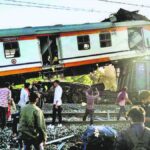




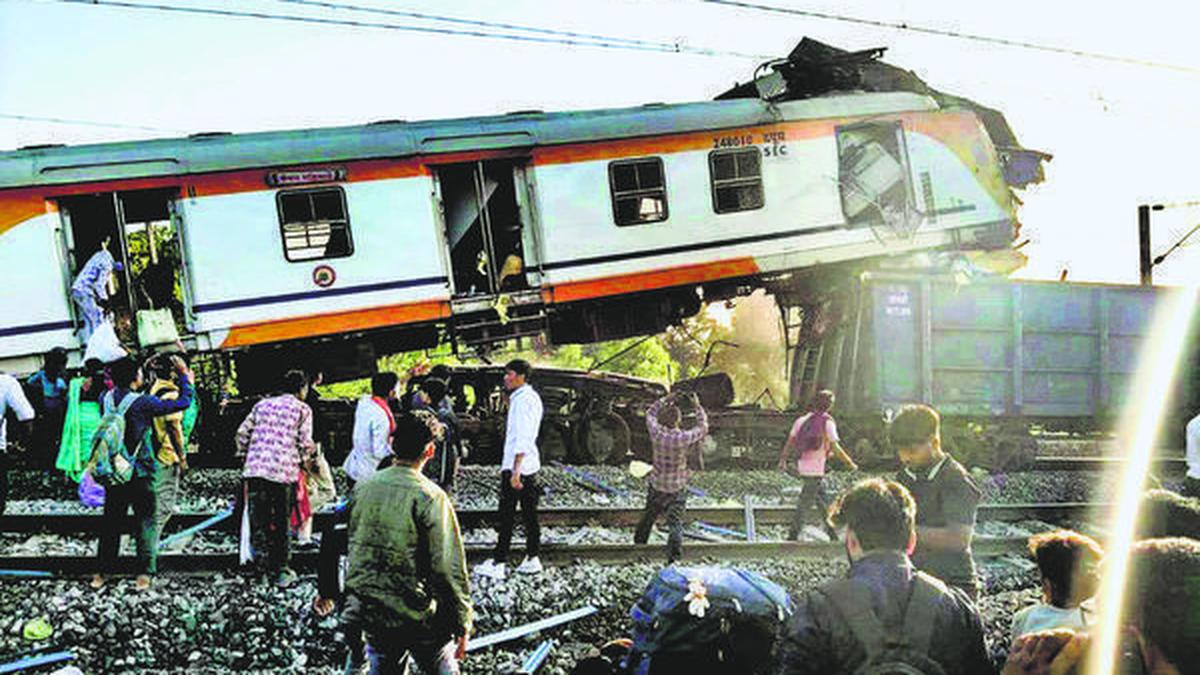

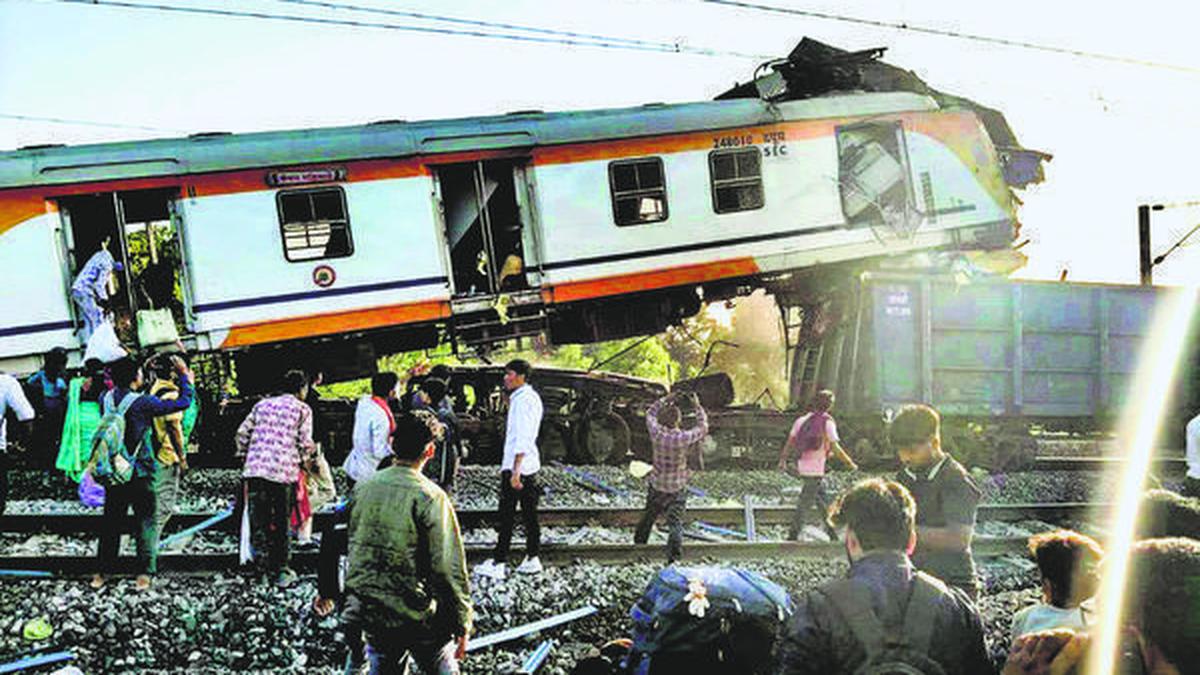
People gather after a passenger train collided with a goods train near Bilaspur railway station, Chhattisgarh, Tuesday, November 4, 2025. Two people have been injured in the incident.
| Photo Credit: PTI
The Ministry of Railways has transferred the Principal Chief Electrical Engineer of South East Central Railway (SECR), Rajiv Kumar Barnwal, and the Divisional Railway Manager, Bilaspur, Rajmal Khoiwal, in the aftermath of the Bilaspur train accident.
The transfers came hours after the report of the Commissioner of Railway Safety (CRS) Brijesh Kumar Mishra, who investigated the circumstances that led to the tragic accident, was published in The Hindu on December 11, 2025.

The accident took place on November 4, 2025 when a Mainline Electrical Multiple Unit (MEMU) train crossed the signal in danger and collided with a stationary goods train, leaving 12 people dead and 19 others injured near Bilaspur in Chhattisgarh.
In his report submitted to the Railway Board, Mr. Mishra said the loco pilot of the commuter train, who also died in the collision, had failed in the mandatory ‘aptitude’ test and was therefore not fit to operate the service.
The CRS also recommended that only loco pilots who had passed the aptitude test should be deployed to operate MEMU services.
He said the aptitude test assessed intelligence, memory, reaction time and personality traits, and warned that engaging loco pilots who had failed the test would compromise operational safety.
Threat to safety
“Deploying loco pilots on MEMU services who have failed to perform against the above parameters will certainly hamper timely decision-making and reaction time during train operations. Loco Pilots should be deputed on MEMU services only after passing the aptitude test,” Mr. Mishra said in his report.

In SECR, of the 142 loco pilots required to operate MEMU services, only 102 had cleared the mandatory aptitude test, leaving a shortfall of 40. The CRS recommended that the Railway Board arrange additional manpower to address the deficit.
He flagged concerns over Signal Passed At Danger (SPAD) incidents. As many as 33 SPAD cases were reported in 2024-25, while six such incidents were recorded in the first two months of 2025-26. He recommended that assistant loco pilots be instructed to apply emergency brakes if a loco pilot crossed a signal at ‘red’ or exceeded prescribed speeds after passing a ‘yellow’ signal, to help contain SPAD occurrences.
Blood alcohol levels
Referring to the Indian Railway Medical Manual, Mr. Mishra said only a “zero” blood alcohol level was acceptable. However, during the inquiry, the Principal Chief Medical Director of the SECR stated that blood alcohol levels of up to 10 mg/dl were being treated as negative, citing metabolic factors that could cause such readings. In view of this, the CRS recommended that Indian Railways review the acceptable blood alcohol limits.
He further recommended that in the event of the death of any crew member involved in an accident, the railways should ensure that blood alcohol content is included in the post-mortem report to ascertain intoxication levels. These instructions, he said, should be incorporated into the Accident Manual and the Indian Railway Medical Manual to prevent lapses by Safety and Medical Department officials.
Mr. Mishra concluded the Bilaspur train accident occurred due to an “error in train working”.
Published – December 14, 2025 08:03 pm IST