






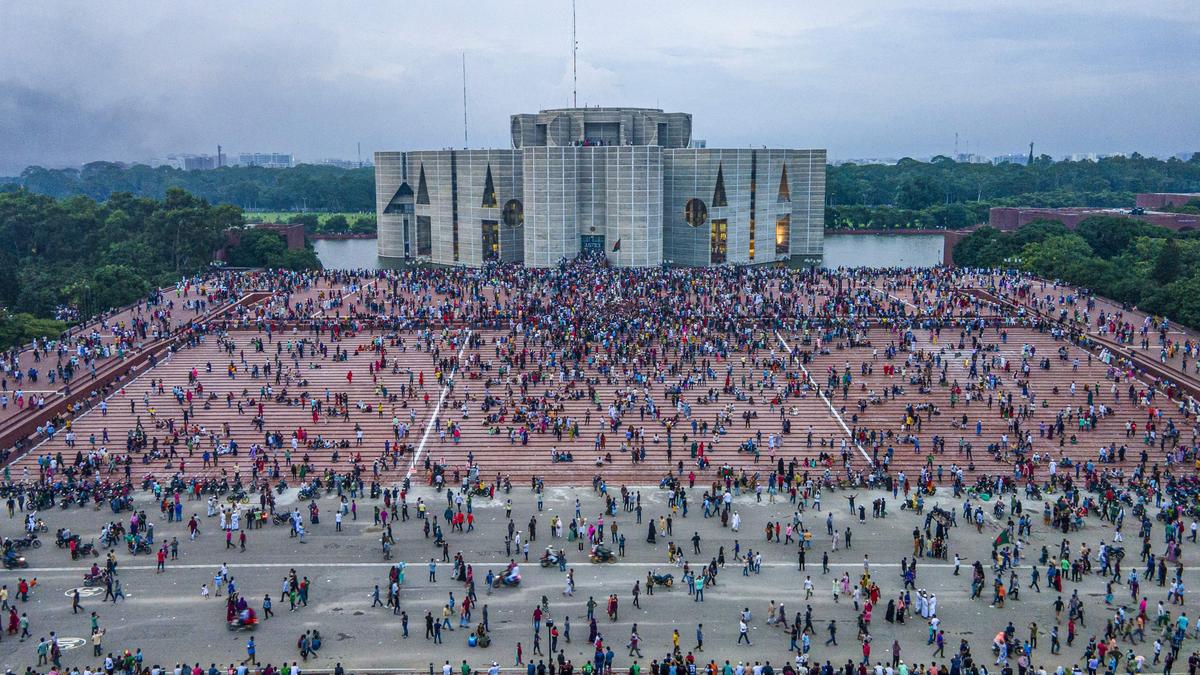

Bangladesh. A nation-state born out of the faultiness of a discriminatory political fabric woven by the Pakistani military and political establishment amid Cold War tensions never embodied real hope for political pundits closely observing its violent birth. Cramped with more than 70 million people deeply entrenched in poverty within a deltaic region vulnerable to environmental disasters, its blood-soaked political independence in 1971 raised more questions than answers. Would this war-torn polity survive and prosper? Could it evolve into the liberal democracy as many aspired? Or would it join the list of newly independent nation-states which remained perpetually drowned in political and social conflict metamorphosing into a failed state? It was a difficult academic inquiry with no solid analytical foundation to guide it.
Moreover, while one might be tempted to think that what has been collectively attained or lost over the past five decades was inevitable, it is certainly not the case. History has walked a very specific path for us to stand on the existing pedestal we occupy today, and there is nothing preordained about it. The present state that we experience is one of the many possibilities that this nation-state could have attained. Bangladesh could have easily become a contested land and a dysfunctional disputed polity between India and Pakistan if our war of independence had taken a few wrong turns. Furthermore, even if we had achieved our independence, there was no certainty that this fragile war-torn polity could emerge into a nation-state that would attain meaningful socio-economic transformation, despite many obvious political failures.
Thus, Bangladesh’s chaotic developmental and political transformation and the critical juncture it has reached following the political transition on August 5, 2024 necessitate both an institutional and historical diagnosis to understand the forces at play, their evolution before and after independence, the political and economic choices that were made and their intended and unintended consequences. In effect, we need an approximate explanation of what went right and where things went wrong for us to comprehend the stakes for the country’s political and economic actors.
In this context, three key political and institutional issues require both reflection and scrutiny to gauge out a useful understanding of Bangladesh’s journey so far. These are:
The Identity of the Post-Independence Political Class: Who assumed political leadership after 1971, and how did their social identity, ideological orientation, political incentives, and organisational structures shape state priorities and national narratives? The consolidation of political authority within a particular social class in the formative years significantly influenced the nature of political competition and the trajectory of institutional development.
The Character of the Inherited State Apparatus: What kind of bureaucratic and coercive institutions were inherited from the colonial and Pakistani eras? How did these structures mediate economic policymaking and basic service delivery concerning health and education in the early decades? The design, capacity, and ethos of the state machinery not only conditioned development outcomes but also reinforced certain path dependencies, particularly in resource distribution and governance modalities.
The constitutional and political settlement: What were the foundational agreements, both formal and informal, that shaped the allocation of power, rights, and public resources across political and social actors? How did these arrangements evolve over time, and what implications did they have for democratic transitions, concentration of political power, political inclusivity, and institutional resilience?
The political economy dynamics before and after Independence
The political, social and economic marginalisation that the Bengali population was subjected to in East Pakistan is a well-documented phenomenon in modern South Asian history. The political collusion between the military and bureaucratic establishment of West Pakistan with the Zaminadri class-dominated Muslim League party in East Pakistan meant that the disparities and discriminations that were experienced by the Bengali population, especially the middle class, were neither administratively recognised nor politically voiced. Yet, this ignorance was not universal. Academics and political thinkers within East Pakistan started documenting this emerging phenomenon of how one nation hosted two unequal economies and how economic resources experienced substantial extraction and transfer from the Eastern to the Western wing, culminating in the economic impoverishment of the Bengali population.
This also provided an economic basis for Bengali Nationalism that was increasingly championed by the newly formed middle-class-dominated political outfits such as the Awami League and the National Awami Party (NAP). Of course, the pollical climax was reached in 1970 when the military and political establishments of West Pakistan refused to respect the democratic verdict of the national election that gave the Bengali population a mandate to finally have serious decision-making authority, resulting in a painful civil war and ultimately political independence.
Consequently, in the aftermath of our political independence, three distinct forces were at play which intertwined to shape the political economy process guiding our developmental transformation.
First, the violent independence movement not only dismantled Pakistan’s centralised authority but also delegitimised the traditional Zamindari class, which had largely clustered around the Muslim League and derived its standing from residual feudal norms embedded within the social fabric. In the aftermath, a new generation of non-elitist political actors emerged to define the post-independence polity, spanning both the Centre-Left and, in part, the Centre-Right spectrum. Unlike the landed aristocracy, this group was more socially rooted, drawing its legitimacy from popular mobilisation rather than inherited privilege. They also recognised early on that sustaining political credibility required a problem-solving orientation, one that prioritised the tangible improvement of people’s lives over symbolic or hereditary authority. This mindset fostered a willingness to engage in policy experimentation and to confront core developmental challenges, such as reducing infant mortality, expanding access to clean water and sanitation, promoting vaccination programs, universalizing schooling, and driving local-level development initiatives.

Bangladesh has one of the lowest tax-to-GDP ratios in the world (less than 7%) – underscoring its fiscal weakness, which manifests in minimal public investment in critical sectors such as healthcare and education.
| Photo Credit:
AFP
Second, the weak and extractive state structure inherited by the newly independent Bangladesh offered limited scope and capacity for economic and political decision-makers to effectively address the pressing developmental problem. This weakness also gave traction to public policy experimentation and developmental solutions that were aligned with the growing neo-liberal prescription that the state should limit its role and provide more room and space for the private sector to drive growth and employment, while a growing NGO ecosystem focused on poverty alleviation and core developmental deprivations. Consequently, from the 1980s, Bangladesh witnessed the gradual rise of both the private sector and the NGOs as dominant actors shaping the country’s economic growth and human development. Moreover, while this dual-track or hybrid developmental model (where the private sector became the principal engine of economic growth and employment generation, while the NGOs emerged as a key factor in addressing human development deficits) did facilitate incremental growth and extreme poverty alleviation for good three decades, this strategic and convenient withdrawal of the state apparatus also led to unintended consequences.
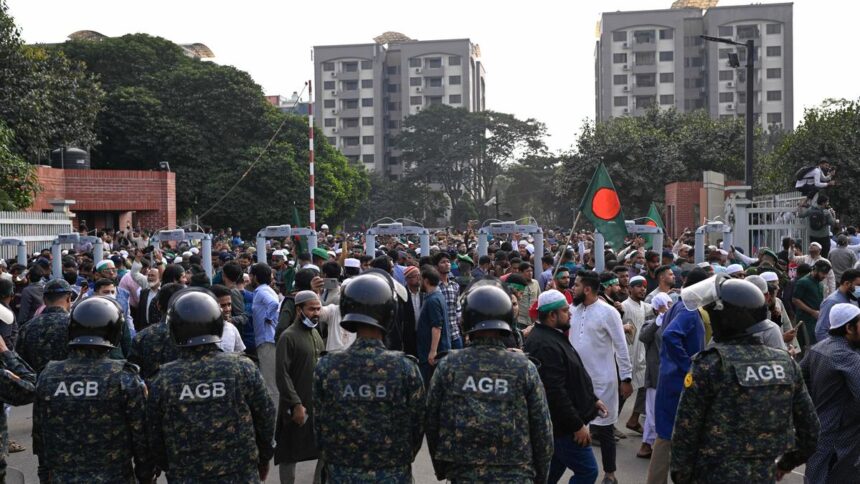
Bangladesh has one of the lowest tax-to-GDP ratios in the world (less than 7%) – underscoring its fiscal weakness, which manifests in minimal public investment in critical sectors such as healthcare and education. In addition, this overall developmental approach, where the state retreated from its redistributive roles also amplified acute inequality and created deep frustrations, especially within a growing impatient young generation. Thus, it was no accident that, over the last decade, young people were increasingly taking to the streets over social and economic issues.
Third, Bangladeshi political decision-makers over time increasingly crafted an absolute winner takes-all constitutional and institutional arrangement that acutely concentrated political power within the executive branch. This not only weakened the judicial and legislative institutions from holding the executive accountable for abusing political and administrative power, but it intensively amplified the cost of losing political power. It created a confrontational political ecosystem where the art of coexisting and developing working relationships across the political aisle was not learned as dominant political parties competing for power lacked the appetite for dialogue or discussion.
For the past five decades, the political game plan has remained cold and brutal: crush your opponent when you gain an upper hand in power – and remain perpetually interlocked in a never-ending existential battle. This persistent political hostility has entrenched a culture of one-sided or rigged elections in Bangladesh, fostering a political environment increasingly shaped by crony capitalism and policy capture, authoritarian tendencies, and violence-driven mobilisation. As a result, the political process has become tribalised; devoid of meaningful commitment to principles such as democratic coexistence, institutional governance, or substantive democratic deepening. This antagonistic political ecosystem has also severely undermined investor confidence, leading to a persistently low inflow of foreign direct investment and limited technology transfer, especially when compared to regional peers such as Vietnam.
One of the most enduring axioms in the political economy of development is that sustained political and economic modernisation is only possible when competing political factions within a polity do not perceive violence as a legitimate or rewarding means of resolving political conflict. In essence, democratic transitions and institutional-deepening become feasible only when political actors reject the exercise of de facto power through coercion and instead commit to rules-based competition. Societies that fail to achieve this threshold remain trapped in cycles of violence, mistrust, and authoritarian drift, undermining both democratic consolidation and developmental outcomes. Unfortunately, Bangladesh exemplifies a case where political change has rarely translated into democratic progress, as successive political transitions have often been accompanied by confrontational politics, intolerance, and the normalisation of violence as a political tool.
These broader political dynamics also meant that the growing middle-class felt increasingly alienated and marginalised from experiencing a political space that is accountable and inclusive – and the growing economic inequality and limited economic opportunities for the young generation meant that the distrust with the political system reached a tipping point when the previous government under Sheikh Hasina grossly mishandled a legitimate demand for reforming a very unpopular quota system for employment in public services in July 2024. The political package that somewhat worked in the past by offering unequal economic opportunities with political exclusion was no longer acceptable. The yearning for a new social and political contract erupted into a social scream. The rest remains a known history.
Possibilities and pitfalls
Bangladesh currently stands at a critical inflection point – one that offers a historic opportunity for political and economic decision-makers to initiate comprehensive constitutional and institutional reforms. These reforms are essential to prevent any single political force from exercising absolute and unaccountable power, an affliction that has long undermined democratic consolidation, fostered political polarisation, and enabled the entrenchment of crony capitalism and policy capture. The prevailing “winner-takes-all” framework has institutionalised cycles of confrontation, eroded political pluralism, and reinforced authoritarian tendencies across the polity.
To break from this entrenched trajectory, Bangladesh must undertake a fundamental reimagining of its constitutional architecture for effectively forging a new social and political contract grounded in accountability, representation, and institutional restraint. This would require embedding stronger political constraints on executive authority through structural reforms, including the introduction of a mixed electoral system that combines proportional representation with first-past-the-post mechanisms within a bicameral legislative framework. Equally essential are the enforcement of term limits for both the Prime Minister and the President, and a clearer separation of powers between the ceremonial and executive functions of the head of state and head of government. Without such institutional safeguards and in the absence of a credible, transparent, and inclusive electoral process, no volume of technocratic policy reforms or bureaucratic recalibration will suffice to remedy the systemic political dysfunction that continues to erode Bangladesh’s democratic foundations.
Yet institutional reform, while necessary, is not sufficient. Revitalising Bangladesh’s developmental momentum will require more than technocratic adjustments; it demands a fundamental reconfiguration of the political ecosystem. Over time, the entrenched antagonism between the Centre-Left and Centre-Right has rendered politics an existential, zero-sum contest, where the imperative to dominate, eclipses the need to govern. This adversarial logic has hollowed out the political centre, creating a vacuum increasingly exploited by extremist forces with alarming regularity.
What is perhaps most disheartening is the inability of the dominant political blocs to evolve in step with the country’s changing socio-political fabric. Despite a citizenry increasingly shaped by urbanisation, civic consciousness, and democratic aspirations, both political camps remain shackled to the antagonisms of the past. Their mutual delegitimisation, refusal to engage in dialogue, and persistent strategic intransigence have led to a political stalemate that is neither ideologically coherent nor institutionally productive. This is not merely a failure of political imagination; it is a dangerous drift. Without a new political settlement rooted in pluralism, shared responsibility, and an unwavering commitment to reform and good governance, Bangladesh risks descending into deeper systemic instability. When institutional fragility converges with political dysfunction, the outcome is not just stagnation but the specter of state fragility; a trajectory we must confront and reverse with conviction and urgency.
Consequently, the current critical juncture offers a serious opportunity to rewrite the rules of the game and create an ecosystem where reforms coexist with sincere political reconciliation paving the path for effective democratic transition. Of course, judging by the trajectory of the past 13 months , there is a sobering risk that Bangladesh may squander its chance to forge its own Mandela moment rooted in reconciliation, moral leadership, and democratic renewal; as unaddressed political hate and the desire to surrender to retribution in the name of justice cloud the path ahead. Hence, there is every possibility that we might end up having an election next year, but no real democratic opening. A few wrong moves and the cycle of zero-sum politics will get re-instated one more time. The onus of getting things right this time rests primarily with the victors of the July Revolution – though revolutions can sometimes be far less revolutionary than they originally aspire to be. Only future history will deliver the final verdict.
Ashikur Rahman is a Principal Economist at Policy Research Institute of Bangladesh