


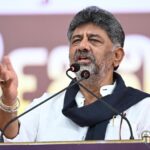


From the Peripheral Ring Road (PRR), proposed nearly 20 years ago, to the city’s network of elevated corridors and junction upgrades such as Hebbal, Bengaluru’s long-stalled infrastructure projects saw some movement in 2025, even if not at the pace of Deputy Chief Minister D.K. Shivakumar’s brainchild, the north-south tunnel road.
The north-south tunnel road, planned as a 16.7-km, underground corridor connecting Hebbal’s Esteem Mall junction to Central Silk Board, made visible progress in 2025 despite sustained opposition. In May, the Karnataka Cabinet approved the project at an estimated cost of about ₹17,780 crore under a build-own-operate-transfer (BOOT) model, and global tenders were floated in July for two packages of roughly 8.7 km each, a pace of movement rarely seen in Bengaluru’s large road projects.
By the end of the year, bids from multiple major firms had been received and were under evaluation.
The project is one of the most virulently opposed infrastructure proposals in the city today, drawing criticism from citizen groups, urban planners, environmentalists, and political rivals. Critics raised concerns over its alignment with the city’s mobility plans, environmental clearances, geological risks, cost escalation, and potential traffic redistribution, leading to protests, public interest petitions, and scrutiny by bodies such as the National Green Tribunal (NGT), even as the project continued to advance through formal approval stages.
Alongside this, a short tunnel-cum-elevated corridor between Hebbal Junction and Mekhri Circle also moved forward in 2025. Spanning about 2.27 km, the project received the Cabinet approval during the winter session at an estimated cost of ₹2,215 crore and was being implemented by the Bangalore Development Authority (BDA) using its own funds.
The plan involves a three-lane twin tunnel from Hebbal Junction to the Karnataka Veterinary, Animal and Fisheries University (KVAFSU), followed by an elevated corridor from the KVAFSU to Mehkri Circle.
The PRR, rebranded in 2025 as the Bengaluru Business Corridor (BBC), also saw long-delayed steps towards execution. Early in the year, the BDA secured in-principle approval for a ₹27,000-crore loan from HUDCO to fund land acquisition and construction. This was followed by the Cabinet clearance later in the year for the access-controlled expressway project, which officials have projected could reduce through-traffic around the city by about 40% once completed.
However, progress on the PRR also remained deeply contested. Farmers and landowners filed mass objections, submitted representations to the Governor and courts, and challenged the compensation framework, arguing that land was being acquired at suppressed guideline values and beyond core road requirements. Opposition groups also urged the HUDCO to reconsider funding, citing unresolved legal, financial and operational risks.
The long-discussed elevated corridor network also edged closer to execution in 2025. Bengaluru Smart Infrastructure Limited (B-SMILE) finalised Detailed Project Reports (DPRs) for 13 elevated corridors, covering a combined length of about 126 km for several key stretches, including Nagavara-Bagalur, Old Madras Road-Electronic City, and Sirsi Circle-Nayandahalli.
The Cabinet also cleared a double-decker flyover integrating Metro and road traffic during the year in September.
Apart from these major projects, 2025 also saw visible movement at the long-clogged Hebbal junction. In August, the BDA opened a 700-metre additional ramp from the Nagawara-Baptist Hospital side to the K.R. Puram loop, easing traffic towards Mehkri Circle. This was followed by the opening of a second new loop on a trial basis recently.
Published – December 23, 2025 07:57 pm IST