




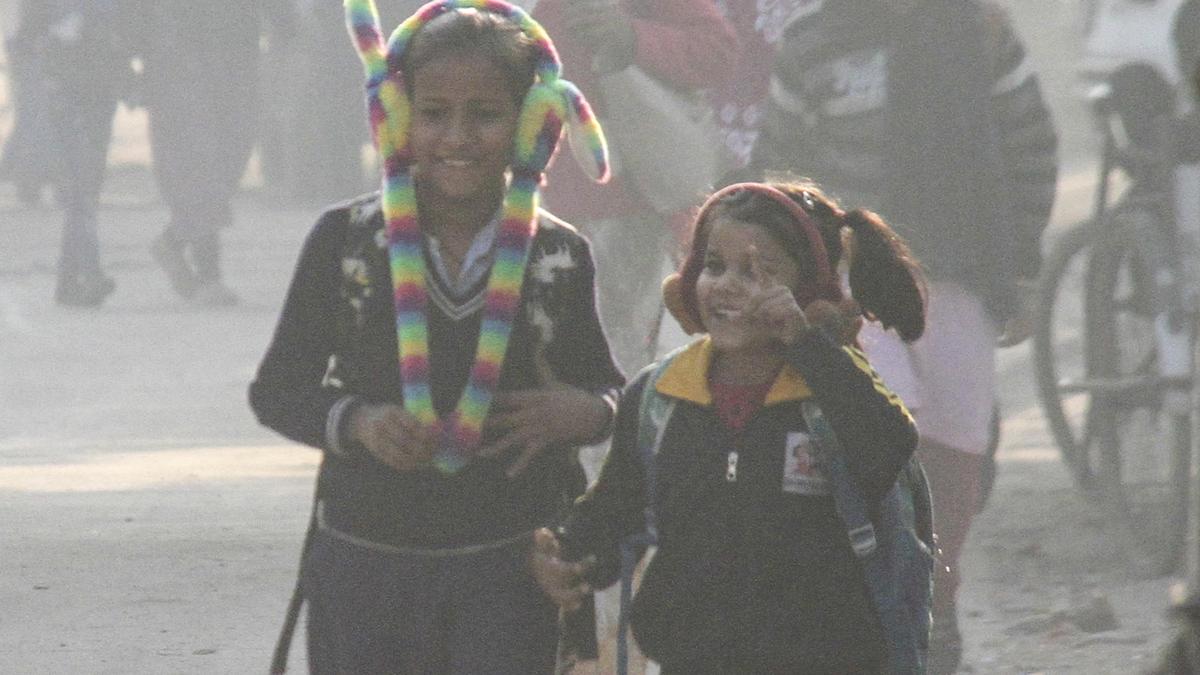


According to parents, online classes do not meet the needs of CwSN students
After a month of alternating holidays and online and offline classes, seven-year-old Rhea (name changed), who lives with Autism Spectrum Disorder (ASD), returned to school and sought comfort in the swing area, where she often retreated to cry.
Rhea studies at a private school in Noida and finds social interaction and communication difficult because of her condition. Her mother said it will take time for her to adjust to the frequent changes in school routine. Between December and January, Stage IV of the Graded Response Action Plan (GRAP) to bring down air pollution was invoked twice. Shifting classes to hybrid mode for students of Class 6 and above and to online mode for lower classes is part of the GRAP-IV measures.
The past two months brought not only winter vacations but also school closures in the second week of January due to a cold wave sweeping through the Delhi-NCR. “Whenever there is pollution, a cold wave, or a heatwave, schools quickly switch to online mode. This makes it harder for Children with Special Needs (CwSN) to handle changes in their routine,” said Rhea’s mother. She added that sometimes, the notice about school closure comes only the night before, which increases anxiety for CwSN students.
Unmet needs
Parents of CwSN students said their children have needs that online classes do not meet. They also said online classes have become common since the COVID-19 pandemic. Rhea’s mother said switching between online and in-person classes affects her daughter’s social and communication needs. “Her sensory issues get worse when she sits in front of the screen because she needs to move every 15 minutes,” she said.
Sonakshi Sapra, a Noida-based mother whose daughter has autism, said a proper routine is important for her daughter’s well-being. “We have to take her to therapy more often because she gets cranky. What’s the point of online classes if my daughter is exposed to pollution anyway?” Ms. Sapra said. Pankaj Garg, a Delhi-based parent whose 20-year-old son has Down syndrome, said, “On paper, integrating CwSN into regular schools sounds good. But in reality, policies often fail to consider their needs.”
Increased anxiety
Arshi Alam, a child and adolescent psychologist in Gurugram, said for the CwSN students, predictability is central to their sense of safety and regulation. “With the hybrid mode, parents are given directives at the last minute about online classes. This leads to increased anxiety, emotional imbalance, and cognitive overload,” she said.
Anita Prasad, head of the special education programme in Noida’s Step by Step School, said, “School is a holistic experience for them. It’s about meeting their friends and interacting with the teacher. It is challenging for all students, but more so for these children who are more vulnerable, and the switching becomes counterproductive,” she said.
Published – January 26, 2026 12:27 am IST