







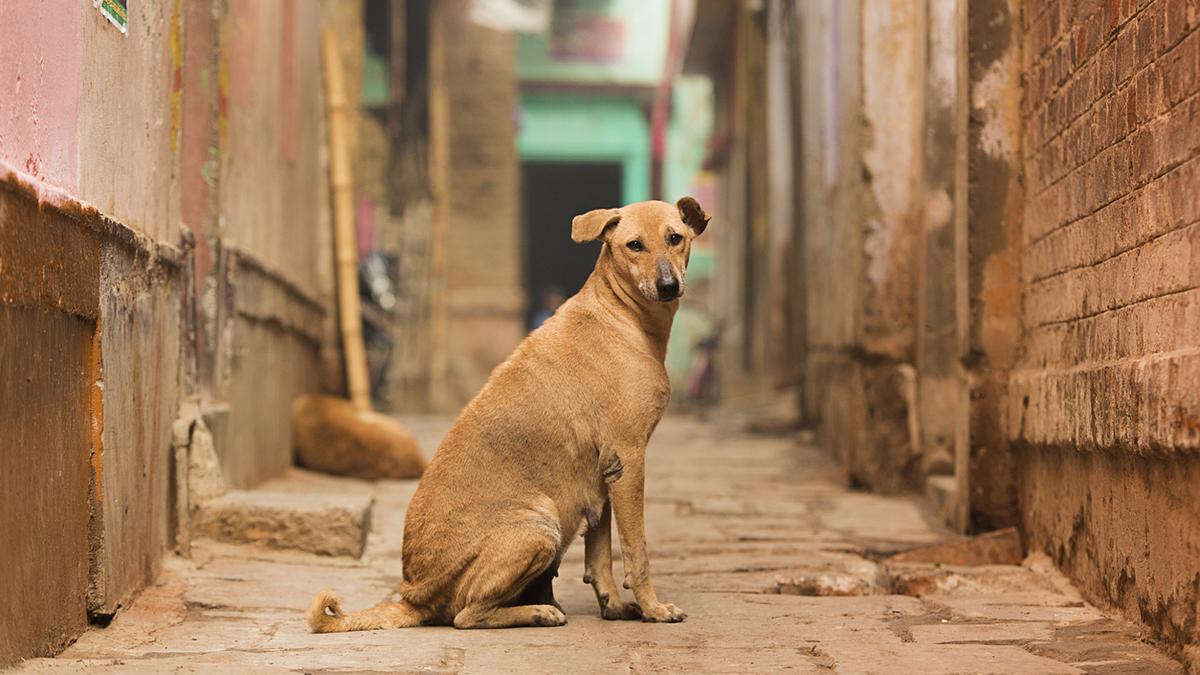

Community dogs in India are found everywhere, across all 28 States and 8 Union Territories. Their tail-wagging presence cuts through human attempts to segregate villages or cities along lines of class, caste and religion. Loved and cherished by many — but also feared and persecuted — these fellow beings are truly pan-Indian citizens who are among our oldest neighbours and companions.
The present case in the Supreme Court will decide the future of animals that are not in a position to plead their own cause before the honourable judges. Crucially, this case will also set a precedent for how India chooses to deal with many other fellow species whose lives are lived around humans — even as humans push further into their territories.

Pragmatic compassion is not yet embraced as a core judicial principle in India, but has worked wonders from Norway to Bhutan, and in other countries that have effectively brought down street dog populations and lowered deaths from rabies while rejecting inhumane and ineffective solutions such as mass culling.
No one wants fellow citizens to be bitten by dogs or to die of rabies. All groups should, logically, strongly support nationwide schemes for the mass vaccination of community dogs, and should demand that anti-rabies vaccines be made widely and freely available across the country.
Animal lovers want the population of community dogs to be controlled in the hope that in the future, far fewer animals will have to suffer harsh and hostile conditions on the streets. Those who are indifferent to animals also want the population of community dogs controlled to minimise interactions. Even though their feelings may differ, it helps to acknowledge that all groups are actually in broad agreement on desirable outcomes.
Systematic implementation of ABC Rules is the need of the hour

A woman with her pet dogs at the ABC centre in Pulianthope, Chennai.
| Photo Credit:
B. Jothi Ramalingam
A ray of hope: the Animal Birth Control (ABC) Rules were passed only in 2023. A sharp decline in the number of dog-human conflicts and bites has been demonstrated in cities such as Lucknow, which achieved 70% street dog sterilisation and vaccination rates in 2024, and in States such as Sikkim and Goa, which have carried out sterilisation and vaccination programmes on a sustained and regular basis.
These are isolated instances; as on-the-ground animal rights NGOs have repeatedly said, we need the courts to endorse the ABC Rules and to ensure compliance from all cities and States. So far, very few States have followed the sensible guidelines laid down in the ABC Rules. The suggested solutions have not failed; they have never been properly and systematically implemented across the country.
It may seem impossible, but I believe that India has the determination and discipline to carry out a nationwide, decade-long, district-by-district mass sterilisation and vaccination programme. If it is solidly backed by successive governments, if municipalities are monitored and ordered to function without corruption, if resources and funds reach NGOs, first responders and the critical layer of neighbourhood volunteers who help to locate and capture community dogs, the country could see a massive reduction in conflict, as well as a swift drop in that population in a relatively short time.
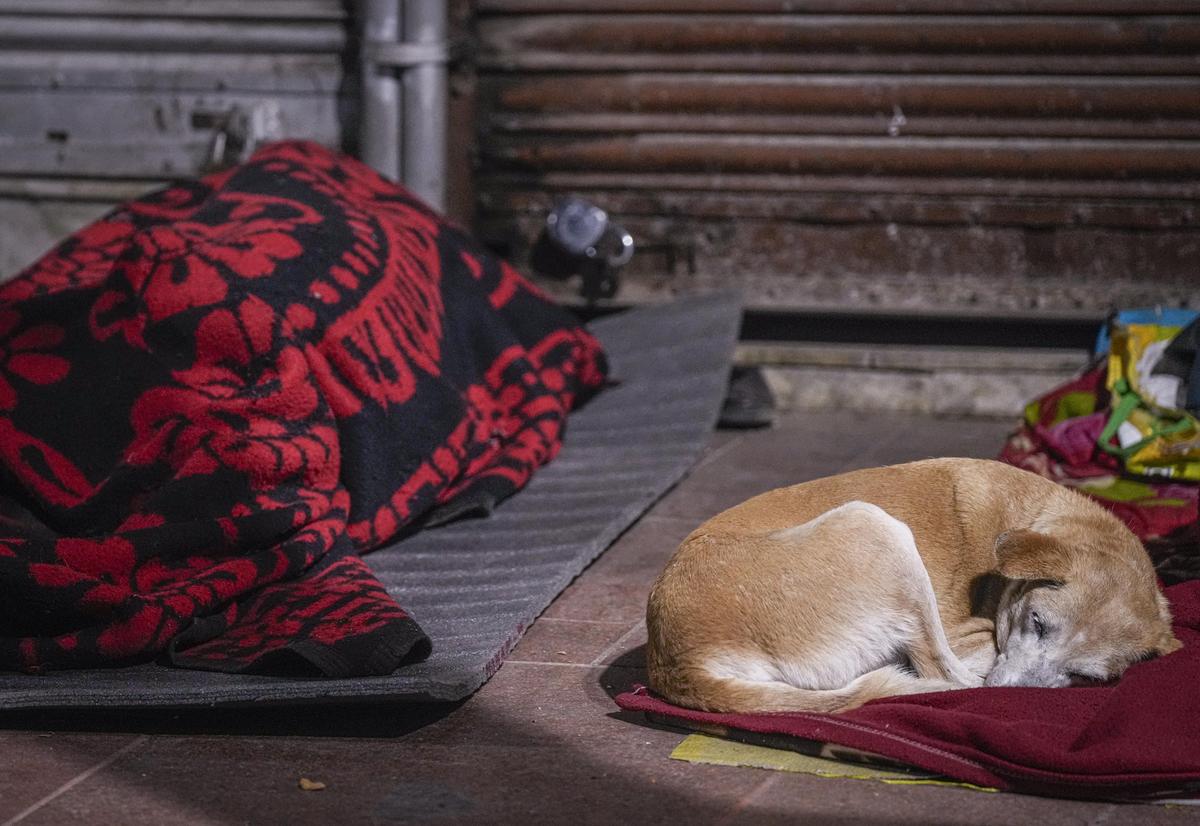
A stray dog takes shelter near a homeless person in New Delhi, January 13, 2026.
| Photo Credit:
PTI
Shelters are impractical and expensive
Turning to other debated solutions, it is glaringly obvious that mass culling is barbaric. In a recent, extremely distressing incident, over 900 dogs were killed in Telangana to fulfil an election promise. These videos of dogs rounded up to be ruthlessly killed by lethal injections in uncomprehending, terrified anguish rival the most heartrending videos of human deaths from rabies.
No creature, dog or human, should suffer such a cruel and unnecessary death — this slaughter is performative cruelty that has no impact on the actual animal population. It is the responsibility of a humane court to turn us back from the madness of culls.
The proposal to drag community dogs off the streets into shelters is just as misguided, according to all experts — a vain attempt to brush an entire population under the carpet. At worst, poorly managed shelters where dogs are crammed into cages and starved for days will in effect become a form of state-sponsored euthanasia.
And in a country that urgently needs shelters for the homeless, it is bizarre and impractical to consider pouring crores of funds into building new shelters for millions of street animals. If those funds were released instead towards a well-managed and consistent application of the ABC Rules, every district in India could carry out a sterilisation and vaccination programme with the help of local volunteers, adopting the Bhutan model.
Instead of eradication, we need a focus on harm reduction, population control and peaceful co-existence. The judiciary already has access to experts who have studied these matters in depth; all the courts need to do is to draw on their knowledge, rather than be swayed by melodramatic TV campaigns.
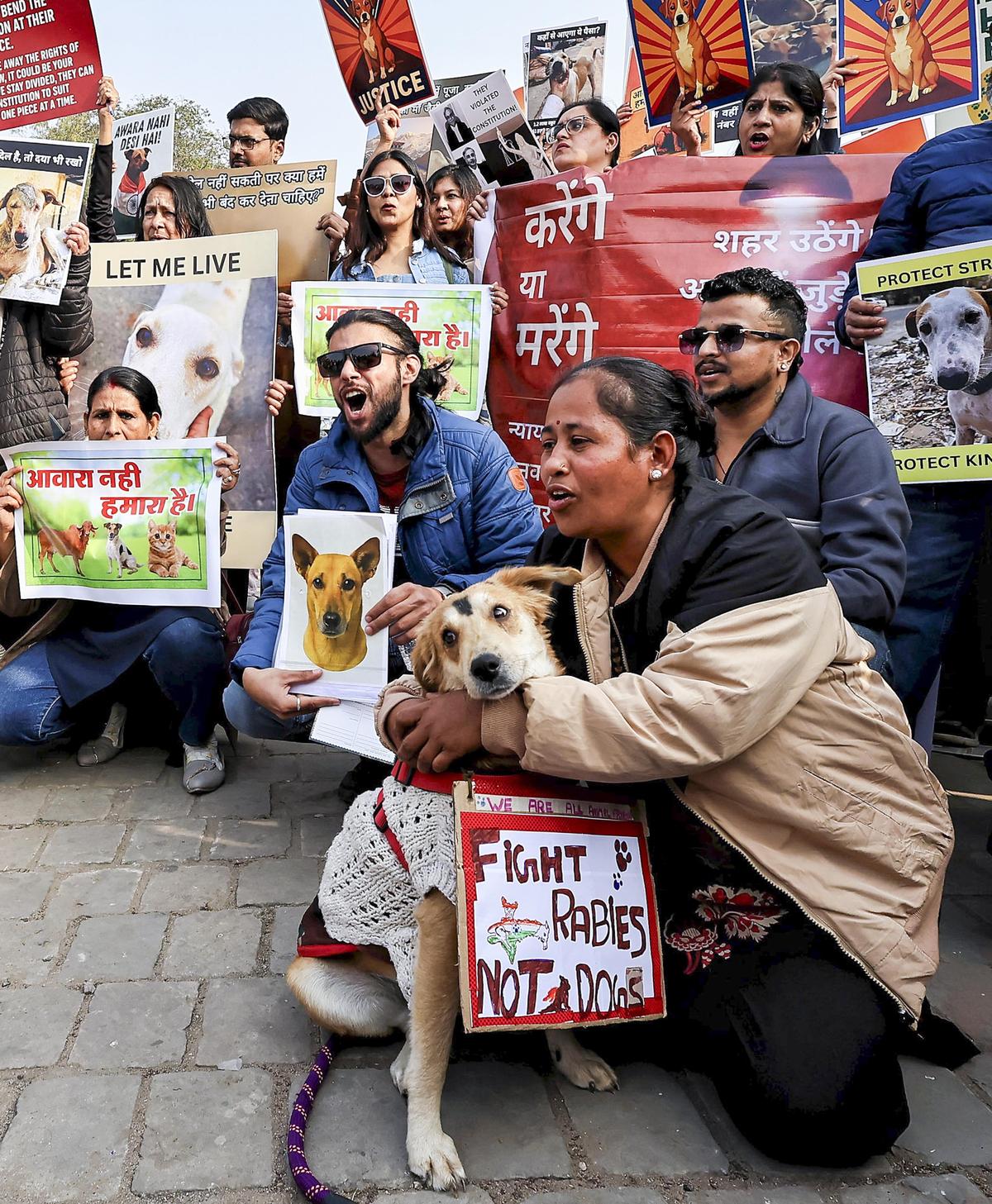
Animal rights activists hold a in Jaipur protest over the Supreme Court’s recent order to remove street dogs from public spaces, January 4, 2026.
| Photo Credit:
PTI
Illegal breeders and pet shops to blame?
Where do free-roaming dogs come from in the first place? The answer is simple: from us. It’s extremely surprising that feeders, who try to help mitigate a problem they did not create, are consistently berated — while pet owners who callously abandon their dogs, and the illegal breeding industry are rarely held responsible. Indians have among the highest rates of pet relinquishment in the world, according to the Pet Homelessness Index report of 2021: 50% of pet owners have given up or abandoned pets in the past.
The dog breeding industry should be strictly regulated under the Dog Breeding and Marketing Rules, 2017, and other laws, as animal rights activists have strongly advocated. In practice, illegal breeders are mostly free to run puppy mills that exploit breeding female dogs to the point of exhaustion, separate pups from their mothers far too early — and cruelly abandon both dogs that can no longer breed as well as pups that suffer from deformities or disease. According to a study by the Indian Journal of Law and Legal Research,over 100,000 illegal pet shops and breeders operate across India.

The media targets community carers and feeders out of ignorance or malice. Citizens who befriend and calm dogs, who aid the municipality when dogs need to be taken in for sterilisations and vaccinations are actually performing a valuable public service. The high number of Indians who abandon pet dogs without thought, treating them as disposable consumer items, and illegal puppy mills are primarily responsible for releasing confused and traumatised dogs back on to the streets.
The judiciary should levy heavy fines on them and should also exercise its power to take municipal corporations across India to task for not doing their job. A blend of indifference, corruption and neglect has led to the population explosion in the first place. The responsibility for many human-animal conflicts rests at their doorstep.
From dogs to large, charismatic mammals like elephants, tigers and leopards, as well as endangered species like frogs, toads and skinks that attract far less public and media attention, the spotlight will be on the judiciary all through this decade. Will we go backwards to the regressive and cruel colonial-era norm of treating animals as lesser beings, brute creatures to be exterminated or dominated at will? Or, as many of us hope, will India lead the way, setting a strong example for co-existence with other species, working to protect fellow humans while practising pragmatic compassion for community dogs and animals?
India already has a vast, growing network of animal carers and volunteers. All we need is steady, compassionate action on the part of the government and the courts, and we could usher in a much brighter future for humans, dogs and other animals who share a habitat and have to find a way to live together with as little strife as possible.
The writer is the author of ‘The Wildings’ and ‘The Hundred Names of Darkness’, a duology featuring many of Delhi’s free-roaming animals.