





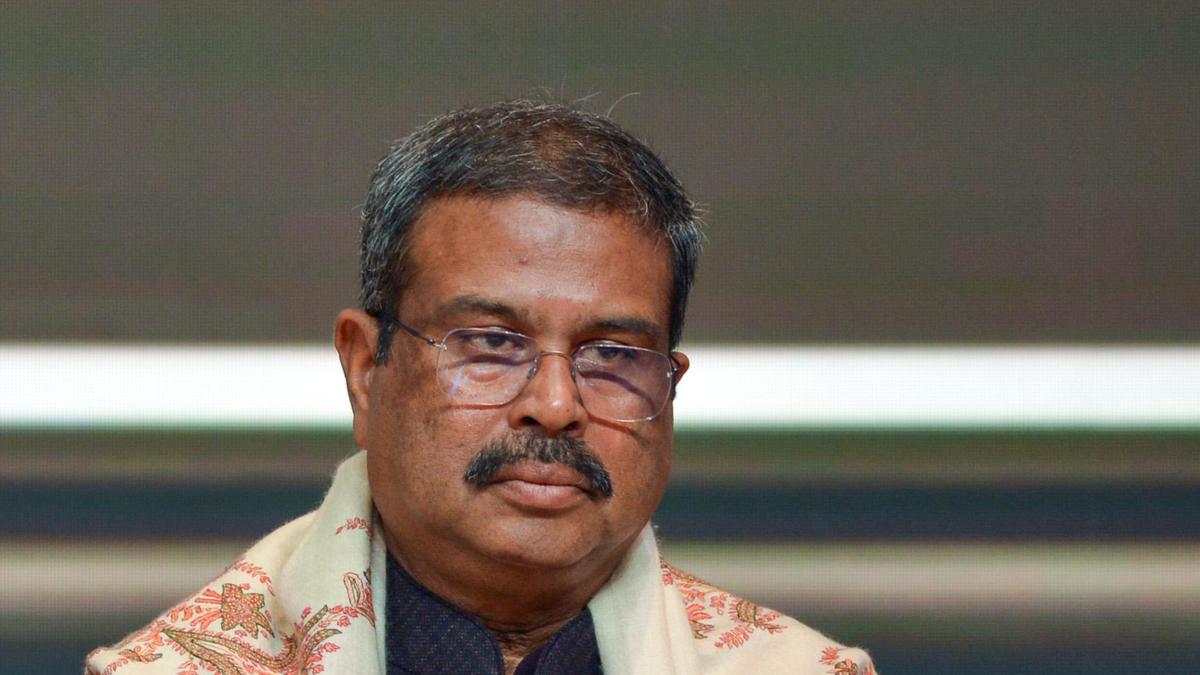

Union Education Minister Dharmendra Pradhan on Tuesday (January 27, 2026) sought to allay concerns over the new 2026 University Grants Commission regulations on promoting equity in higher education institutions, amid protests and allegations that the rules discriminate against “general category” students.
Speaking to reporters in Rajasthan, Mr. Pradhan said the regulations had been notified under the supervision of the Supreme Court and assured that “there will be no discrimination” and that “no one will have the right to misuse anything in the name of discrimination”.

His remarks came against the backdrop of protests against the UGC regulations in cities like Lucknow, Indore, and New Delhi, with more demonstrations planned in the coming days, and multiple petitions filed in the Supreme Court challenging the framework.
The new regulations, notified on January 13, define “caste-based discrimination” as discrimination on the basis of caste or tribe against those belonging to the Scheduled Castes, the Scheduled Tribes, and the Other Backward Classes. The final version also drops a provision proposed in an earlier draft to penalise false complaints.
Critics of the regulations have argued that by not recognising students from the “general category” as potential victims of caste-based discrimination, the definition itself is discriminatory. They have also flagged the absence of any mechanism to act against complaints believed to be false.

Addressing reporters in Rajasthan’s Didwana, Mr. Pradhan said, “I want to assure everyone that no one will be subject to harassment and there will be no discrimination. No one will have the right to misuse anything in the name of discrimination.”
He added that whether it was the UGC, the union government or any State governments, it will be their responsibility to ensure fair implementation. “I assure you that whatever system or arrangement is made in India will be within the framework of the Constitution. No injustice, oppression, or discrimination will be committed against anyone,” he said.
On Tuesday (January 27, 2026), students protested against the regulations outside Lucknow University and in parts of Bareilly in Uttar Pradesh, in Indore in Madhya Pradesh, and outside the UGC office in New Delhi. Students from Delhi University have also called for a protest in front of the varsity’s Arts Faculty building on Wednesday (January 28, 2026).
The Akhil Bharatiya Vidyarthi Parishad, the BJP’s student wing, on Tuesday (January 26, 2026) also issued a statement, saying that while the new regulations were “well-intentioned”, they required “clarity and balance”. This statement quoted ABVP national general secretary Virendra Singh Solanki as saying that “there must be social equality for all sections of society”. However, he said that “misconceptions” about the regulations were prevailing amongst students, parents, and stakeholders, and the UGC must engage with them to clarify concerns.
Meanwhile, the National Students’ Union of India, the Congress’ student wing, backed the regulations as a “necessary step towards addressing discrimination on campuses across the country”. NSUI national president Varun Choudhary expressed support for the framework in post on X.
Politicians continued to express their views regarding the rules. On Tuesday (January 27, 2026), Rajya Sabha Shiv Sena (UBT) MP Priyanka Chaturvedi doubled down on her argument that the new regulations were discriminatory against certain sections while Nagina (UP) MP and Bhim Army founder Chandra Shekhar Azad said that his party Azad Samaj Party (Kanshi Ram) welcomed the regulations and said the opposition to the regulations were a “misleading and organised effort against social justice, which is extremely concerning”.
The new regulations emerged from Supreme Court proceedings on a batch of petitions filed in 2019 by parents of students who died by suicide, arguing that the earlier 2012 UGC regulations were inadequate to address issues of caste discrimination on campuses. During the hearings, the union government had informed the court that it was revising the framework.
A draft version released by the UGC in 2025 for public comments had defined “caste-based discrimination” as discrimination on the basis of caste or tribe against members of the SCs and STs communities and included a provision on punishments for false complaints. The draft drew objections from petitioners and other stakeholders who argued that provisions for punishing false complaints were not detailed enough to determine the veracity of complaints.
A parliamentary panel on education, headed by Congress MP Digvijaya Singh, had in 2025 also recommended that OBCs be included within the ambit of “caste-based discrimination”. Following this, the new rules were notified this year, with OBCs included in the definition of “caste-based discrimination”, and the provision of false complaints dropped.
Published – January 27, 2026 09:44 pm IST