






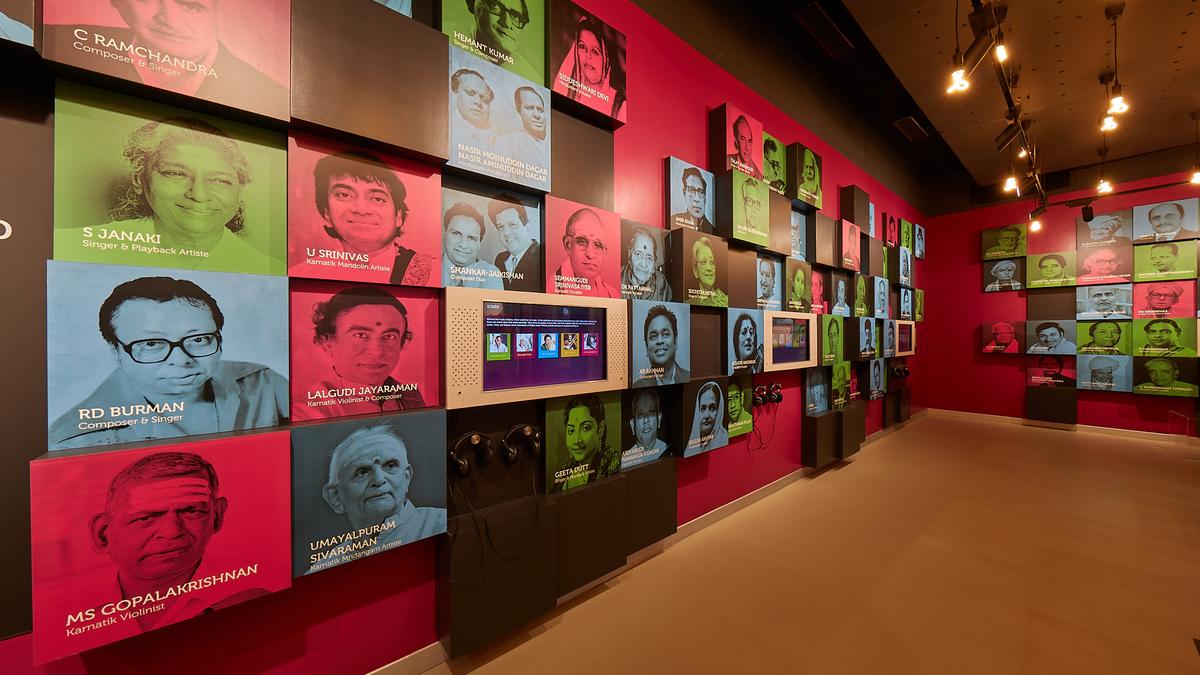

When veteran German ethnomusicologist Andreas Meyer first visited the Indian Music Experience (IME) museum in Bengaluru, late last year, his initial reaction was one of familiarity.
The design aesthetic reminded him of museums across Europe and America, but as he spent time studying the museum’s exhibitions and engaging with visitors, Meyer discovered it was quite different from many European music museums he had analysed during his career.
“Indian music is presented as a treasure here and Indians should be proud of it,” Andreas says. This distinction marks a fundamental departure from European music museums, where the focus typically falls on composers’ biographies, the history of musical instruments or social issues surrounding popular music.
Andreas’ journey to Bengaluru is an extension of his research. Until his retirement from the Folkwang University of the Arts in Essen, Germany, two years ago, he was part of a project funded by the German Research Foundation, travelling across Europe to examine how music is presented in museums. After visiting several European institutions, he felt compelled to look beyond Western horizons and IME was among those that caught his attention.
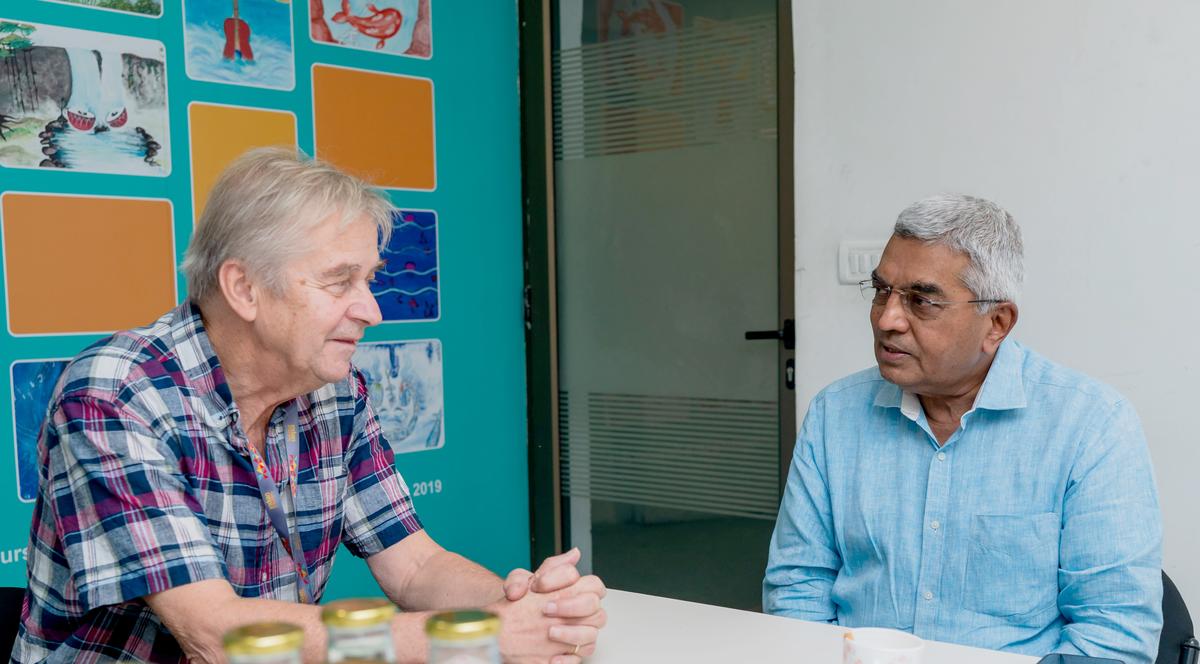
MR Jaishankar, executive chairman, Brigade Group with Andreas Meyer
| Photo Credit:
Special Arrangement
What sets the IME apart, according to him, is its ambitious didactic approach. The museum educates visitors about nuances behind Indian musical concepts, he notes. In the gallery devoted to Indian classical music, visitors encounter playful interactive stations that explain intricate systems such as the raga and tala, as well as different compositional forms.
“There is a chance for visitors to learn something, a take-away from their time spent here. That is a big difference when compared to European museums.” In Europe, music museums usually follow predictable patterns: instrument museums focus on historical evolution, composer museums emphasise on biography, and popular music exhibitions centre on social context.
The technology supporting this educational mission impressed Andreas considerably, particularly the high-quality videos accompanying the musical instrument gallery. “You learn so much about the sound of an instrument, how it is played, and even its social background.” While similar concepts exist in European museums, Meyer found them, “not so convincingly designed”.
However, he also identified a familiar challenge: visitors tend to move from one interactive electronic station to the next, potentially ignoring other valuable content. “It is a pity as so many interesting things get left out,” he observes, suggesting that better strategies for guiding visitors to different sections might enhance the experience. Many visitors he interviewed mentioned the museum’s richness as a highlight, with some expressing surprise at discovering how diverse Indian music is.
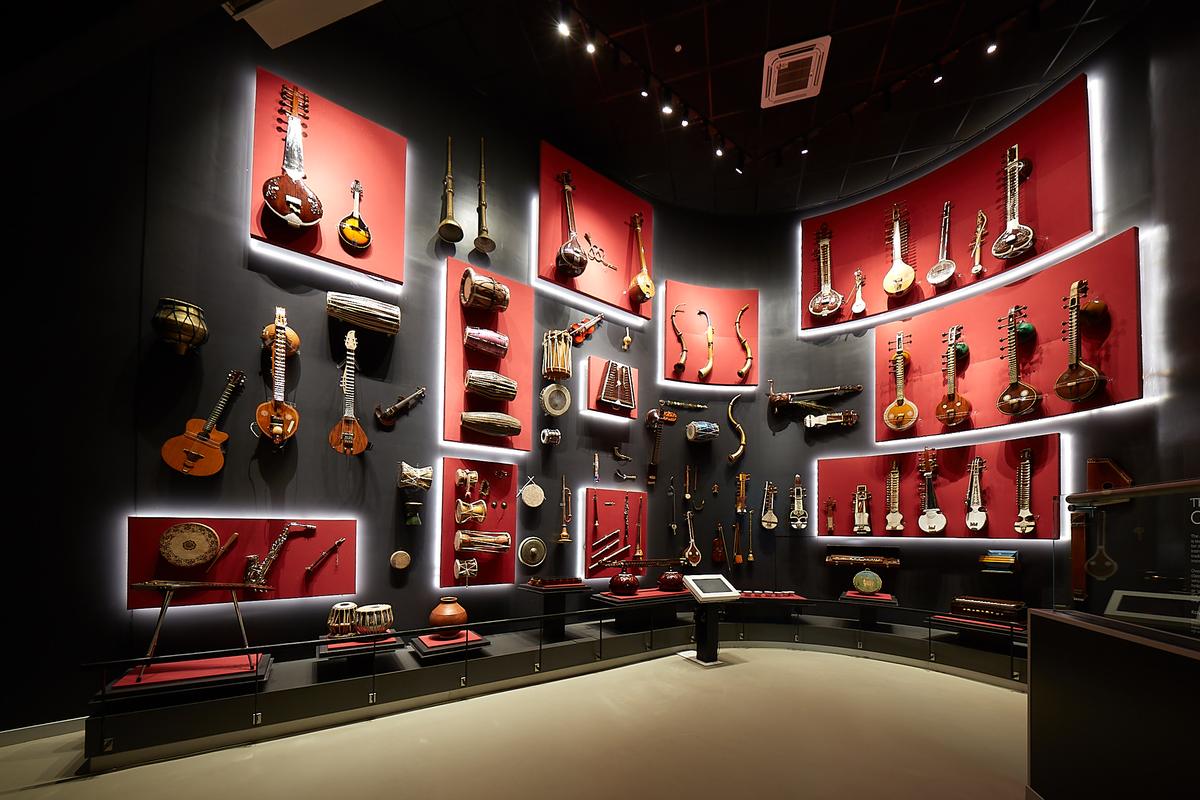
One of the sections at the Indian Music Experience
| Photo Credit:
Special Arrangement
An emotional connection to cultural heritage in India differs markedly from typical European museum visits, where audiences tend to be musically educated individuals seeking specific knowledge at classical music museums, or those seeking entertainment at popular music exhibitions.
The IME’s ambition to encompass classical, folk, and popular music of India also distinguishes it from European institutions, according to Andreas. He explains how curatorial teams for classical music museums typically consist of musicologists who “would hardly display folk or pop music, because it is not what they know”.
“Nowadays, people listen to so many different musical forms, it doesn’t make sense to say, ‘We have classical music here, we don’t want anything else.’” In this respect, he considers the IME, “very progressive.”
The museum’s programming of live performances also reflects its evolved approach, with events ranging from Mumbai-based theatre collective Yalgaar Lok Sanskriti Manch to an Indo-jazz presentation, A Musical Hortus Malabaricus, and more.
Andreas does suggest some improvements such as instruments that visitors can play in real time to experience them firsthand or discovering the different sounds on a tabla through various techniques. He also envisions better integration of live performances with the permanent exhibitions.
However, these are refinements to an already successful model, he says, adding that while many European music museums struggle with sparse attendance, the IME draws genuinely engaged crowds of predominantly young visitors.
Published – January 27, 2026 10:16 pm IST