





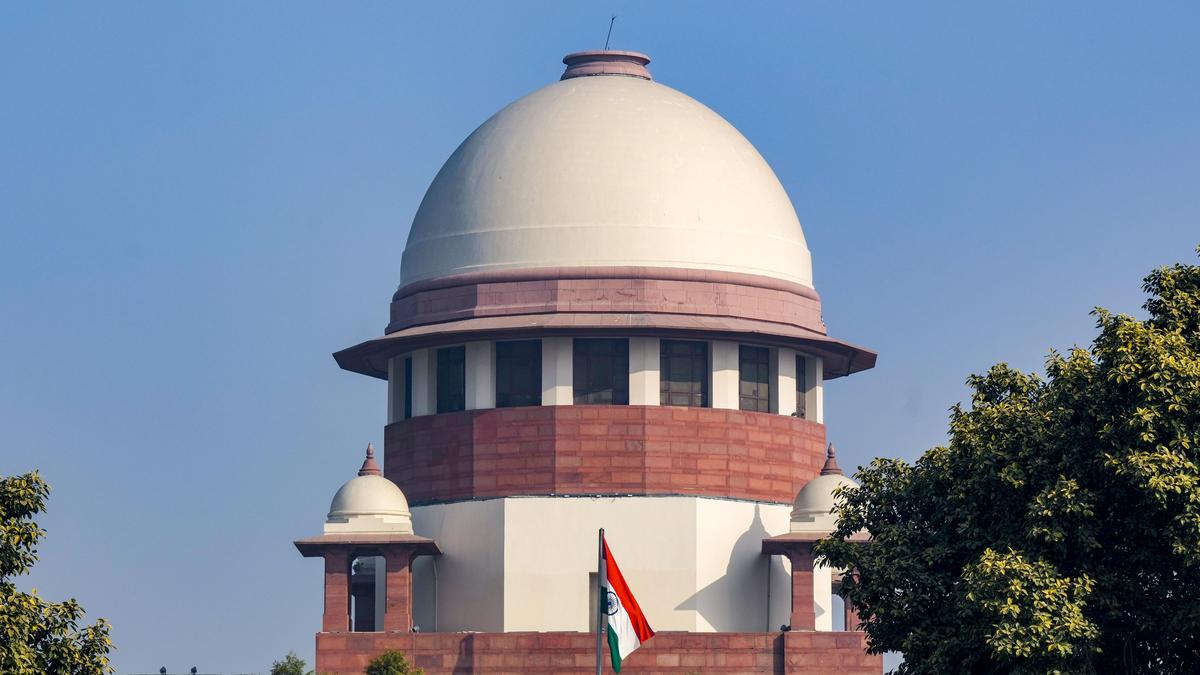

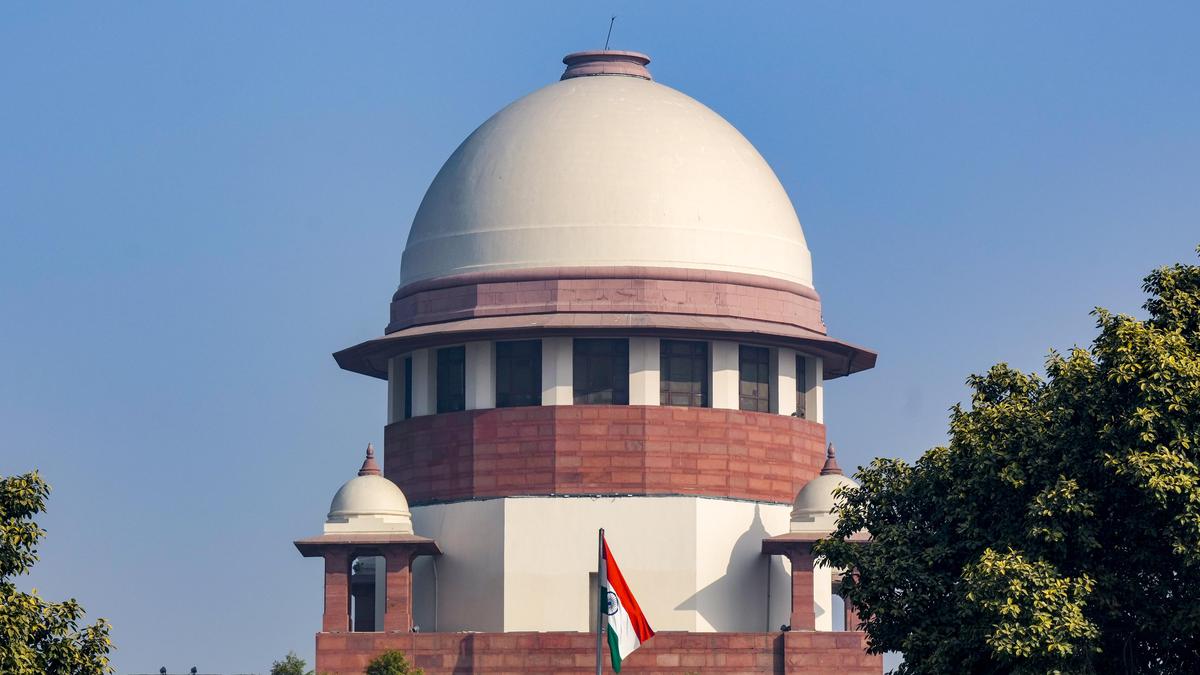
The Supreme Court was hearing a petition filed by acid attack survivor and activist Shaheen Malik, who said the pain caused when acid consumes one’s life and identity is “unbelievably traumatic”. File
| Photo Credit: PTI
The Supreme Court on Tuesday (January 27, 2026) recommended that the assets of people found guilty of carrying out acid attacks should be seized and auctioned to compensate their victims, both as a punishment and a measure of deterrence.
Chief Justice of India Surya Kant, heading a Bench, said the crime of acid attacks should result in “extraordinary punitive measures which are beyond the letters of the law”.

The top court said adopting a “reformative approach has no place for acid attackers”. A counsel submitted that the attackers, too may be hailing from the “lowest” strata of society with hardly any assets in their name.
Deterrent needed
“If a person is found guilty of acid attack, why should all his assets not be acquired and auctioned in a transparent manner to compensate the victim. The police should probe his assets, to whom they belong, etc, and submit the details along with the chargesheet in court, which should order an embargo on creating third party rights on these assets,” Chief Justice Kant observed.
Chief Justice Kant said the state action should be extremely painful for the those convicted of the crime. Otherwise, punishment would not act as a deterrent against future attacks, especially on young women and children, he said.
‘Unbelievably traumatic’
The court was hearing a petition filed by acid attack survivor and activist Shaheen Malik, who said the pain caused when acid consumes one’s life and identity is “unbelievably traumatic”.
“The pain is so bad, so bad, that even I cannot express it. I had 25 surgeries. The mental and physical pain is extreme. One loses a sense of identity. I have sight in at least one eye. There are many women out there who are completely blind and who have not got any help from the State,” Ms. Malik said.
She informed the court that her alleged attackers had recently been acquitted by the trial court.
“I fought the case for 16 years. I lost. I am filing an appeal against the verdict in the High Court. Can you please tell the High Court to expedite the hearing, so that I don’t have to wait another 16 years. They attacked me when I was in my 20s, now I am 42. I lost the best years of my life fighting the case,” Ms. Malik addressed the Bench of Chief Justice Surya Kant and Justice Joymalya Bagchi.
‘Legislative interventions’
Chief Justice Kant asked her to give a list of four or five lawyers she considered good, so that the top court could appoint them as her legal aid counsel in the High Court.
“We will see that you get the best legal representation,” Chief Justice Kant assured Ms. Malik.

The court asked the Centre, represented by Additional Solicitor General Archana Pathak Dave, to consider “legislative interventions” on behalf of acid attack survivors.
“This crime should not be seen as any less than dowry death. There should be a shifting of onus onto the accused. Again, why should this crime be part of the general sentencing policy? Why don’t you consider carving out an exception?” Chief Justice Kant asked the Centre’s law officer.
The Bench directed States to furnish a list of the incidents of acid attacks reported yearly, the number of chargesheets filed, cases decided, pending appeals, brief particulars of each victim, their academic qualifications, current employment and marital status, medical treatmen, and details of expenses incurred or committed by the State rehabilitation scheme for victims of acid attack, if any. It also sought details separately of victims who were forcefully made to ingest acid.
The court asked the States to provide details of any special scheme run by them for survivors.
Reports from 15 High Courts submitted in the top court showed that the maximum number of pending cases of acid attacks were in Uttar Pradesh at 198, followed by 160 in West Bengal, 114 in Gujarat, 68 in Bihar, and 58 in Maharashtra.
Published – January 27, 2026 09:00 pm IST