
The story so far:
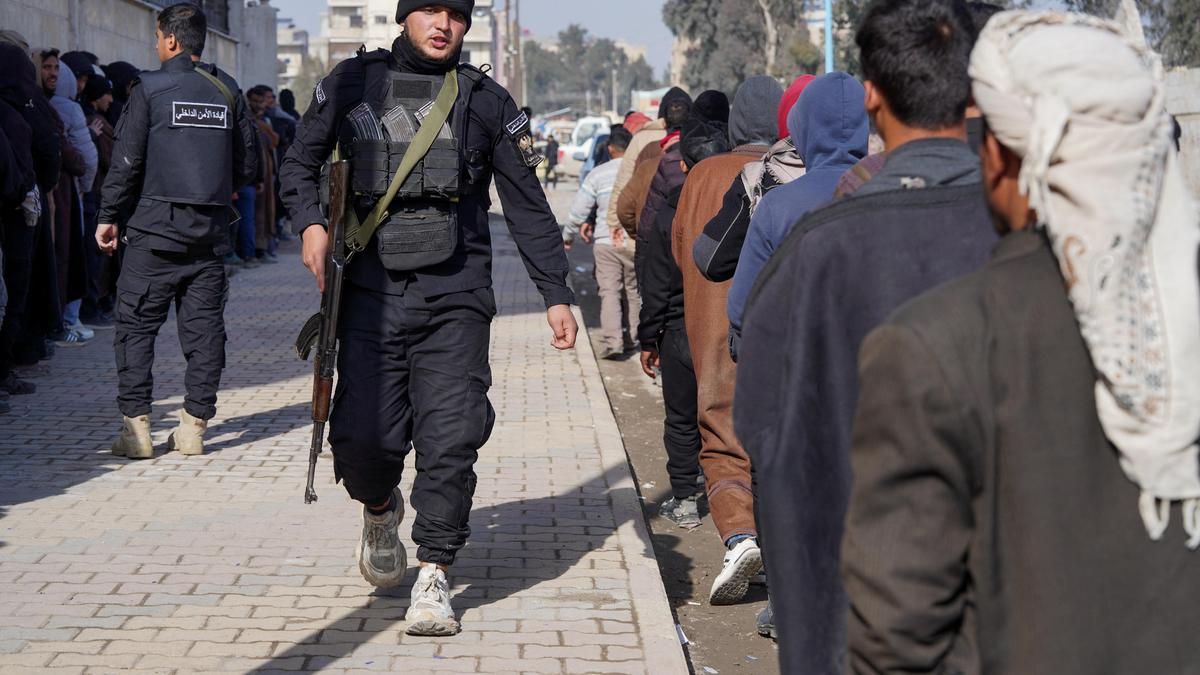
When Bashar al-Assad’s regime collapsed in December 2024, many hoped it would mark the end of Syria’s years-long civil strife. Ahmed al-Sharaa (formerly Abu Muhammad al-Golani), who emerged as the country’s interim leader, pledged to form an inclusive administration. But the past year has been marked by a resurgence of sectarian violence against the Alawites in the west and the Druze community in the south. In the latest flare-up, fighting broke out in the country’s northeast, between government forces and the Kurdish-led Syrian Democratic Forces (SDF). The SDF has been pushed out of parts of eastern Syria it once controlled, and, despite a ceasefire, a tense standoff persists between Kurdish militias and government forces in the country’s Kurdish areas. The renewed violence now threatens to unravel the autonomy Syria’s Kurds have exercised since the 2011 civil war.
Who are the main Kurdish actors?
Syria’s Kurds, who make up roughly 10% of the country’s population, have long demanded autonomy for the Kurdish-populated regions in the north and east. When the Assad regime was forced to withdraw troops from the northeast in 2012, amid the civil war, Kurdish parties, councils and militias moved swiftly to fill the vacuum by establishing their own administrative structures. Several Kurdish regions (called ‘cantons’) came together to declare autonomy from the Syrian state, and establish the Democratic Autonomous Administration of North and East Syria (DAANES), also known as Rojava.
The main party in Rojava is the left-leaning Democratic Union Party (PYD), whose ideology is rooted in the ‘democratic confederalism’ championed by Abdullah Ocalan, the leader of the Kurdistan Workers Party (PKK). Another major political actor is the Kurdistan National Council (KNC), which is aligned with the Iraqi Kurdistan Democratic Party. The main armed militia in Rojava is the People’s Protection Units (YPG), which is aligned with the PYD, the ruling party. The YPG and its women’s brigade YPJ gained prominence in 2014-15 as they defeated Islamic State (IS) jihadists in Syria’s Kobane, a predominantly Kurdish region. After their victories against the IS in Syria’s north and east, the U.S. started offering them air cover in the battles against jihadists. In 2015, with the blessings of the U.S., the Kurdish leaders formed the SDF with Arab and other minority militias, with the YPG being its core component.
Why did fighting break out?
The question of Kurdish autonomy emerged immediately after the Assad government fell. Mr. Sharaa, formerly the chief of al-Qaeda’s Syria branch, wanted to establish a centralised regime in Damascus — an idea pushed back by the country’s ethnic and religious minority communities. In March 2025, Mr. Sharaa and SDF commander Mazloum Abdi signed an integration agreement, laying out principles for integrating the SDF and other administrative units into the Syrian state. But the Kurds were clear on one point — they did not want to forfeit the autonomy they had built over more than a decade. In an interview with The Hindu in May, Salih Muslim Muhammad, co-chairman of the Democratic Union Party (PYD) said that “nobody wants another centralised regime in Syria”.
The Shaara-Abdi agreement promised to flesh out the details of integration by the end of the year, but that deadline passed without progress. Tensions mounted as Damascus proposed deploying its troops in Kurdish regions. While the Syrian government wanted to extend its control across the country which it thinks is essential for reasserting its sovereignty, Kurdish leaders argued that losing military control of the north and east would imperil their autonomy. As talks stalled in early January, Mr. Sharaa’s forces moved into the Arab neighbourhoods of Aleppo, which were controlled by Kurdish forces. Fighting soon followed and government forces asserted control within days, forcing the SDF to withdraw to the northeast.
What does Damascus want?
While the Syrian state forces withdrew in 2012 and other rebel and jihadist groups were preoccupied with their battles against Damascus during the civil war, the IS exploited the vacuum to establish a solid presence in Syria’s east. But the YPG, the Kurdish militia, emerged as critical foot soldiers in the war against the IS. The first major defeat the IS faced was at the hands of the YPG. In the following years, the YPG (or the SDF, the expanded version) became the key anti-IS force on the ground in Syria while the U.S. provided them air cover. They controlled the regions they liberated from the IS and established Rojava. The Assad regime tolerated Kurdish autonomy because it was preoccupied with other problems.
Now, Mr. Sharaa, who has been emboldened by the international recognition he has achieved, wants to end Kurdish autonomy. He has taken a two-pronged approach. On January 16, amid ongoing fighting between government forces and the SDF, Mr. Sharaa issued a decree formally recognising Kurdish as a “national language” and offering citizenship to all Syrian Kurds. He also declared Newroz, the new year festival celebrated by Kurds, as a national holiday. But he said nothing about Kurdish autonomy. His plan is to give cultural concessions while taking control of the Kurdish militias militarily.
Where do Turkiye and the U.S. stand?
Turkiye sees the PYD (the political party) and the YPG (the militia) as extended arms of the PKK (the Turkiye-based Kurdish group which has been designated as a terrorist entity by Ankara and its Western allies). Mr. Sharaa and his group, Hayat Tahrir al-Sham (HTS) are close allies of Turkiye. Ankara backed Mr. Sharaa’s plan to integrate the Kurdish administrative and military structures into the Syrian state. When Kurds resisted the move, in December 2025, Turkiye warned against them. In the past, Turkiye had carried out military operations to push Kurdish forces away from the Syria-Turkish border and create a buffer. Now that a peace process is under way in Turkiye between the government and the PKK, Ankara believes weakening of the SDF across the border would strengthen its hand and weaken the overall Kurdish push for confederational autonomy.
The U.S. on the other side backed the SDF in the fight against the IS. The U.S. still has some 900 troops in Syria, mostly in the Kurdish northeast. But Washington has warmed up to Damascus after Mr. Sharaa, a former designated terrorist who carried a $10 million State Department bounty on his head, captured power. Mr. Sharaa visited Washington in November 2025 and met Mr. Trump after which Syria announced that it would join the U.S.-led coalition to fight the IS. Now that the U.S. has Damascus, it doesn’t need the Kurds to maintain its presence in Syria. The U.S. and Turkiye also find common ground in establishing a centralised Syria, by strengthening the hands of Sharaa, so that the influence of Iran and Russia could be gradually neutralised.
What lies ahead?
After seizing the SDF-held regions of Aleppo, Mr. Sharaa’s forces turned to areas between Aleppo and the Euphrates River. These predominantly Arab-populated regions were captured by the SDF between 2015 and 2019 after it drove out the IS. SDF positions subsequently collapsed across Raqqa and Deir al-Zour, both former IS strongholds. Reports also emerged of internal cracks within the SDF, with some Arab militias breaking ranks with YPG commanders. Dozens of IS members escaped from a prison in Hassaka which was caught in the crossfire. On January 18, Mr. Abdi, the SDF commander, agreed to a ceasefire and integration deal. Mr. Sharaa insists that the military integration of the SDF be undertaken on an “individual basis”— not as units. The ceasefire agreement also asks the SDF to hand over Raqqa and Deir al-Zour provinces “administratively and militarily” to the government; to integrate all administrative institutions in al-Hassaka into government structures; to hand over all border crossings and oil and gas fields; and to expel all non-Syrian members of the PKK from Syria.
But there seems to be serious disagreements on the degree of autonomy Kurds would retain. The agreement affirms the need “to protect the special character of the Kurdish areas”. The SDF seems ready to give up Raqqa and Deir al-Zour, but they don’t want to give up their positions in Kobane, al-Hassaka and Qamishli. While the Sharaa regime wants to end the SDF’s local monopoly on the use of force, the SDF doesn’t want government troops to be deployed in Kurdish areas. A Kurdish representative based in Europe told The Hindu that the autonomous administration has called for a general mobilisation. “Kobane is now under siege. But Kurdish fighters are defending their positions,” he said.
Published – January 28, 2026 08:30 am IST