




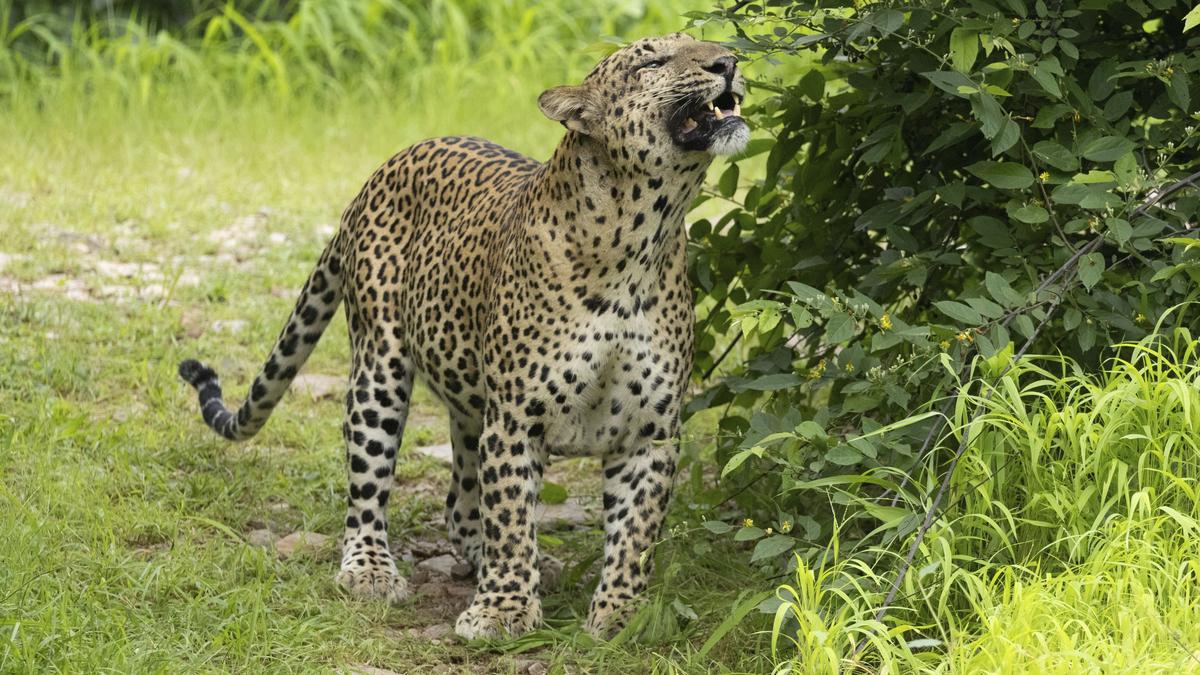

Aishwarya Sridhar first laid eyes on Rana, the young leopard who would become the central character of her recently-released award-winning documentary, Leopard Dynasty: The Rise of Rana, through a Facebook post. A friend of hers, she says, began tagging her on pictures of Rana, taken at the Jhalana Leopard Reserve in Jaipur and “something about him caught my attention.”

This virtual encounter provided to be serendipitous: she had finished a documentary on Asiatic lions and had already done one on tigers, so “in my mind, I wanted to do a trilogy on India’s big cats, and my next natural selection of a subject was the leopard,” says Aishwarya, the first Indian woman to win the prestigious Wildlife Photographer of the Year award, who had been narrowing on locations to shoot leopards at around this time.
Since these pictures of Rana piqued her interest, she decided to spend her Christmas break there in 2022, visiting this small park, India’s first leopard reserve, with her family. “I saw Rana on my first safari in Jhalana,” she says, recalling being struck by the animal’s boldness and nonchalance in that hour or so she spent with him. ‘Something clicked, and I knew I had found my next protagonist. So, I applied for permissions and began filming,” says the Mumbai-based wildlife photographer, conservationist and filmmaker, the co-founder & CEO of Bambee Studios, a production company in India that focuses on natural history and environmental documentaries.
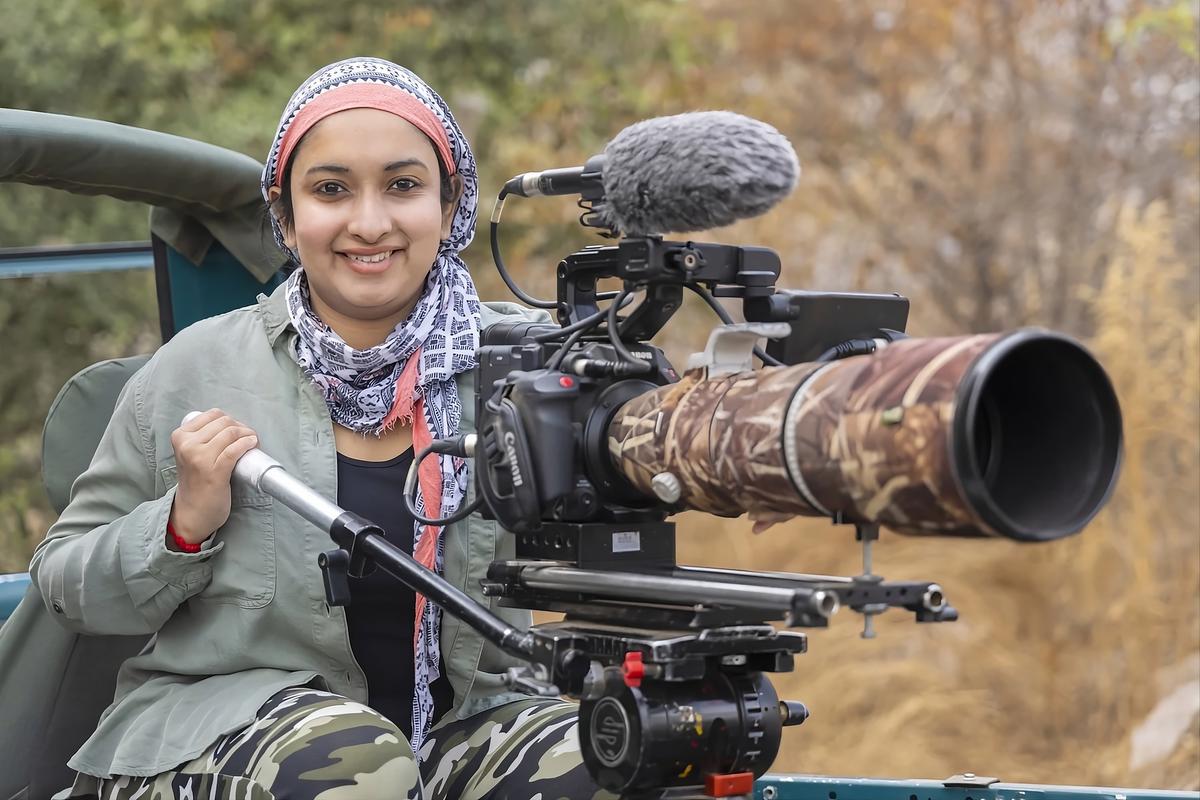
Aishwarya Sridhar
| Photo Credit:
Special Arrangement
She began filming in February 2023, spending over a year in the rock-strewn, semi-arid forests of Rajasthan, patiently tracking this young leopard as he grew stronger and began challenging his father for territory. “It is a constant journey of sitting in the forest, waiting patiently day after day to get those moments that really tie a story together,” says Aishwarya, recalling a couple of her favourite moments of the shoot, especially one involving an encounter between Rana and a nilgai. “It is very difficult to find a leopard that would prey on a species like the nilgai, because the latter is literally three times its size,” she says. When Rana went in for a pregnant female, she was sure that it wouldn’t be a successful hunt. “I thought he would get kicked and come back injured, but, though he struggled for 30 minutes, he did not let go and eventually ended up killing the nilgai,” she says.
By the end of her filming, Aishwarya had nearly 50 terabytes (TB) of footage, which would be whittled down to this 52-minute film. “We started the edit in June 2024, and had a whole 6-7 month very tough editing schedule. Then, we went into post-production — the music came in, the SFX, the foley, the narration, and I simultaneously wrote the story,” says the 29-year-old, who fell in love with the natural world as a child, which she attributes to growing up in Panvel, Navi Mumbai, “a green paradise…I had a lot of wildlife around my own backyard and would end up chasing everything that crept, crawled and flew,” she laughs.

A very “outdoor kid”, she would often accompany her father, a member of the Bombay Natural History Society (BNHS), on trips, falling deeper and deeper in love with wildlife. Soon, she began wanting to document all that she saw on camera, “so my father gifted me a small point-and-shoot, and that is how the journey with photography began. I was an amateur photographer who was very interested in natural history, and that grew with every passing day,” says Aishwarya, who began making wildlife films a couple of years after graduating with a degree in mass media. Some of the films made by the young National Geographic Explorer include Panje-The Last Wetland, Pride of India, and The Queen of Taru, and she has also just completed a film on illegal wildlife trade. “I am deeply passionate about telling stories that leave a lasting impact on society.”
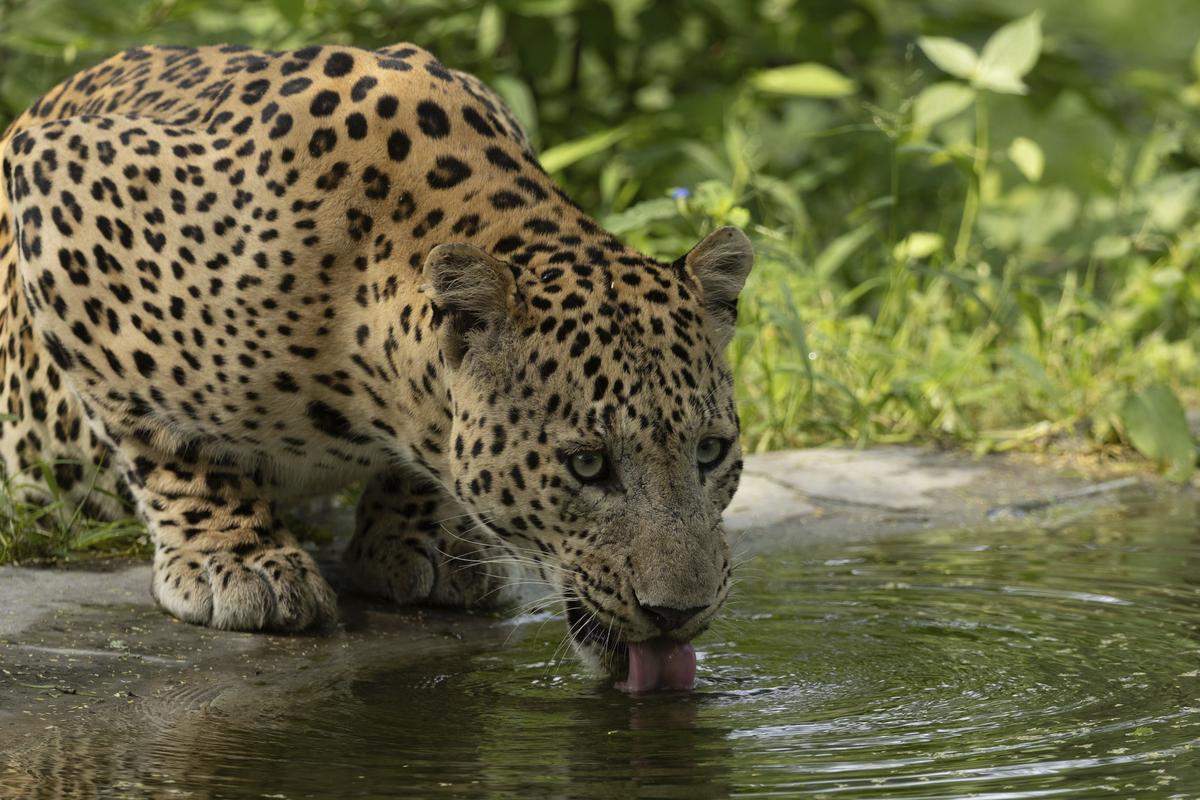
Rana drinking water from a man-made waterhole at Jhalana forest.
| Photo Credit:
Terra Mater Studios GmbH
Leopard Dynasty: The Rise of Rana, co-produced by Terra Mater Studios, Bambee Studios and Ouragan films production, with the participation of ARTE GEIE, has a Bollywood-inspired vibe: think star-crossed love, item numbers, fight sequences and dramatic music. “I have grown up watching Bollywood, and it is a style of cinema I really enjoy,” says Aishwarya. “You don’t see too many big cat stories from India with an Indian gaze; you normally see it through the Western gaze. I wanted to stay true to my roots, but also blend the authenticity of the wild in the film.”

While she agrees that anthropomorphising wild animals is a double-edged sword, she also believes that if entertainment can drive conservation, it is worth taking that route. In a world of shortened attention spans and too much competing content, making a story entertaining is the only way a lay audience will get hooked to a wildlife story, she believes. “Of course, you have to stay true to wild instincts and behaviour, but I personally feel that when you make characters out of animals, people across age groups end up relating to a story,” she says. “I want to make people connect to and fall in love with wildlife.”
Leopard Dynasty: The Rise of Rana is screening on Animal Planet and discovery+
Published – January 29, 2026 06:19 pm IST