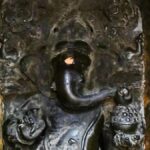



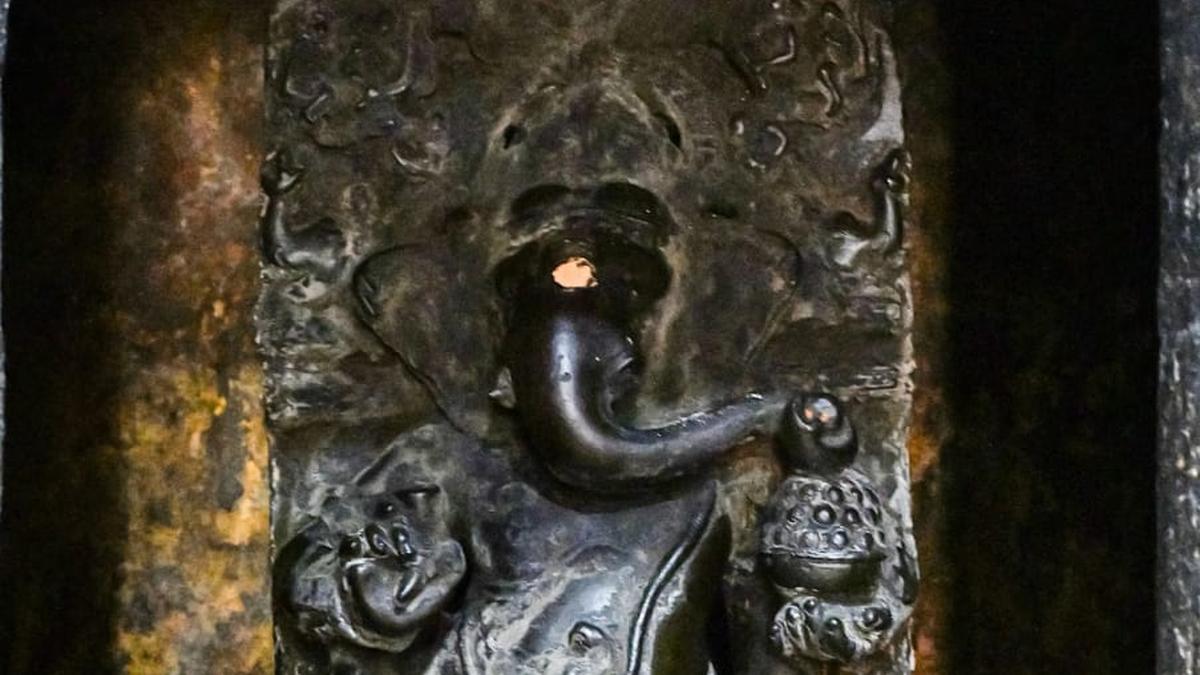


Stone idol of Bengal’s Pala dynasty Vinayagar, worshipped as Gangaikonda Vinayagar, at Nageswaran temple in Kumbakonam
| Photo Credit: B. Jothi Ramalingam
On the left side of the entrance to the sanctum sanctorum of the Nageswaran Temple in Kumbakonam of Thanjavur district stands an unusual statue of Pillaiyar (Lord Vinayagar), adorned with a serpent worn as a sacred thread. Worshipped as Gangaikonda Vinayagar, the idol was brought to the Nageswaran Temple — known as Kudanathi Keezhkottam — by the Chola king Rajendra I following his conquest of Bengal.
“The deity, depicted in a standing posture, is a creation of the Pala dynasty, which ruled in Bihar and Bengal from the eighth to the twelfth century. It is one of the many war trophies brought to Tamil Nadu by Rajendra Chola,” notes Kudavayil Balasubramanian in his book Rajendra Cholan – Victories, Capital, Temples. Stone inscriptions and literary works record the artefacts and sculptures brought by Chola kings from various countries after their conquests.
The Vinayagar in the Nageswaran Temple, facing north, is shown with four hands: one holding a modakam (or kolukattai, a rice-based delicacy), one a broken tusk, one a strand of rudraksha beads, and one a parasu (axe). He is depicted eating the kolukattai with his tusk, while a mouse sits at his feet.
Mr. Balasubramanian says the beauty of the idol impressed the sculptors of the Chola Kingdom, who were renowned for their expertise in bronze casting. “A sculptor cast a copy of the Pala dynasty Vinayagar in bronze. It was found buried in Muthupet in Nagapattinam district and is now on display at the Thanjavur Art Gallery,” he writes.
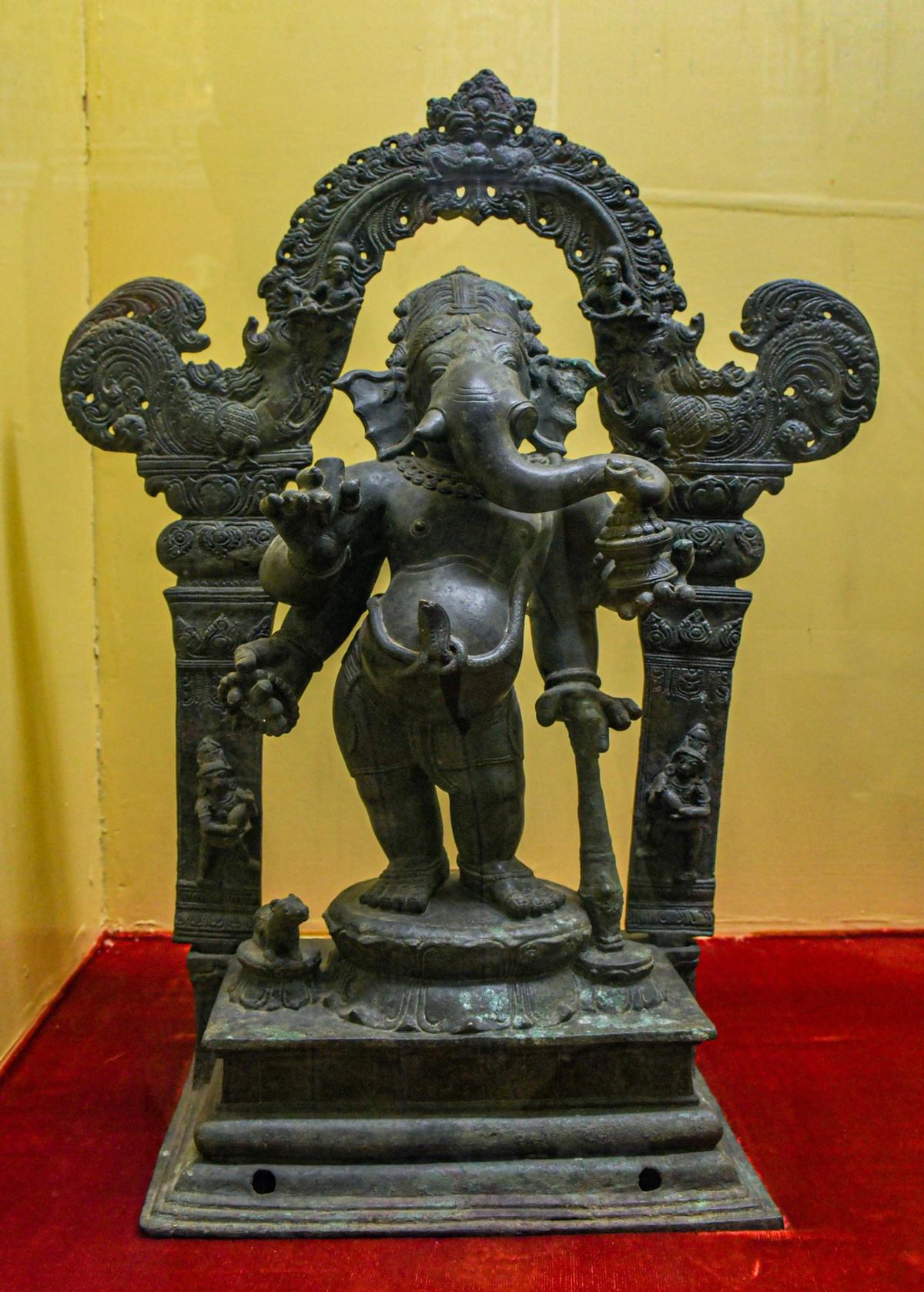
The bronze idol of Bengal’s Pala dynasty Vinayagar now kept on display at the Thanjavur Art Gallery
| Photo Credit:
R. Vengadesh
Historians R. Kalaikovan and M. Nalini, who have studied the origins of Vinayagar worship in Tamil Nadu, say the earliest literary references to the deity are found in the Thevaram hymns of Thirugnanasambandar and Thirunavukkarasar.
“Even the Poolankurichi inscriptions, believed to belong to the period of Silapathikaram and referring to temples and worship, make no mention of Vinayagar. The Saivite minstrels, who praise Lord Muruga in forty-seven places, refer to the elephant-headed God only in a few,” they write.
They point out that the Pallavas, pioneers in the creation of rock-cut temples, did not feature Vinayagar in those structures. “A stone mandapam in Thirukazhukundram, created by Narasimhavarman, also does not include Vinayagar. But, there is a Vinayagar in the Ramanuja rock-cut temple in Mamallapuram,” they explain in their essay Pillaiya Vazhipattin Thotramum Valarchiyum (The origin and growth of Pillaiyar worship).
Vinayagar adorns the Dharma Ratha in Mamallapuram, belonging to the period of Rajasimha. The deity is also found in temples constructed by this king. “Keezhkudavarai in Tiruchirapalli, the Kailasanatha temple in Tirupattur, and the rock-cut temple in Vallam in Chengalpattu district also feature the deity. This clearly shows that Vinayagar began to appear in temples in northern Tamil Nadu only a century after the time of Thirunavukkarasar,” they write.
Mr. Kalaikovan and Ms. Nalini, however, believe the worship of Vinayagar originated in southern Tamil Nadu much earlier and identify the earliest sculpture as the Pillaiyar of Pillaiyarpatti. “Although Pillaiyar is today worshipped as the main deity there, the sculpture was originally created as a kosta deivam (wall shrine deity) of a rock-cut Shiva temple,” they say, noting that it likely dates to either the sixth or seventh century.
Published – November 23, 2025 02:11 pm IST