


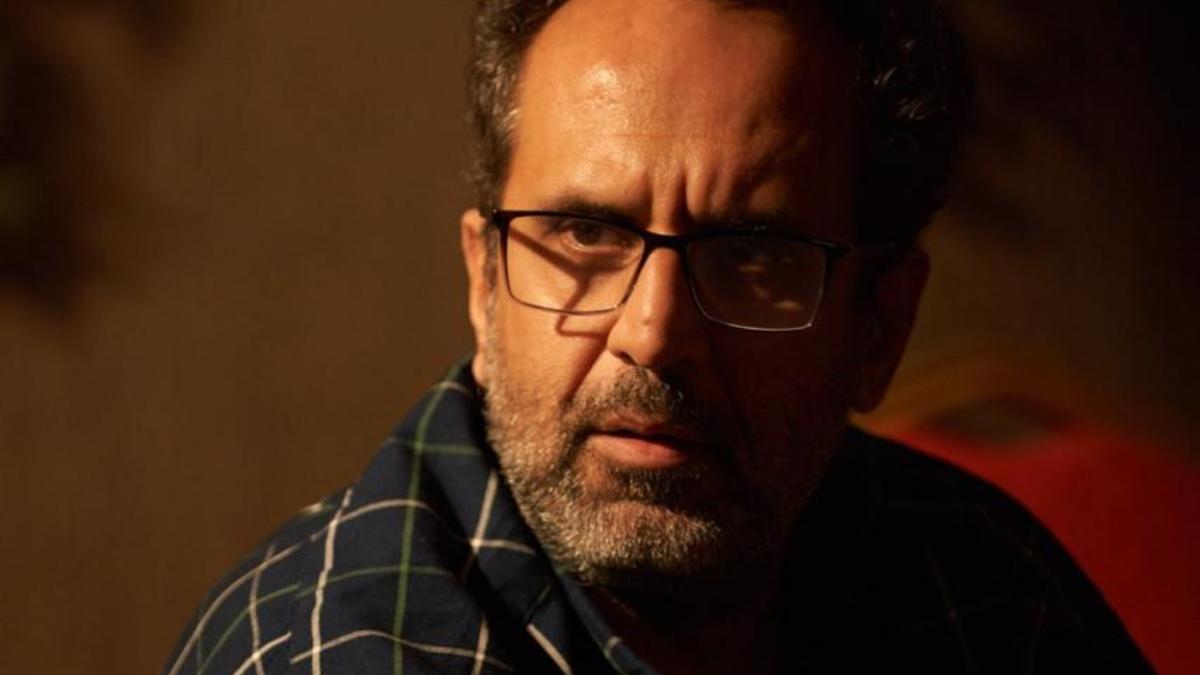

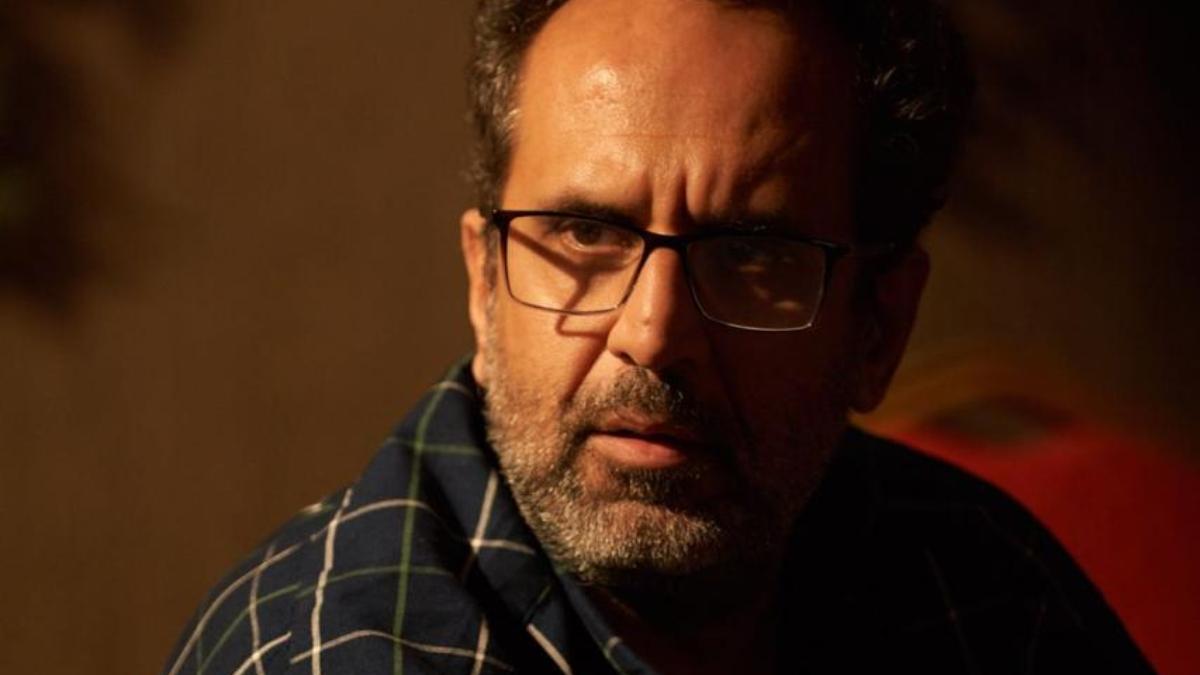
Filmmaker ‘Aanand L Rai’.
| Photo Credit: SPECIAL ARRANGEMENT
Filmmaker Aanand L Rai has been working around the clock as his next film, Tere Ishk Mein, is set for release on November 27. There is excitement in his voice when he tells us how he loves promoting his movies. “Usually, I can’t keep myself awake after 10 pm. But these days, I am like a young boy, running around from one VFX studio to another sound studio,” Rai says, with a smile.
There are glimpses of that young blood and a stormy, obsessive romance in Tere Ishk Mein. Operating in a world similar to that of Raanjhanaa (2013), the Dhanush and Kriti Sanon starrer tells an intense love story between the protagonists, Shankar and Mukti. Rai says he wanted to explore the maturity of love through the film. “There is so much action happening around, so I just felt that it is time to go for a deep, mature love story,” he says, adding that his perspective on love has taken a shift in the last ten years.
“All of us evolve with time through our experiences. Sometimes, you get more practical, sometimes you are emotional and vulnerable. All of that adds to our understanding of the feeling. So, as a filmmaker, I can put that on celluloid and see how others feel about it.”

Tere Ishk Mein is also the third collaboration between Rai and Dhanush, after Raanjhanaa and Atrangi Re (2021). The director feels their relationship has grown over the years. “I met an actor when I worked with him for the first time. Now, I have a son,” Rai says, as he goes on to reflect on the transactional nature of relationships in the film industry.
“We are selfish people who are together for some reason. So, in such a space, if you discover a relationship that goes beyond just working in films, then it is magical. I can say that my profession gave me something very personal.”
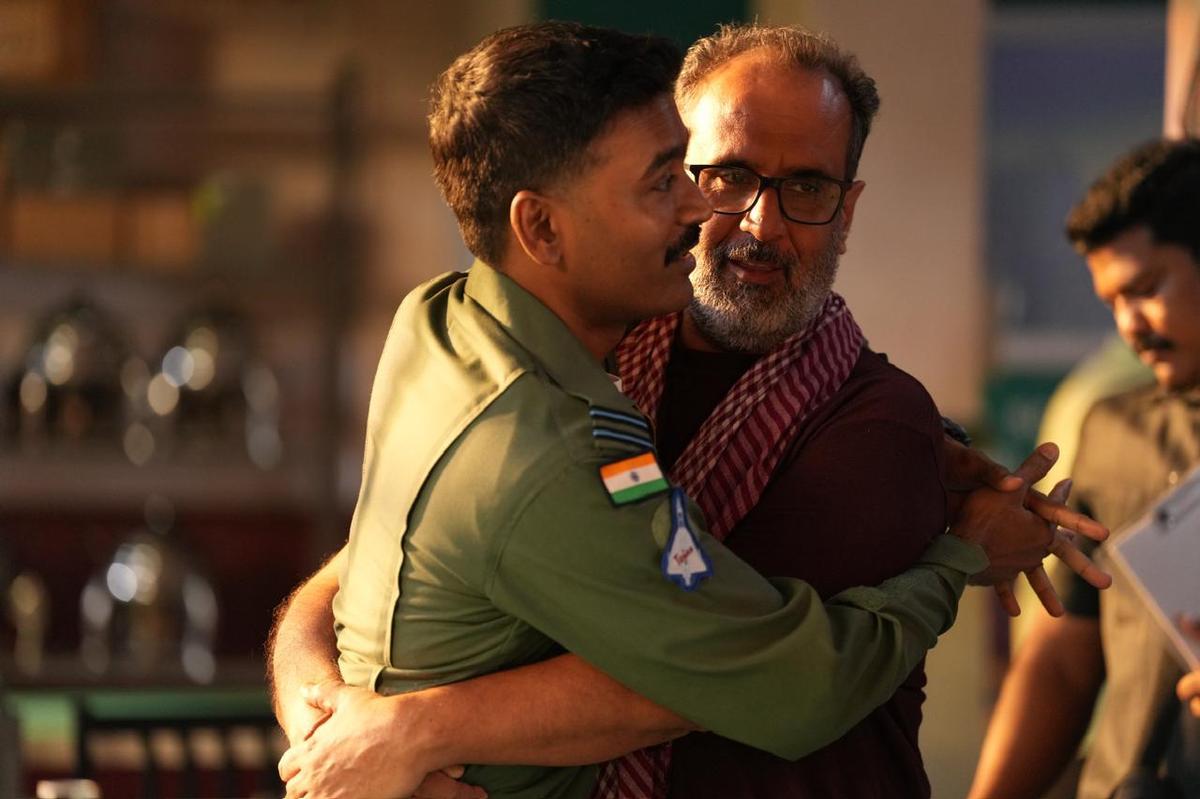
Dhanush and Aanand L Rai during the shoot of ‘Tere Ishk Mein’.
| Photo Credit:
SPECIAL ARRANGEMENT
It is also Rai’s third collaboration with AR Rahman, who has added a deepening complexity into the world of Tere Ishk Mein, whether it is the electrifying title track or the piercing study of melancholia in ‘Usey Kehna’. Rai calls Rahman a “master craftsman” for his astute ability to understand the narrative through music.
“Whenever I have a layered story that has a lot to say, I need him in my life. I can’t drive a film with such intensity alone. For Raanjhanaa, he crafted something else. For Atrangi Re, he understood what I wanted as a maker. For me, he is like a strong pillar who is holding the roof together,” Rai says.
Apart from generating excitement about the three artists coming together, the trailer of Tere Ishk Mein has also sparked discussions around toxic masculinity, with many describing Dhanush’s character as an ‘alpha male’. In a scene, he is shown violently entering a wedding ceremony and setting things on fire, threatening to burn the city down. The film is written by Himanshu Sharma (who also wrote Raanjhanaa) and Neeraj Yadav.
Rai maintains that they just wanted to tell a story of two different kinds of people who fall in love with each other. “A story is never conceived thinking of your character as an alpha. For me, the character is emotional and sensitive and nothing that he does is wrong,” he says. “At the same time, when others see the film, they can look at the character as alpha. But I can’t do that. I am ready for a conversation too, as this is what you make films for.”
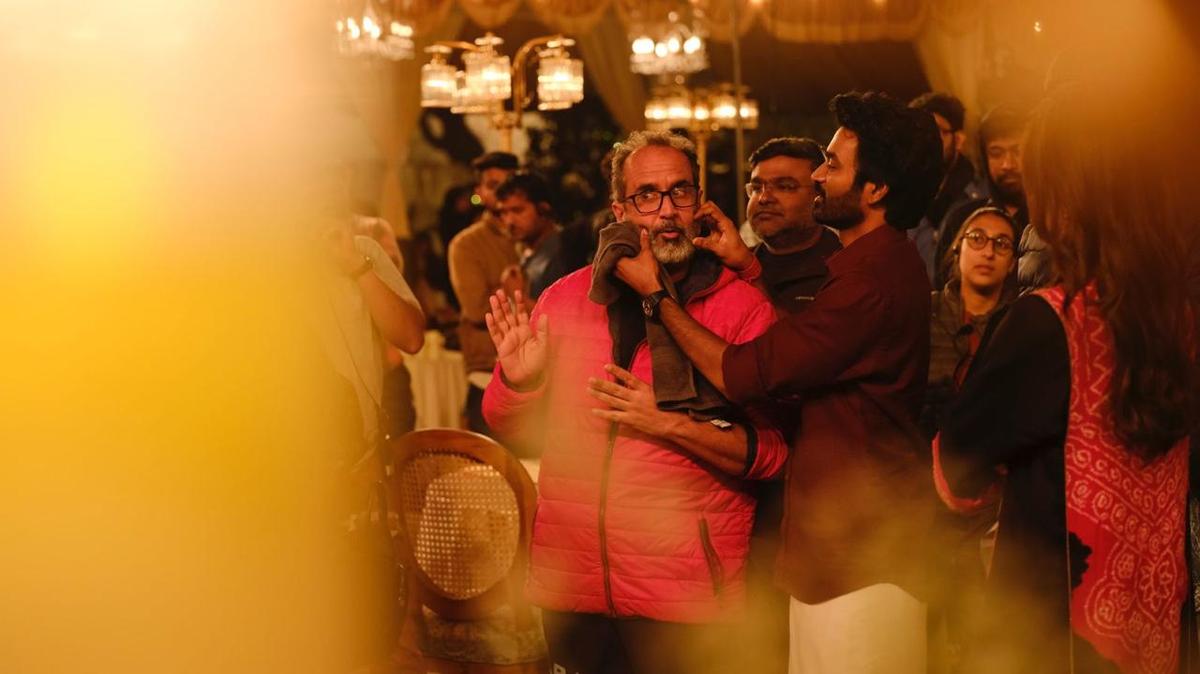
Aanand L Rai and Dhanush from the sets of ‘Tere Ishk Mein’
| Photo Credit:
SPECIAL ARRANGEMENT
The romantic drama is also being compared to Sandeep Reddy Vanga’s Animal (2023) and Kabir Singh (2019). They were criticised as misogynistic by a section of people. Rai feels that his film is different. “It doesn’t belong to the same space. There are similarities in how the characters have aggression and rage. But those are just the ingredients and not the story,” he says.
The director also disagrees with the criticism that Raanjhanaa received for normalising stalking. “I never found Dhanush’s character in Raanjhanaa to be a stalker. It is just my perspective of a boy from Benaras, and that is his expression. I don’t understand why we take everything on ourselves. We are just telling stories to entertain,” he says and concludes, “Characters are bound to have flaws. I am just telling a human story of people with flaws. This is not Ramayana or Mahabharata.”
Published – November 22, 2025 06:14 pm IST