



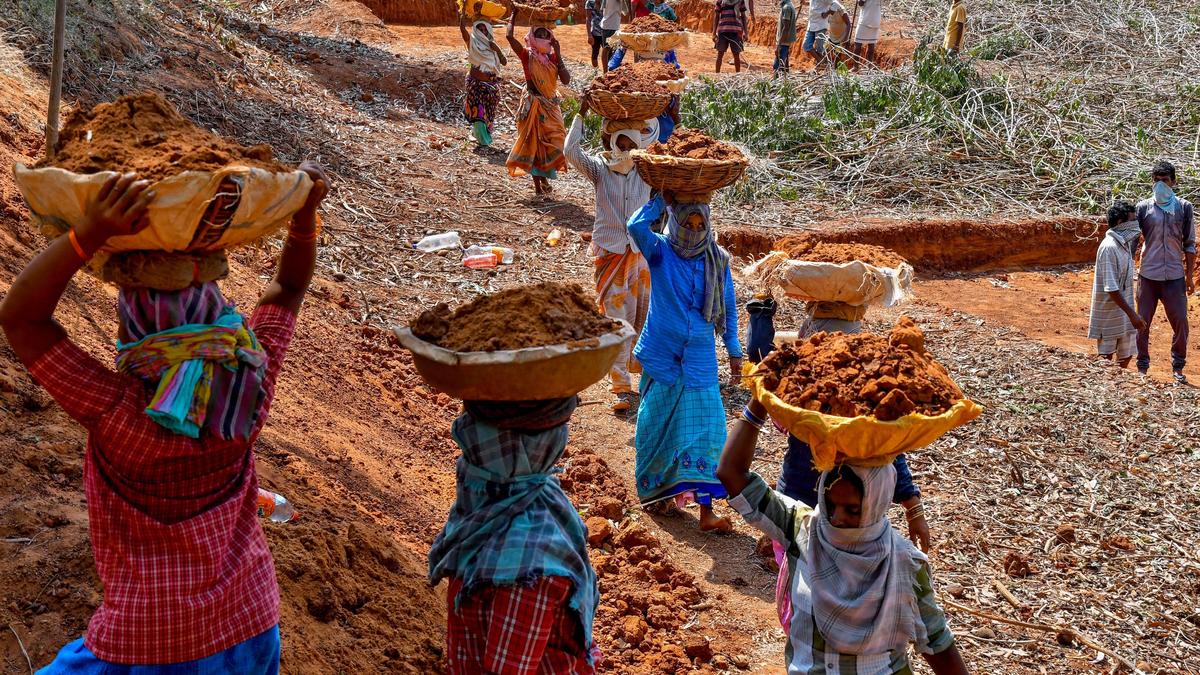


The decline is widespread across the State with 23 out of 26 districts recording a fall in employment. NTR district registers the most severe drop at 44.7%, followed by Chittoor at 31.3%. File
| Photo Credit: K.R. DEEPAK
Andhra Pradesh has recorded a steep decline in employment under the Mahatma Gandhi National Rural Employment Guarantee Scheme (MGNREGS) during the first half of the financial year, raising concerns over shrinking work availability, reduced incomes, and introduction of new digital barriers for rural workers.
As per an analysis by the Delhi-based research organisation, LibTech India, the person-days generated under the scheme fell by 13.6% between April and September 2025, compared to the corresponding months the previous year, and a sharper fall than the 10.4% decline recorded nationally.
The number of households that received work also reduced from 42.79 lakh to 40.74 lakh, marking a 4.8% drop.
The decline was widespread across the State. Twenty-three out of 26 districts recorded a fall in employment. NTR district registered the most severe drop at 44.7%, followed by Chittoor at 31.3%, while Nellore and Visakhapatnam showed only marginal increases.
Despite a rise in the notified wage rate from ₹300 to ₹307, household earnings under the MGNREGS fell from ₹10,695 to ₹10,178 this year because fewer days of work were provided. The total earnings for workers in the State dropped by ₹435 crore compared to the previous year.
LibTech India’s Data Analyst Diwakar Mantri said the wage revision had offered little relief because work availability declined at the same time.
“A wage hike has no meaning if employment itself is not guaranteed,” Mr. Diwakar said. “Workers earned less this year simply because they received fewer days of work,” he added.
SC/STs worst-hit
The report finds that the decline hit the Scheduled Castes and the Scheduled Tribes households the hardest.
The person-days for SC workers fell by 18.7% and by 17% for ST workers, compared to a 11.3% drop among other workers.
Though SCs and STs together make up just 18.7% of the State’s population, they constitute 31.9% of MGNREGS workers. This showed how deeply these groups relied on the programme for income stability, the organisation noted.
The data revealed not just a statistical change, but a social vulnerability. “SC and ST workers rely on MGNREGS more than any other group, and they have experienced the steepest fall in the person-days. When work availability shrinks, they feel the impact first and the most,” Mr. Diwakar said.
Digital hurdle
The report also flags that the Union Rural Development Ministry has made Aadhaar-based e-KYC mandatory for workers across the country to continue accessing MGNREGS.
In Andhra Pradesh, only 67.9% of the registered workers completed e-KYC, leaving nearly 38 lakh workers pending. Among active workers —those currently seeking work — more than 21.6 lakh have not yet completed the process.
LibTech India warns that without adequate facilitation at the field level, the e-KYC prerequisite can block genuine workers from accessing a legal entitlement.
“Workers may end up losing access to work not because they don’t want employment, but because a digital step stands in the way,” said Mr. Diwakar.
While Andhra Pradesh has historically been one of the strongest performers under the MGNREGS, the report notes that the current trends mark a reversal: fewer households are getting work, household earnings have declined, and a new digital condition is being imposed when employment itself is falling.
The briefing note titled ‘Guarantee Under Strain: MGNREGA Employment and e-KYC Exclusions in Andhra Pradesh (April–September 2025)’ is available on LibTech India.
Published – October 31, 2025 08:04 pm IST