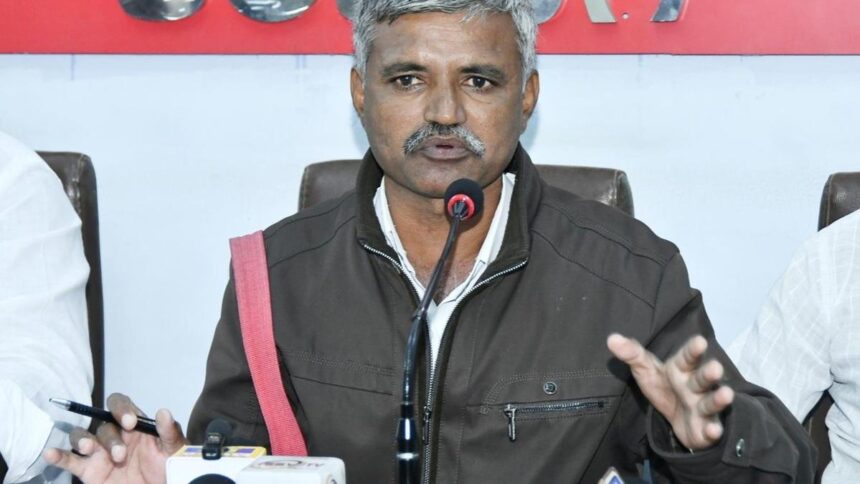







Julian Hill, Assistant Minister for International Education, Australia
| Photo Credit: By Arrangement
Australia has announced several reforms to its international education and migration systems, positioning the country as a global destination for high-calibre students and young professionals.
The reforms come amid concerns among sections of Indian parents and students following isolated racism-related rallies and amplified negativity on social media. Julian Hill, Assistant Minister for International Education, clarified that such incidents do not reflect the country’s true social landscape. “Australia is the safest country in the world and one of the most successful multicultural societies,” he said, adding, “Social media often gives a loud microphone to a negative minority but they do not represent Australia.”
Indians are among the fastest-growing skilled migrant groups with Hindus and Sikhs from Indian heritage making up nearly 4% of Australia’s population. Nearly 40% of the Indian community resides in Melbourne, a city that has become a cultural hub featuring Diwali celebrations across public spaces and the globally renowned Indian Film Festival of Melbourne, the largest celebration of Indian cinema outside India.
Historically, Indian students viewed the US as their first-choice destination, but Mr.Hill said Australia’s strategy was different. “Parents invest heavily in education. They want safety first, just like I would want my daughter to be safe abroad. Quality is the second factor. We are not a cheap country but a quality destination.” He added that students can work 24 hours a week, but must have funds for their studies.
Australia’s complete university ecosystem, he said, consistently ranks high in research and industry integration, offering a strong return on investment. With nine Australian universities ranked among the world’s top 100, he insists that academic excellence, globally recognised research systems and thriving industry partnerships make Australia a high-value destination.
The government is also focusing on south India, including Telangana, which Mr.Hill described as a great destination for talent, innovation and research.
Australia tightened migration norms in recent years. While earlier cohorts prioritised permanent residency, a growing percentage of students now want to return to India with global experience. “There is nothing wrong in seeking migration,” Mr.Hill said, adding, “Students who do not qualify for skilled visas must return. Our goal is to ensure students come to study, not purely to migrate.”
Obtaining a study visa is often a family celebration for Indian households. However, Mr. Hill cautioned against fraudulent practices. “In some parts of India, we see fake English language skill test scores and fake bank statements. The Australian High Commission is strict. Genuine students have nothing to worry.”
While many Indian students gravitate toward IT, Australia is encouraging enrolment in engineering, sciences, health and business. South Indian students, Hill said, are particularly inclined towards research-driven careers aligned with the region’s booming tech and start-up ecosystem.
The MATES programme offers up to 3,000 visas to high-performing graduates from top Indian universities in fields like IT, science and technology. Successful applicants can work in Australia for two to three years in relevant industries, with the government selecting candidates from a pool of applicants. “This programme will become a strong bridge between India and Australia,” Mr.Hill said, describing it as a long-term talent partnership between the two nations.
Published – December 07, 2025 11:35 pm IST