



Late evening at Bengaluru’s Sankey Tank is a spectacular visual experience, dusk-kissed skies turning the lake’s water molten while the park’s other regulars — amblers, brisk walkers, couples in love, runners, cormorants, ducks and red slider turtles (pets-turned-invaders) — slowly recede into the darkness. It is also when flying foxes, who have been roosting on the trees bordering this man-made lake, named after the man who built it in 1882 to meet the city’s water supply needs, wake up.
Roundglass Sustain’s recently-released film Batman and the Baavali, a documentary that showcases the nocturnal world of bats with bat conservationist Rohit Chakravarty, captures this stunning moment: swathes of these fruit bats flying across the park at dusk, silhouetted against the darkening skies, some even dipping down to skim the surface of the lake to hydrate themselves.
“They go down to the water…make a splash with their chest…head off to the nearest tree…and drink water from the wet fur,” explains Rohit, in the film. “And all of this is happening bang in the middle of a city.”
Rohit, whose work with bats often take him to remote, far-flung places, says spotting these flying foxes in the heart of the city was one of his most satisfying moments. “While I would have expected bats to be there, I didn’t go looking for them,” he says, pointing out that almost every city in India has bats, but we simply do not notice them. “Bats are in places where you would least expect them, and there are many such places in Bengaluru.”
Making the film
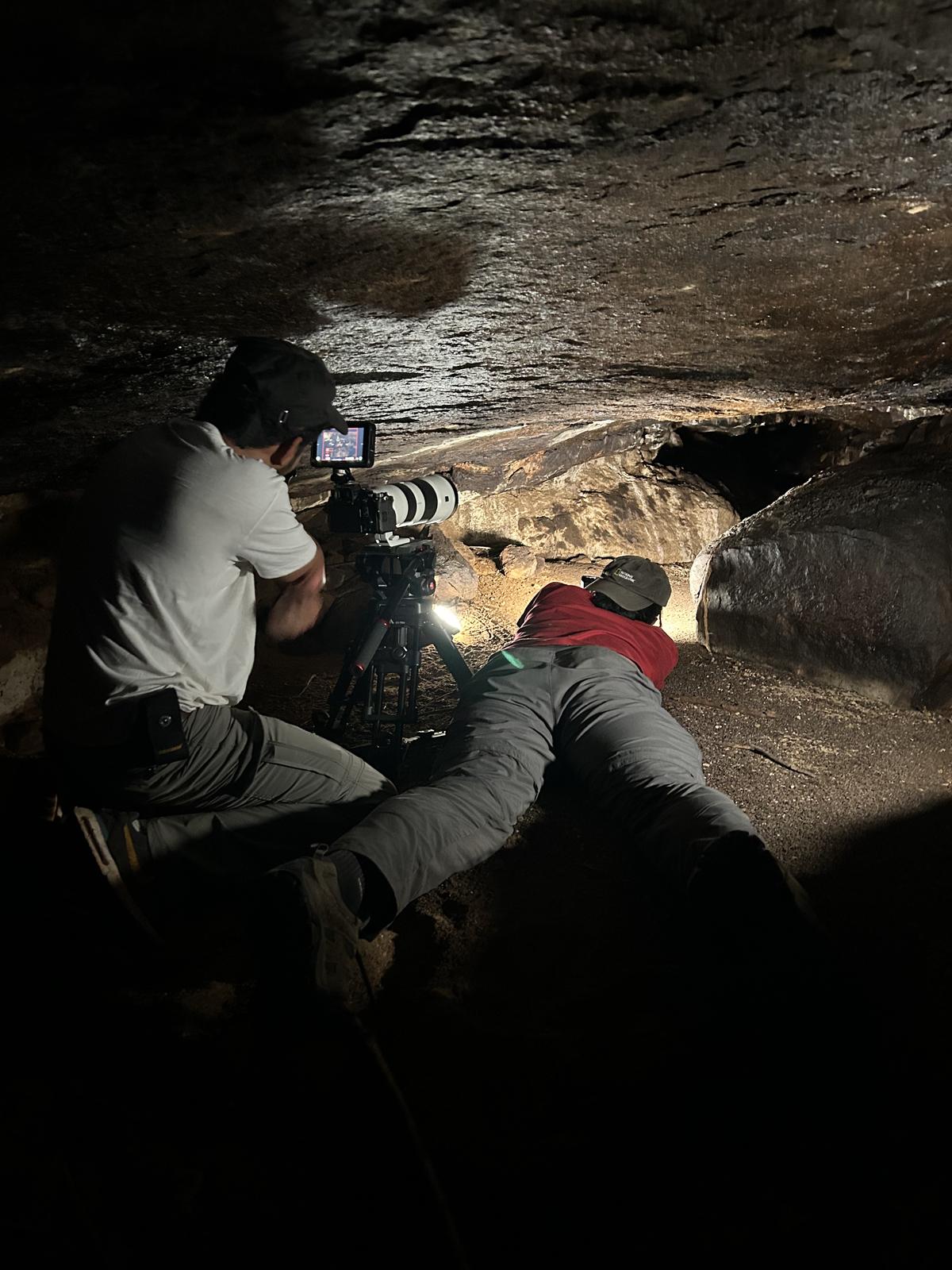
Bats are often found in the heart of our cities
| Photo Credit:
Roundglass Sustain
Batman and the Baavali, whose soundtrack has been created by sound artist Nikhil Narendra with bat echolocation calls, introduces viewers to some of these places. These include the canopies of the many Singapore Cherry trees that dot the city, an abandoned building, the IISc campus and even the Parsi Tower of Silence.
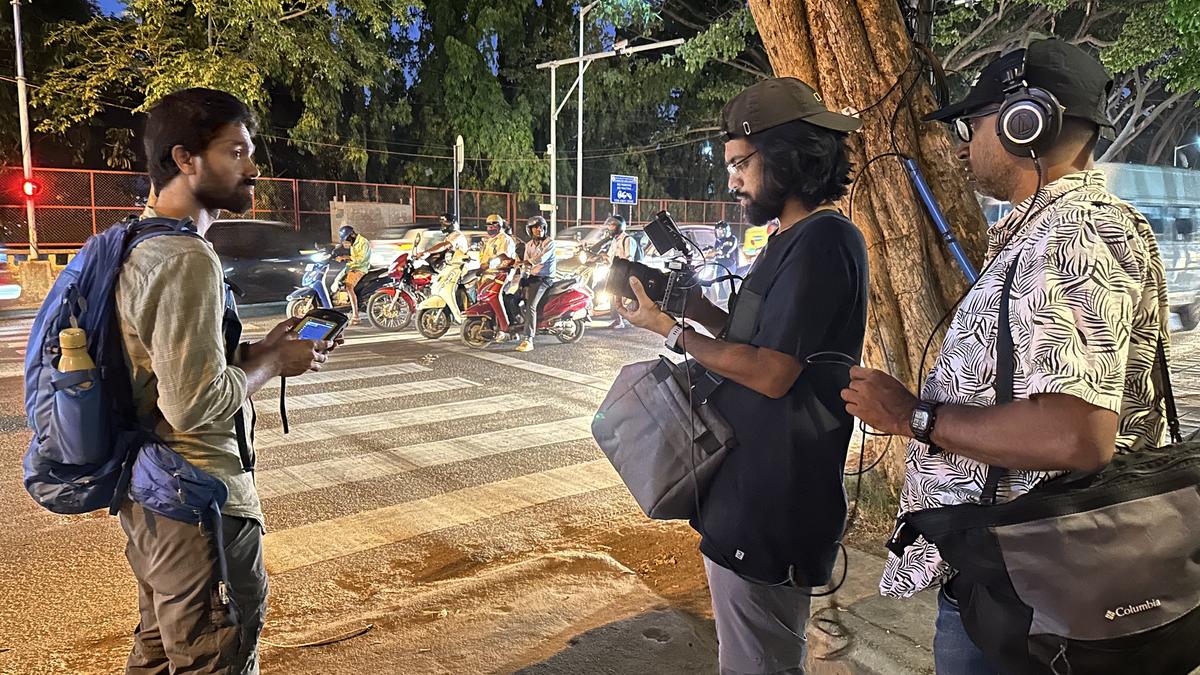
The film follows Rohit, bat-detector in hand, trawling through the city, looking for and identifying bats in the various nooks and crannies as well as amidst the tree cover. Dheeraj Aithal who co-directed this film with Pradeep Hegde, says,“ We were quite sure we wanted it to be a journey because both Pradeep and I were curious about where these bats went.”
They would often see bats flying out in the evening or flying in at dawn, but never really knew where they roosted, so “that was something on our minds, and we thought that through this journey, we might get the answer to this question.”
According to Samreen Farooqui, the head of films at Roundglass Sustain, the genesis of the film stretches back several years. “We started Roundglass Sustain five or six years ago with the mindset that the wild is far away. But slowly we realised that the wild was right here; you just have to open your eyes to see it.”
This, in turn, led to a series of films, set in different cities in India, focussing on how urban centres too support diverse plants and animals. When she wanted to do a series on the urban wildlife of Bengaluru, in 2022 or so, she reached out to Pradeep and Dheeraj, and they “started to brainstorm on what we can bring in, when it comes to Bengaluru.”
Bats, she says, came up early in that conversation. “I live very close to the Bellandur lake, and there is a reserve forest there,” says Samreen, who would often see the bats roosting there in the evenings. “So they were anyway on my mind.” And, so, when Pradeep and Dheeraj got involved and proposed this idea of following Rohit as he tried to find bats in Bengaluru, “the project took wings,” she says.
Bats and the city
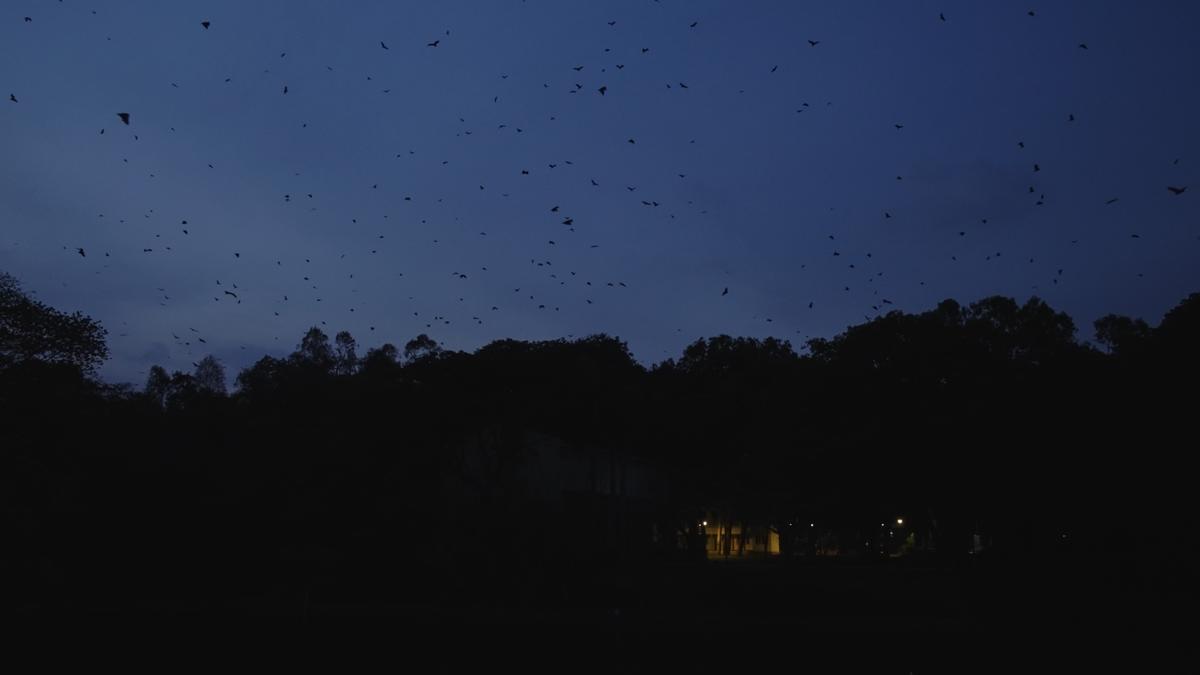
Bats at Sankey Tank
| Photo Credit:
Roundglass Sustain
Bats, of which there are around 1,500 species worldwide, are the second most common group of mammals after rodents and the only one capable of true flight. Around 135 of them live in India alone, “with something like 10-15 species in Bengaluru,” says Rohit.
Though humans have coexisted with bats for hundreds of thousands of years there is often a negative perception about them. Not only does folklore and literature often associate bats with death and darkness, but now, humans fear them more because they are known to serve as natural reservoirs of many viruses.
However, bats also offer vital ecosystem services: “They feed on a lot of insects; even a small bat of about 5 grams can eat up to 25% of its body-weight, something like a 1,000 mosquito-sized insects a night,” he says.
Given that they are some of the few animals that prey on mosquitoes and there are so many bats all around us, it adds up to a lot of insects. Moreover, bats are among the most prolific dispersers of seeds and “in a forested environment, they are one of the major pollinators,” says Rohit, who believes that the best way to conserve bats is simply to leave them alone.
Pradeep hopes that the film succeeds in giving out “the right information about bats, given that there is so much misinformation about them,” he says, pointing out that people simply do not know enough about bats. “Ever since college, I’ve heard people speak of bats flying over roofs or across the cityscape in the evening, but they did not always know what they were,” he says. Many people imagined them to be birds, instead of the flying mammals that they are, “so we thought that this was an important story to tell.”
Filming these bats took longer than they expected, “because we underestimated the number of permits we needed from different departments, given that we were shooting in places like Sankey Tank and Bugle Rock,” says Pradeep.
However, the process also made them realise something important: “A lot of places where these bats roost are mostly government properties, essentially places which have not changed much,” notes Dheeraj.
It is the presence of these untouched pockets, as well as the deep concern that many people have in protecting the city’s environment, which allow urban fauna like bats or lorises to thrive in Bengaluru, believes Samreen. “For me, it was an affirmation that Bengaluru has a great civil society that cares about its environment, and I’m happy that we are documenting it, in whatever small way possible,” she says.