


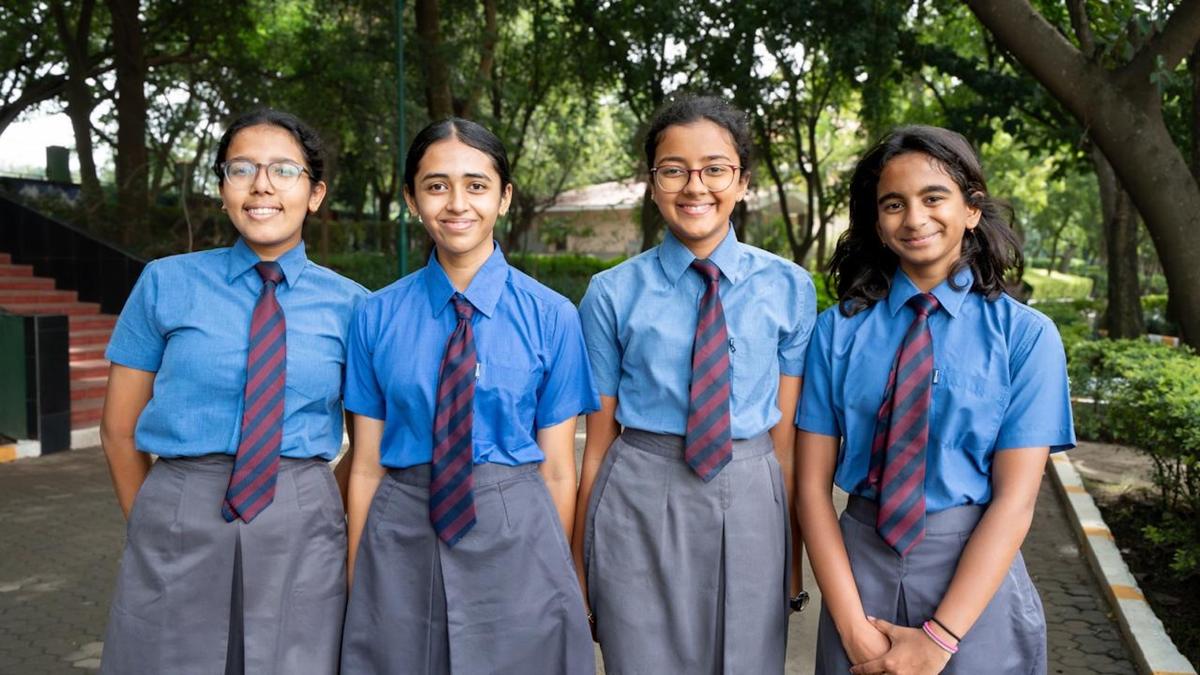

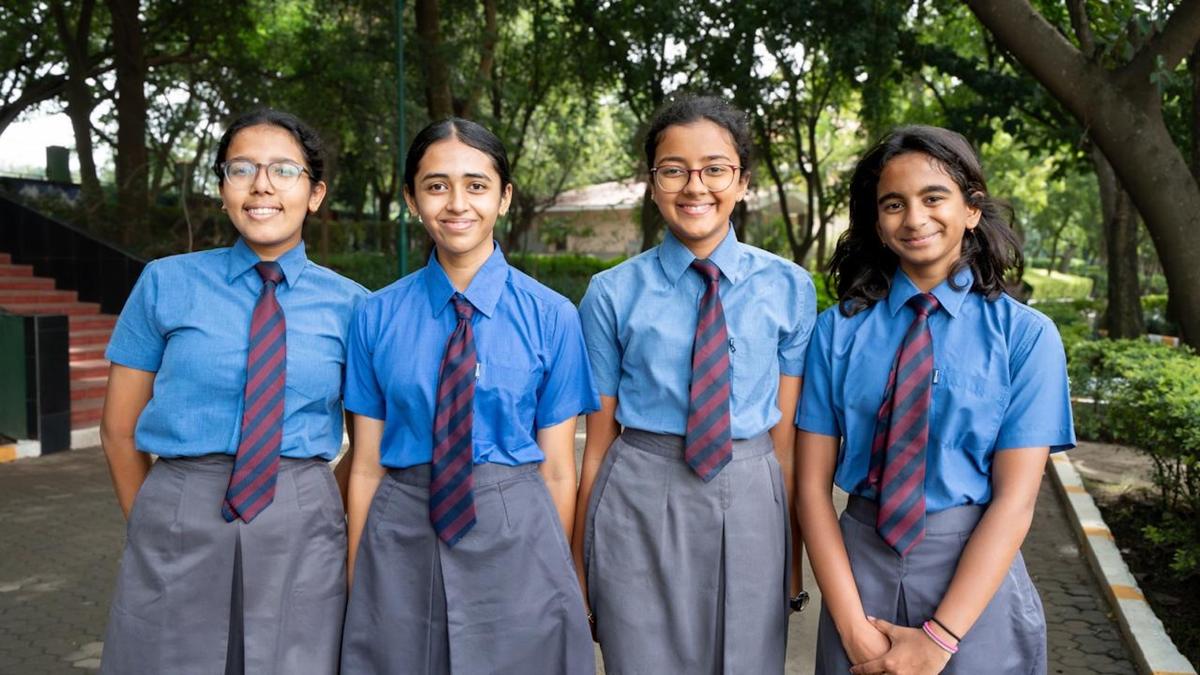
(L-R) Mahi Khandelwal, Aadya Yeri, Maya Candade and Anoushka Subramanyam
| Photo Credit: Special arrangement
In Bengaluru, almost everyone would have, at some point, sent up a silent prayer for an ambulance stranded in the gridlock. Not being able to find an ambulance on time, more often than not resulting in tragic loss, is yet another common issue.
Four young girls from The International School Bangalore (TISB) may have developed a solution for this.
‘Ambulink’, an app developed by Aadya Yeri, Anoushka Subramanyam, Mahi Khandelwal, and Maya Candade- all Grade 8 students from TISB- has been designed to find ambulances quickly, help the ambulances navigate congestion and enable faster coordination during medical emergencies.
Global recognition
The all-girls team, which designed Ambulink recently won the Global Grand Prize at Technovation Girls 2025, one of the world’s largest tech-entrepreneurship competitions encouraging girls to pursue STEM. Selected from 33,000 participants across 117 countries, Ambulink was the only finalist entry from Asia this year.
“In India there are so many contact numbers for ambulances – numbers issued by the government, private entities like hospitals, NGOs and so on. Government ambulances often don’t reach on time, whereas the private ones are extremely expensive and therefore inaccessible for most,” said Ms. Khandelwal.
“Our plan is to make the pricing of ambulances affordable and to improve accessibility by ensuring there are no long waiting times or hard to reach numbers,” she explained.
User-friendly features
The app works on an aggregator model similar to that of taxi aggregators. When a user tried to book an ambulance, the request is sent to ambulance drivers within a 10-km radius. Once a driver accepts the request, the user can track the former’s live location. Drivers need to produce their medical number and licence to register on the app.
While the user has the option to choose a hospital, the app also can give suggestions in terms of hospitals for specific needs, based on the inputs of the user.
They have incorporated Google Maps and ChatGPT into the app. The ChatGPT helps with suggestions of measures to be taken to help the patient while waiting for the ambulance. It has been ensured that the information is given in a concise manner and not as lengthy texts, explain Ms. Candade and Ms. Subramanyam.
Shorter time, lower price
The team estimates that the app would allow the users to get an ambulance within 15 minutes of booking and hopes that the volume of bookings would help to bring down the prices.
“With our app, a much wider audience opens up for the ambulance drivers. More number of bookings means that they can reduce the price of each individual ride,” Ms. Khandelwal said.
Multiple stakeholders including doctors, ambulance drivers, hospital owners and cab aggregators were consulted during the design process of the app which is currently in its prototype stage. Rohit Shamdasani and Kavyashree Yeri from Adobe mentored the team.
Future plans
“We have seen the potential of technology in improving people’s day-to-day life. The competition and developing the app has allowed us to truly see the power of technology to help people in emergency situations too. Now our focus is on improving the app and adding more features to make it an easier experience for the users,” said Ms. Yeri.
The students are now exploring the possibility of working with traffic police to give an advance notification when an ambulance is on its way to a patient or a hospital so that arrangements could be made for its quick passing. Plans are also on to use AI for real-time language translation.
Published – November 30, 2025 01:32 am IST