



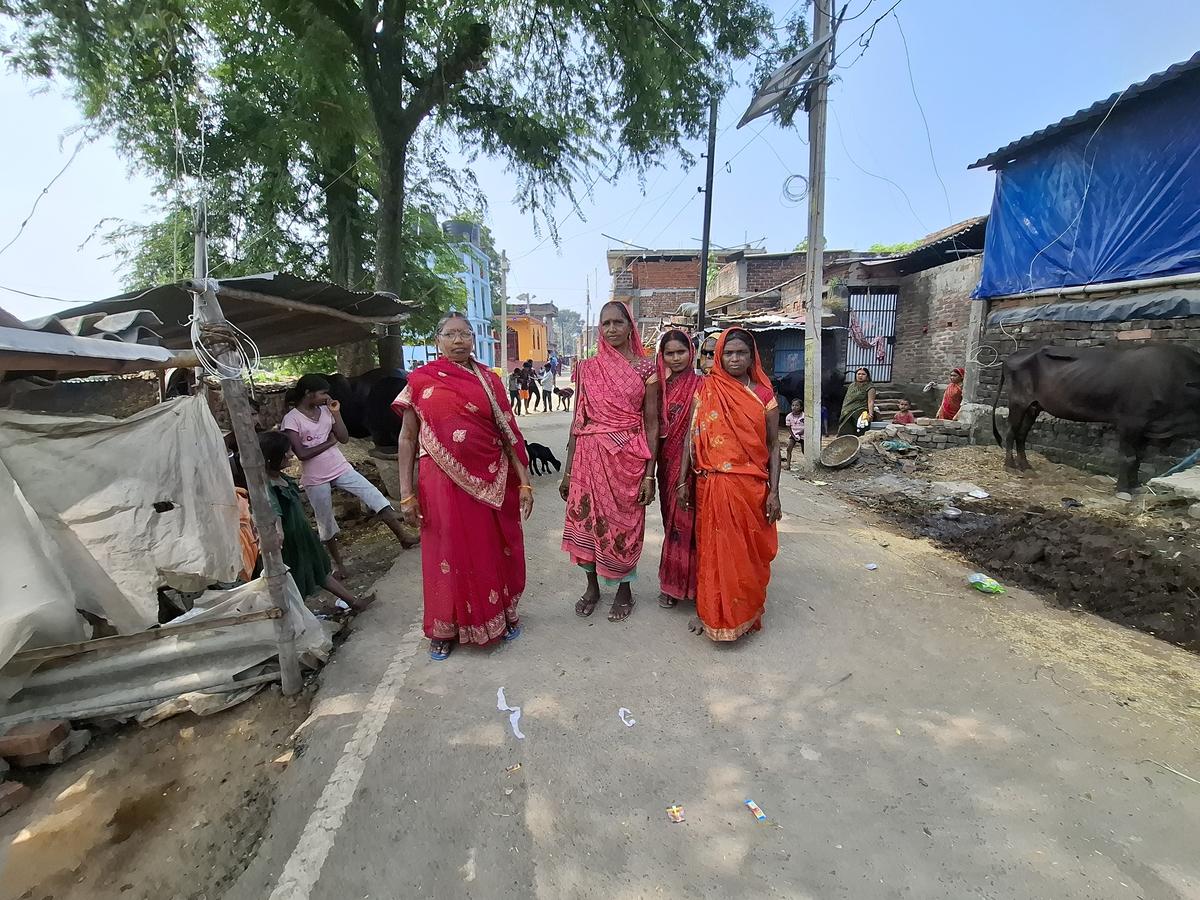
Leading a black goat to her home in Kafarpur village in Bihar’s Jehanabad district, 58-year-old Kiran Devi hears men discussing politics, and pauses to offer her two bits on the topic. “Indira Gandhi showed the country that a woman could lead, but Nitish Kumar gave us the opportunity to lead,” she says, summing up the Bihar Chief Minister’s legacy in a sentence.
The goat is Ms. Devi’s newest acquisition, a purchase made using the ₹10,000 that she received under the Nitish Kumar-led government’s Mukhyamantri Mahila Rozgar Yojana last month. Under the scheme, ₹10,000 each has been given to 1.2 crore women between the ages of 18 and 60 years who are associated with Jeevika, a World Bank-aided Bihar Rural Livelihoods Project. So far, Rs 12,100 crore — about 4% of Bihar’s annual budget — has been transferred into the bank accounts of 1.21 crore women beneficiaries. Of more than 7 crore voters in Bihar, around 3.5 crore are women, meaning that about a third of them have benefited from the scheme.
Ms. Devi is a Chouhan, an extremely backward class (EBC) voter, and her village falls under the reserved Assembly constituency of Makhdumpur. The last time that Mr. Kumar’s Janata Dal (United) occupied the seat was in 2010 when former Chief Minister Jitan Ram Manjhi, then a JD(U) member, won from here. This time, the seat is being contested by the JD(U)’s ally in the ruling NDA, the Lok Janshakti Party, and Ms. Devi is clear that her vote will be in its favour.
Changing lives
Seeing her talk, other women also join in. Kaanti Devi, 48, her hand smeared with the cow-dung she had been mixing, pipes in to credit Mr. Kumar for making it safe for women to move around. “Mela gaye, mithai khaye (Went to the fair, ate sweets),” she says, laughing while as she adjusts the pallu on her head. On a serious note, she adds, she too bought goats. The women plunge into a discussion of how much they expect to gain from their new purchases by the end of the year, explaining that goats give birth twice a year. If reared well, they could earn a neat sum for their owners.
The government has promised to award ₹2 lakh to high-performing beneficiaries who manage to use the money as capital for their businesses. However, the criteria for assessing such beneficiaries has not been spelt out yet.
Financial viability
According to a senior Bihar government official, the Mukhyamantri Mahila Rozgar Yojana had been in the works for nearly six months and is the result of an intense debate within the government. Several models were studied, including the Maharashtra government’s Mukhyamantri Majhi Ladki Bahin Yojana that is widely credited for the NDA’s latest victory in the State. That was scheme launched just ahead of the election in June 2024 and offers ₹₹1,500 per month to eligible women. Lately, though, it has run into rough weather, causing a serious imbalance in the Maharashtra budget.
“Both ideas were weighed: monthly payouts to the beneficiaries verses a one-time payment. After study, it was settled that the second model is financially more viable,” a senior Bihar government official said.
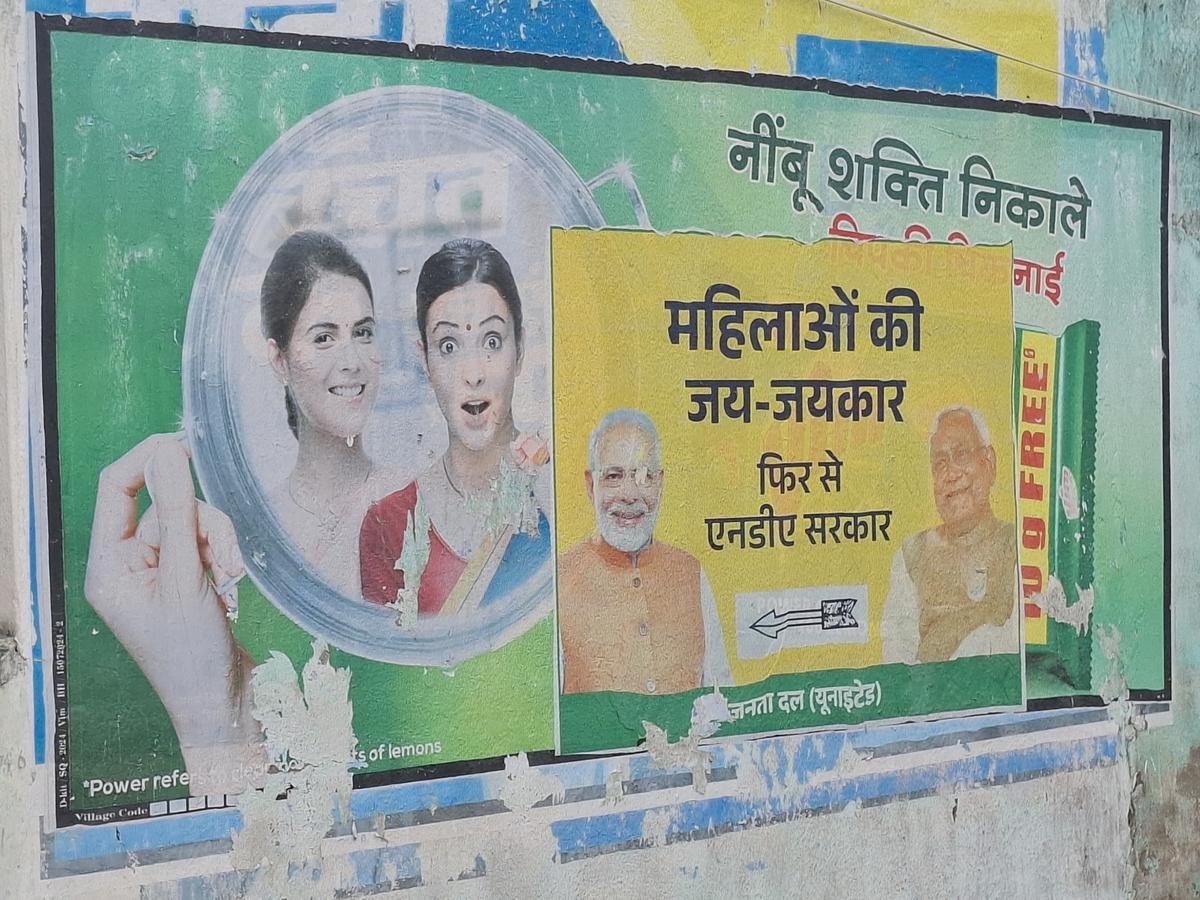
Financially viable or not, the scheme is proving to be a game-changer for the women themselves. It also helps to further build up the caste-neutral constituency of women voters that Nitish Kumar has created for himself, with his various women-centric schemes, from increasing reservation for them in panchayats to scholarships and financial aid for girl students. The Jeevika scheme, for instance, gave many women cash in their own 3+hands for the first time, granting them a voice in decisions made both inside and outside the house.
Expanding horizons
Chander Deep Das, 65, is holding forth on who he believes has a better chance at winning in the Kurhani Assembly seat in Muzaffarpur district, where there is a direct contest between the incumbent BJP MLA Kedar Prasad Gupta and the RJD’s Bablu Kushwaha. His wife, Bina Rani inches closer. “Nitish Kumar has given us so many facilities for all girls and boys,” she says, detailing the stationary scholarship that the government provides for students.
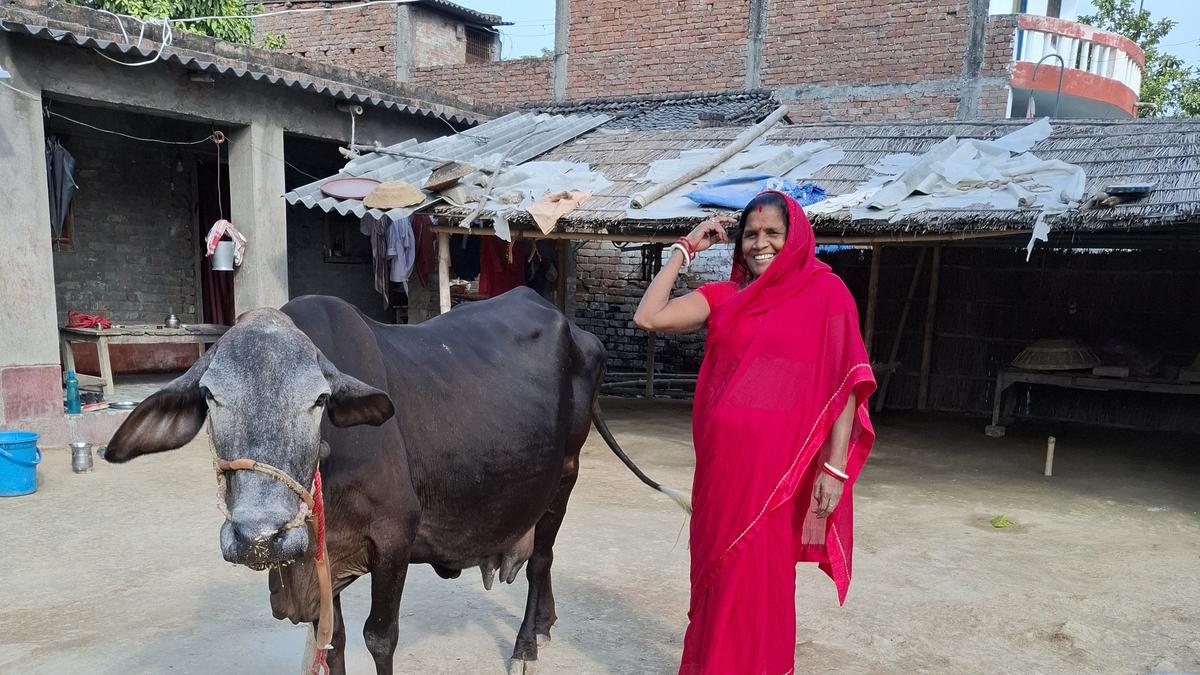
She pauses for a moment to steal a glance at her husband and then continues. Jeevika, she says, enabled her to travel beyond the threshold of her home. She has now gone to places where she never thought she would. Has she been to the State capital of Patna, about 70 km away from her home? “Maybe I will,” she says, smiling. She bought a cow with the money given by the government, adding ₹25,000 from her own savings. “Not any cow, this is an Oswal,” she adds, proudly posing next to her new purchase.
Opposition promise may be too late
In its manifesto released on Tuesday (October 28), the Mahagathbandhan has also proposed to provide financial assistance for women under the Mai-Behin Maan Yojana. The Opposition alliance has promised ₹2,500 per month from December 1, amounting to ₹30,000 annually. It has also promised permanent jobs for Jeevika community mobilisers. The announcement comes a little late in the campaign, however, and may find it hard to compete with the ₹10,000 that has already reached a third of the State’s women voters.
There are complaints from many women that they have been left out. Interestingly, however, the women are not blaming the Chief Minister for their omission. “Modi jaane kyun nahi diya,” says Rekha Devi, a Dalit voter in the Belaganj Assembly constituency in Gaya district. Her anger is directed at Prime Minister Narendra Modi who released the payment for the first group of women on September 26. There is also speculation that the sum will have to be paid back to the government with interest.
In Darbhanga, 35-year-old Sarita Yadav scoffs at the ₹10,000 sum. She runs a small stall from her home, selling samosa and chowmein, and has bought stocks for her stall with the money. “₹10,000 ka koyi value hai aaj ke time main? (Is there any value of ₹10,000 in today’s time)?” she asks. Her daughter Kanchan, who is studying in Class 12, stands by, silently smiling. As soon as her mother leaves, she speaks out. “I will vote for Nitish, in the next election, when I will become eligible to vote. After all, he gave us school bags, uniform, stationary to study,” she says, her voice not more than a murmur.
Published – October 30, 2025 10:28 pm IST