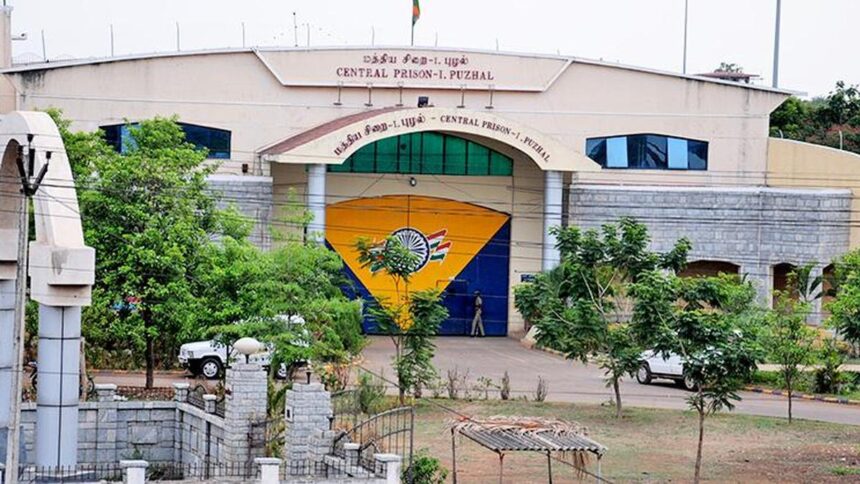







Image used for representational purposes only. File
| Photo Credit: Vivek Bendre
The Kolhapur Bench of the Bombay High Court on Thursday (November 27, 2025) set aside an order passed by the Education Officer, Sindhudurg, rejecting approval for the appointment of a peon at a Vaibhavwadi school, holding that the decision was based on government resolutions issued after the appointment and could not be applied retrospectively.
A Division Bench of Justices M.S. Karnik and Ajit B. Kadethankar passed the order in response to a petition filed by Satywan Laxman Kale against seven different authorities from the State education department.
Mr. Kale was appointed as a peon at Arjun Ravrane Vidyalaya, Vaibhavwadi, run by Vaibhavawadi Taluka Shikshan Sanstha, on August 1, 2011, under the Nomadic Tribe- C category, following an advertisement in a Marathi newspaper and a resolution by the school management.

The petitioner approached the court after the Education Officer (Secondary), Zilla Parishad, Sindhudurg, rejected the approval proposal on August 21, 2018, citing lack of prior permission, non-compliance with advertisement norms, and absence of staffing pattern approvals. The officer relied on a Government Resolution dated February 6, 2012, which introduced new conditions for recruitment.
Advocate Prashant Bhavake for Mr. Kale argued, “Appointment of petitioner on the subject matter post was clearly after due process and hence school management submitted a proposal to the Respondent No. 5 (Education Officer) for approval. The officer did not even call upon the School Management or the petitioner to explain the deficiencies recorded. Petitioner cannot be said to have been appointed by a back-door entry.”
Advocate Utkarsh Desai, for the school management, said, “The School Management has followed the due process while appointing the petitioner. Even if the Education Officer had called upon the School Management to explain any query, the things could have been definitely worked out earlier.”
Defending the rejection, Assistant Government Pleader T.J. Kapre argued, “Respondent No.5 has considered the prevailing State policy, record and only thereafter has passed the impugned order. As per Government Resolution dated 16th July 2011, there was ban on the recruitment of non-teaching staff.”
After hearing the parties, the Bench observed, “We have no doubt in our mind to record that Government Resolution dated 6th February 2012, and riders imposed therein are not applicable to the petitioner’s case for lack of its retrospective effect. The petitioner was appointed on an already existing sanctioned post which became vacant due to the superannuation of an employee. The absence of new staffing pattern or staff approval, that too, for subsequent period would not invalidate the petitioner’s appointment.”

The Bench also noted that the recruitment process was transparent, “Respondent No.6 (Vaibhavawadi Taluka Shikshan Sanstha has even published an advertisement in daily ‘Lokmat’ inviting applications. We appreciate that adequate transparency has been maintained.”
The court directed the Education Officer to approve Mr. Kale’s appointment within four weeks of receiving the proposal and to release salary arrears within eight weeks thereafter. The Bench also directed that upon granting approval, the petitioner’s name be included in the Shalarth Pranali, the State’s online payroll system for school employees, and a Shalarth ID be issued within four weeks to enable the release of salary arrears.
Published – November 28, 2025 06:22 pm IST