


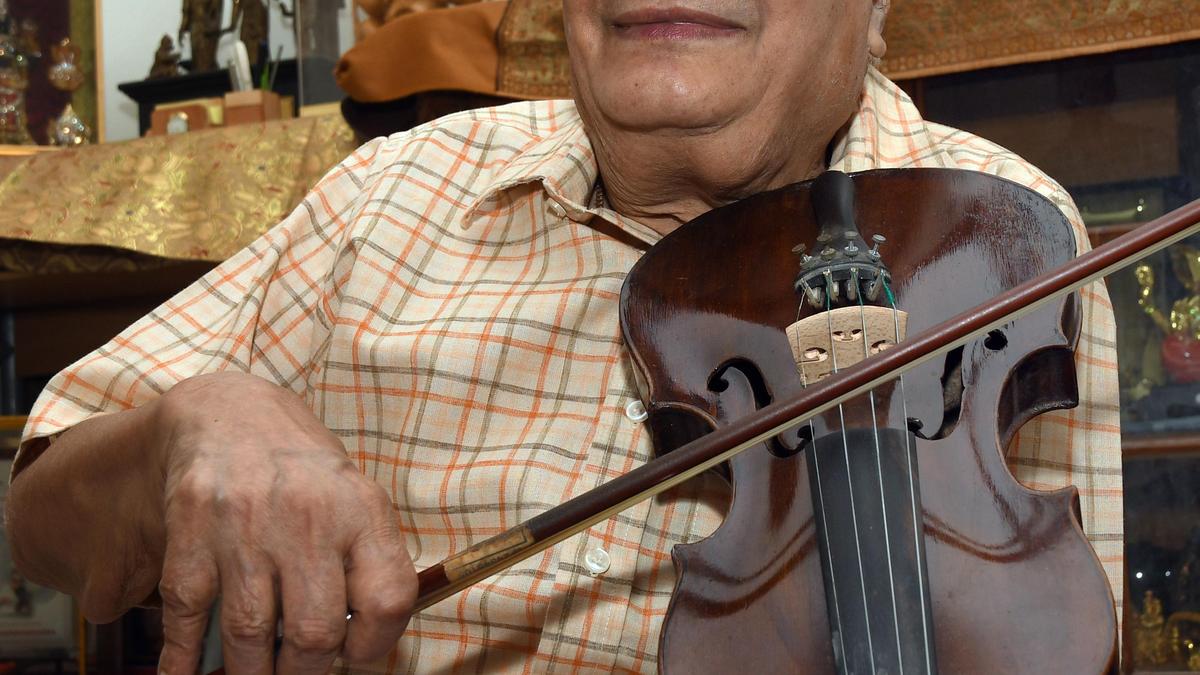

Violinist M. Chandrasekaran, blind from the age of two, has travelled across the world and performed alongside revered Carnatic musicians. “My mother and guru Charubala Mohan insisted I was no different from others,” recalls the Sangita Kalanidhi awardee. Charubala created innovative pedagogy, such as sticking paper on the violin’s finger board to help her son feel the swarasthanas, even as she persevered to make all aspects of life accessible for him and others.
Mridangist Erode Nagaraj, a senior student of Umayalpuram Sivaraman, cannot walk, and his arms are weak with limited range of movement. He got polio when he was two, and was bodily lifted or crawled long distances until he could purchase a customised wheelchair.
Born blind in a family without musical antecedents, N.S. Kamakshi learnt vocal and violin (from Parur M.S. Anantharaman, Sethalapati Balu and Suguna Varadachari), before focussing on vocals. Her father and brothers helped her internalise critical aspects such as pronunciation and word splits during practice. A regular performer, she says picking up co-artistes’ cues can be tricky when, for example, they might stress rhythmic syllables.
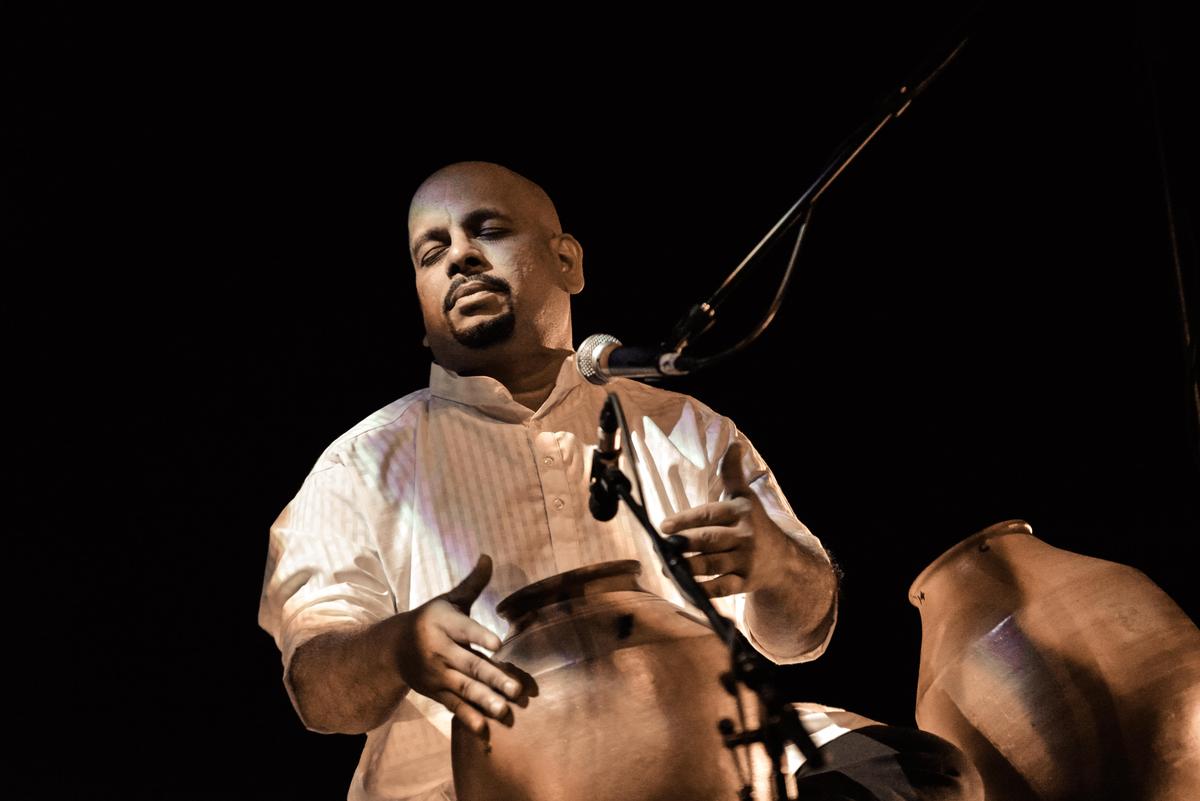
Ghatam exponent Suresh Vaidyanathan
| Photo Credit:
Special Arrangement
Ghatam exponent Suresh Vaidyanathan’s right leg has been affected by polio, making reaching venues and ascending stages exhausting. Suresh travels alone to concerts regularly the world over.
While certain aids reduce bodily strain, he chooses to not use them to avoid hassles for the others sharing the stage. “I don’t want anyone to wait even one extra moment for me.”
All these artistes say family is the reason they have pursued art and succeeded in it. Chandrasekaran is escorted by his children or students, and his daughter G. Bharathi performs frequently with him. “My mother’s request for concessionary train fares for the handicapped was implemented a year after she wrote to then railway minister Lal Bahadur Shastri,” he adds.
Suresh’s family ensured he could eventually walk. Kamakshi’s family provided all the tools and support for music and academics. She lives with her brothers, including morsing artiste Nerkunam Manikandan and kanjira exponent Nerkunam Sankar, one of whom always escorts and performs alongside her. Nagaraj’s mother lives with him and he has siblings staying nearby too.
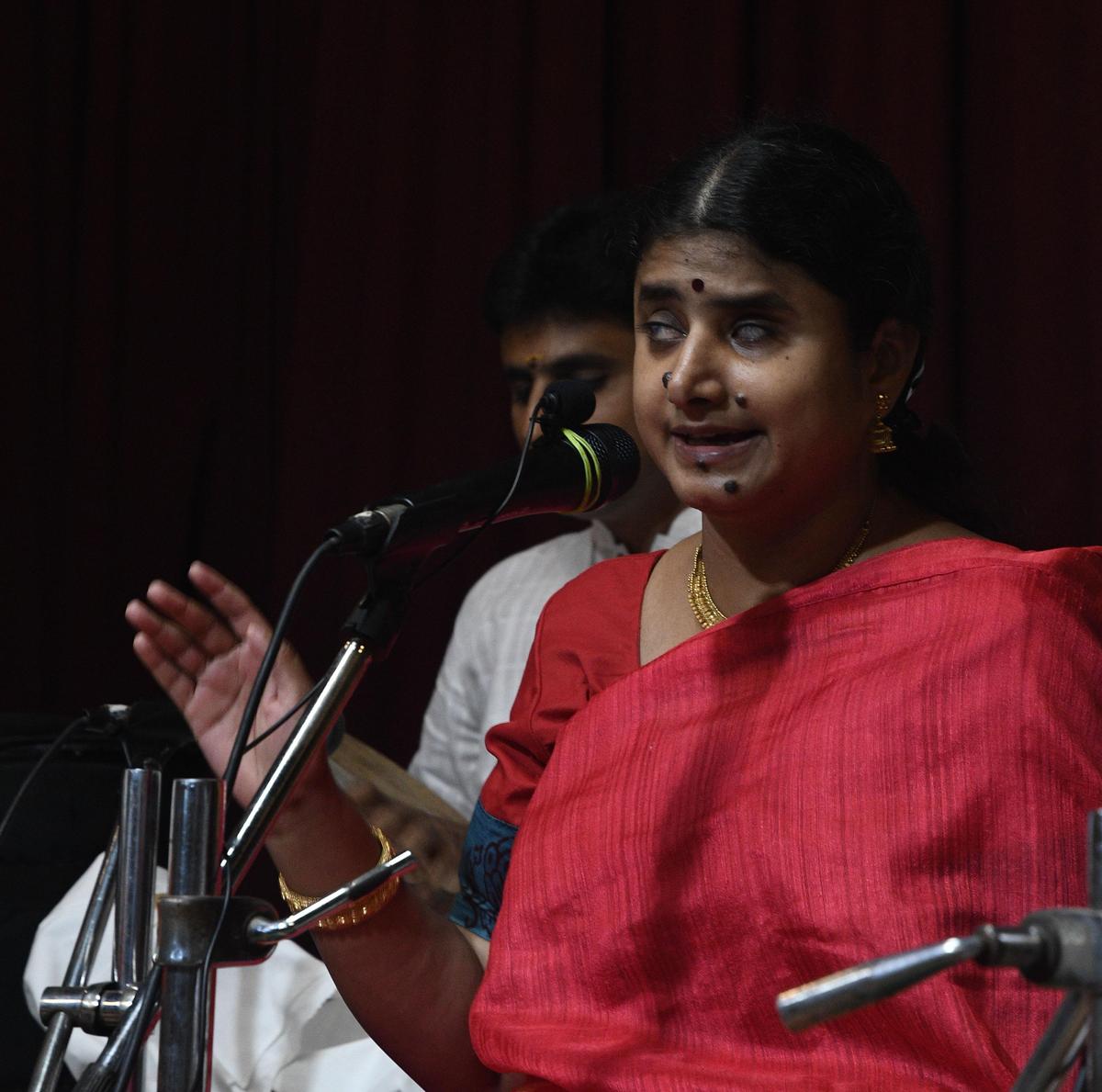
Vocalist N.S. Kamakshi
| Photo Credit:
R. Ragu
These artistes have transcended their disability, but many others like them languish unknown, unheard and unseen, getting few opportunities, if at all. Festivals dedicated to the differently abled are not the answer — what these artistes desire and seek is integration with the music community.
There appear to be many challenges, however, not all related to logistics. When Chandrasekaran got more applause in a concert, some co-artistes were unhappy, say Bharathi and her brother Murali. Suresh mentions how he was chosen for tours abroad, but dropped because co-artistes thought he would not be able to physically assist them, and might require assistance himself. Nagaraj’s choosing to play only at accessible venues led to offers dwindling.
They also feel bad at missing out on the joy of interacting with rasikas after the concert. Many of them require a wheelchair and they have to exit through specific pathways in the rear of the auditorium. “By the time I come out, most attendees have left,” points out Nagaraj. This also means lost networking and performance opportunities.
But, support sometimes comes from unexpected sources.
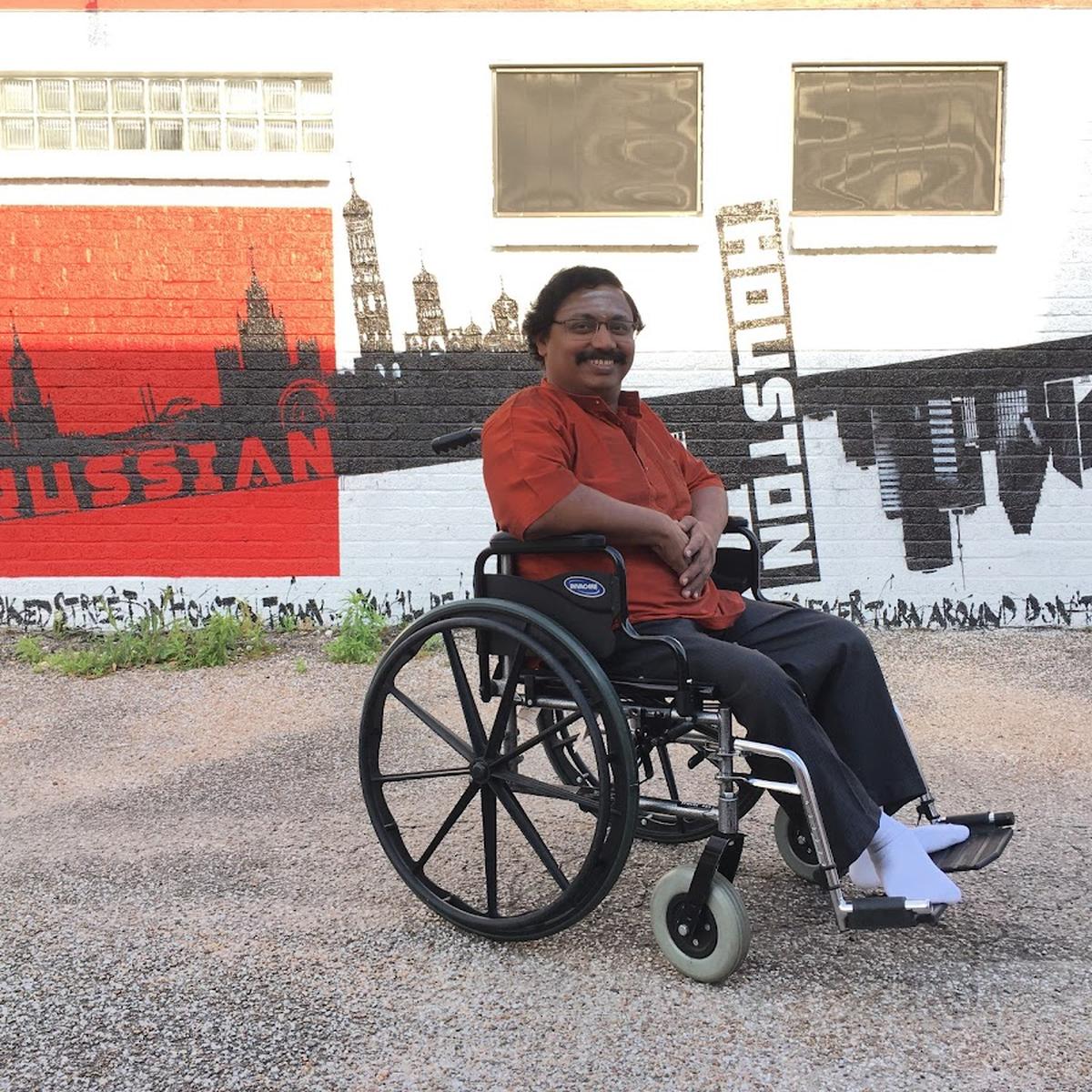
Erode Nagaraj
| Photo Credit:
Special Arrangement
Nagaraj fondly recalls vocalist Vasudha Ravi’s father scoping out venues and requesting Nagaraj only when the location is accessible. Kamakshi credits some of her co-artistes with playing in an intuitive manner that does not require visual cues.
Nagaraj says that while people’s kindness certainly helps, some things should become a part of the system. Common sense and forethought can improve accessibility, he believes, suggesting that committees meant for the specially-abled include individuals facing difficulties. His questions are valid: Why does one need to take steps to get to the elevator? Why are the steps uneven with unstable railings? Why are braille signs so rare? Why are the restrooms not very accessible? Why are wheelchair ramps not very common? And, when they are, why the poor design, where you need help to turn? Nagaraj recollects one ramp where the surfacing was installed in reverse — because of this, wheelchairs would accelerate while descending and experience severe friction ascending.
Bharathi opines that in today’s scenario, unless the families are well-heeled enough to pay for opportunities, differently-abled musicians stand little chance of being successful performers. What helps most of them, strangely, are teaching opportunities, abroad. Life is more accessible there, and Kamakshi and Nagaraj say that keeps their finances in the green.
However, despite constant challenges, from both their bodies and the environment, these musicians display admirable spirit. There’s no rancour. Nagaraj recollects a sabha secretary telling him he was paying him Rs. 80 for transport instead of Rs. 75, because he came in a customised tri-cycle!
Published – November 27, 2025 12:07 pm IST