






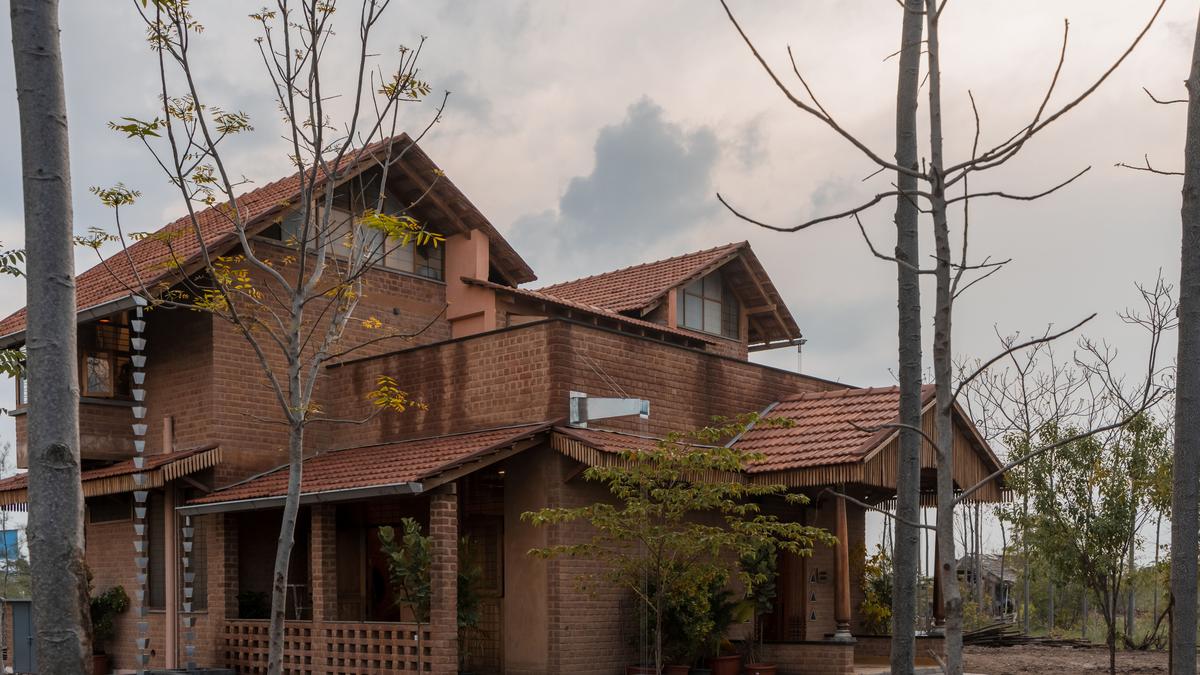
Brick Manor, Coimbatore
| Photo Credit: Special arrangement
When ArchDaily, the online architecture platform, released its list of nominees for Building of the Year earlier this year, one of the names that stood out was Brick Manor, a residential project in Coimbatore by Bhutha Earthen Architecture Studio — a practice known for its commitment to sustainable building. The project reimagined elements of vernacular architecture like wooden columns, oxide flooring and lime plaster combined with exposed brickwork for a modern family.
While the project did not make the cut for the award, the fact that the Coimbatore-based studio won the attention of an international publication felt like recognition enough for architects S Vinoth Kumar and V Srinath Gowtham, who founded the studio in 2019. Both graduates of the erstwhile SVS School of Architecture (later rechristened the Amrita School of Architecture), they were exposed to sustainable architecture during a four-year stint at Auroville near Puducherry. “In Auroville we saw a city with all the essential infrastructure — from supermarkets to medical supplies — set amidst dense greenery. It was something that inspired us,” Srinath recalls.
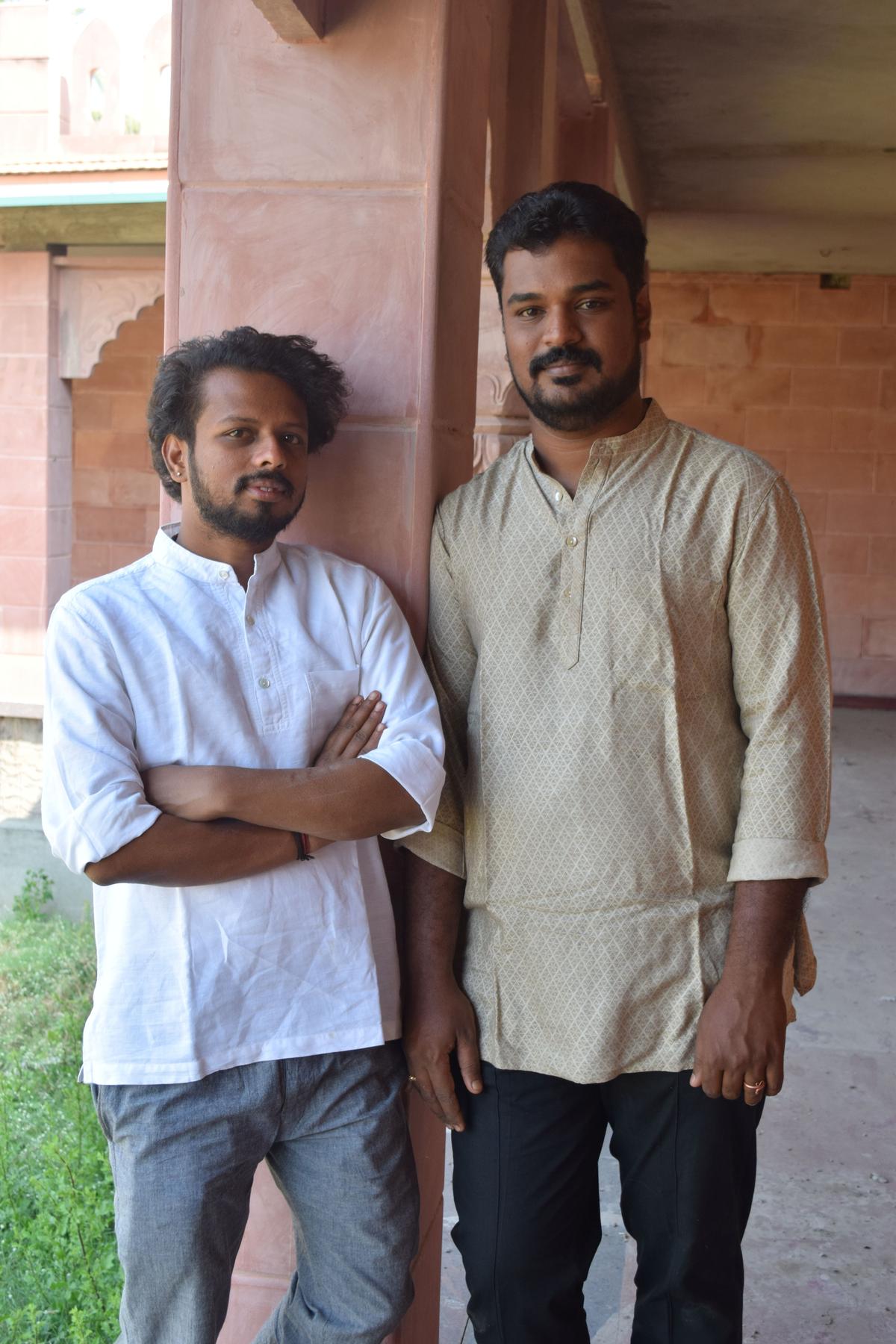
V Srinath Gowtham and S Vinoth Kumar, the founders
| Photo Credit:
Special arrangement
When the time came to establish their own practice, Vinoth and Srinath chose Coimbatore, a city in the midst of rapid urban expansion. “Compared to other cities in Tamil Nadu, Coimbatore is much greener, with several open spaces,” Srinath notes. While the city’s green cover has shrunk over the past decade and a half, they felt there was much to be salvaged.
In a world slowly waking up to the reality of climate change, the word ‘sustainability’ has come to gain increasing currency. When it comes to construction however, the consensus continues to be in favour of carbon-intensive cement and concrete. So it should come as no surprise that Srinath and Vinoth struggled to find clients who shared their vision.
“It was a couple of projects before our work would finally get noticed,” says Srinath. It also helped that there was a gradual increase in awareness surrounding climate responsive building practices. Even as the city continues its infrastructural push, it could be balanced with green cover, he adds, citing the revamped Race Course Road as an example.
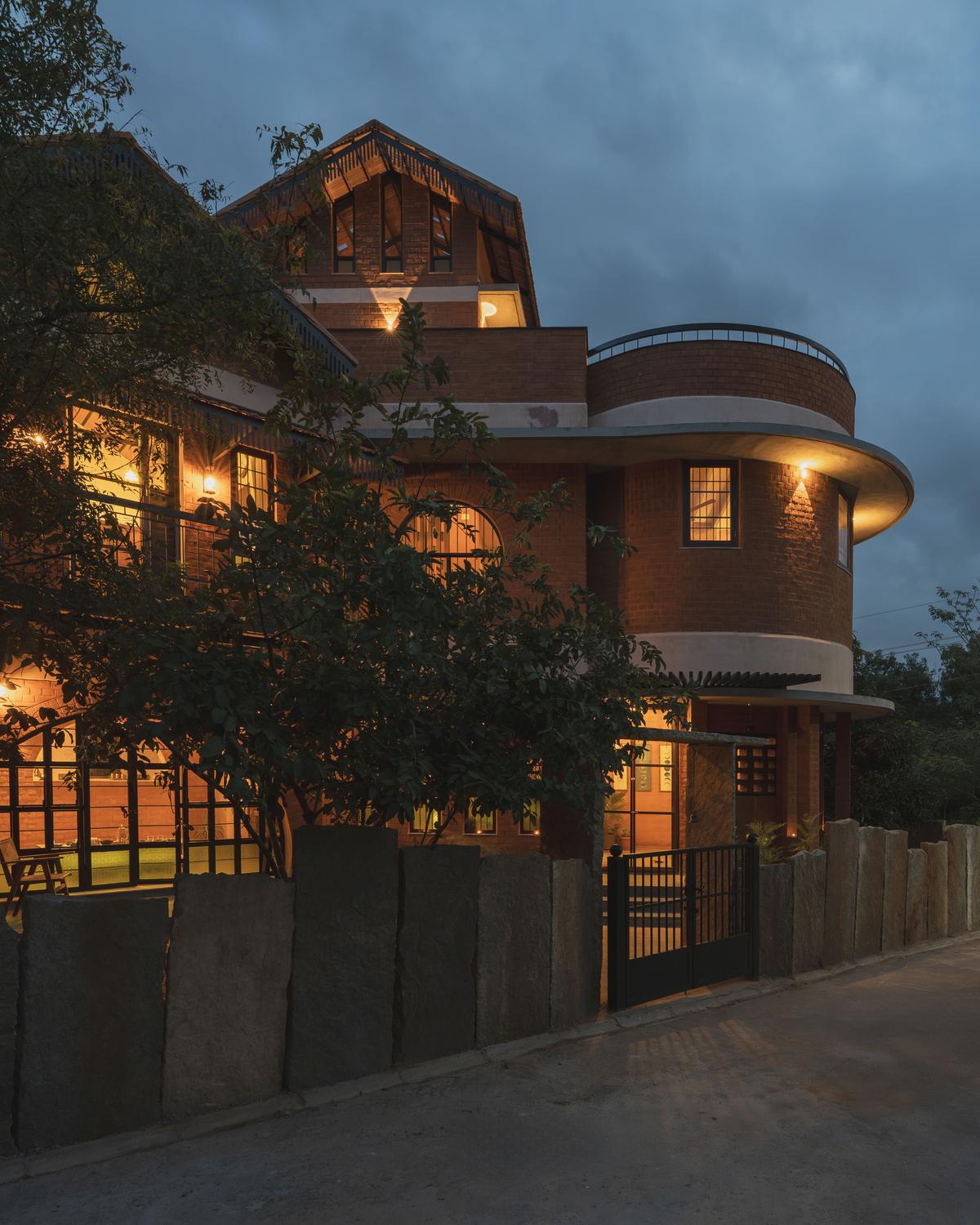
Onella in Hosur
| Photo Credit:
Special arrangement
The team has also had the good fortune of working with clients whose sensibilities matched their own. One of them was a tech couple from Bengaluru who wanted a 3BHK home in Hosur. “The couple were particular about the home having minimal carbon footprint, besides being pet friendly. All of this was factored in during the design process,” recalls Srinath.
Onella, as the house came to be called, incorporated passive cooling methods like louvred windows alongside elements drawn from traditional architecture like the thinnai, while the use of arches and domes gave the house an air of sophistication.
Completed in 2024, Onella, which balanced climate-responsive building with an appeal to contemporary tastes, again thrust the studio into the limelight, being featured in Architectural Digest and other publications.
As it stands today, the construction industry is among the world’s most polluting, with the manufacturing and transport of steel, cement and concrete exacting a heavy toll on the environment. “In sustainable architecture, the emphasis is on judicious use of resources, curbing the use of polluting materials wherever possible so as to minimise carbon footprint,” Vinoth says. “We’ve also used reclaimed wood in our projects, and often design the furniture ourselves.”
Debris left over from construction and demolition projects often find new life as poured mud concrete and jaalis in several of their projects. Where the usual practice is to dump the debris in dumpyards or wetlands, this method helps reduce costs and ecological impact.
Srinath and Vinoth see their role as being more than that of architects, with their efforts directed towards making each element in a building echo the values of sustainability, while also making sure that traditional skills used in vernacular building practices are preserved and passed down to the next generation.
Published – September 08, 2025 12:45 pm IST