


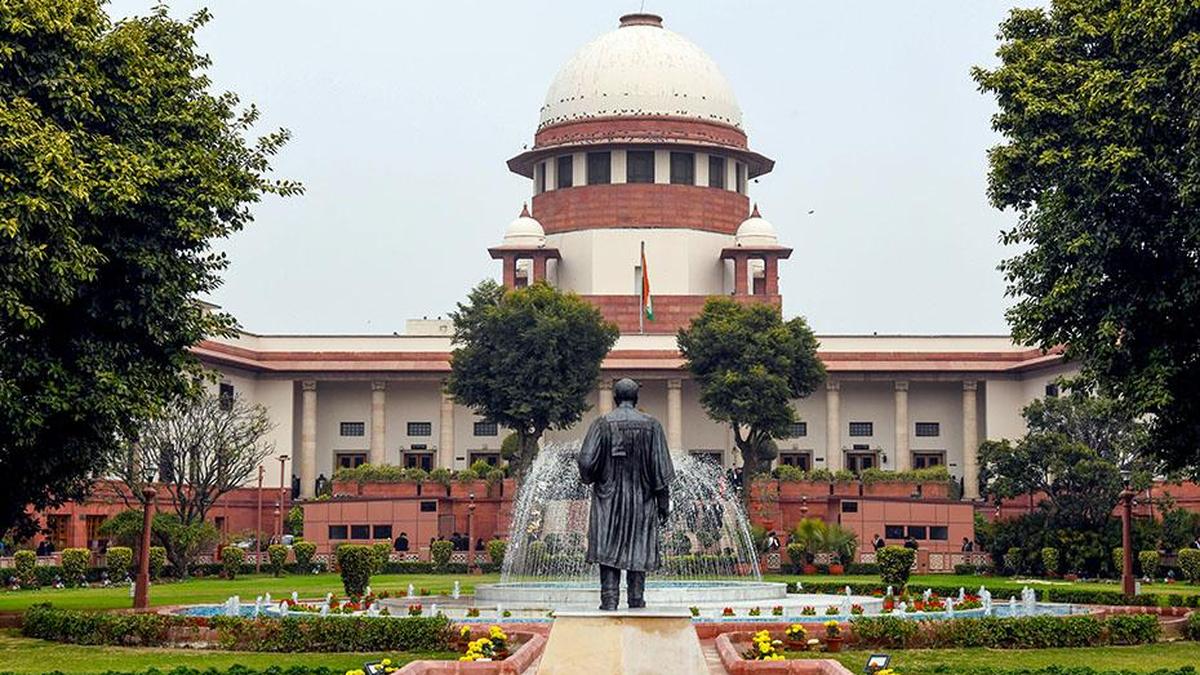

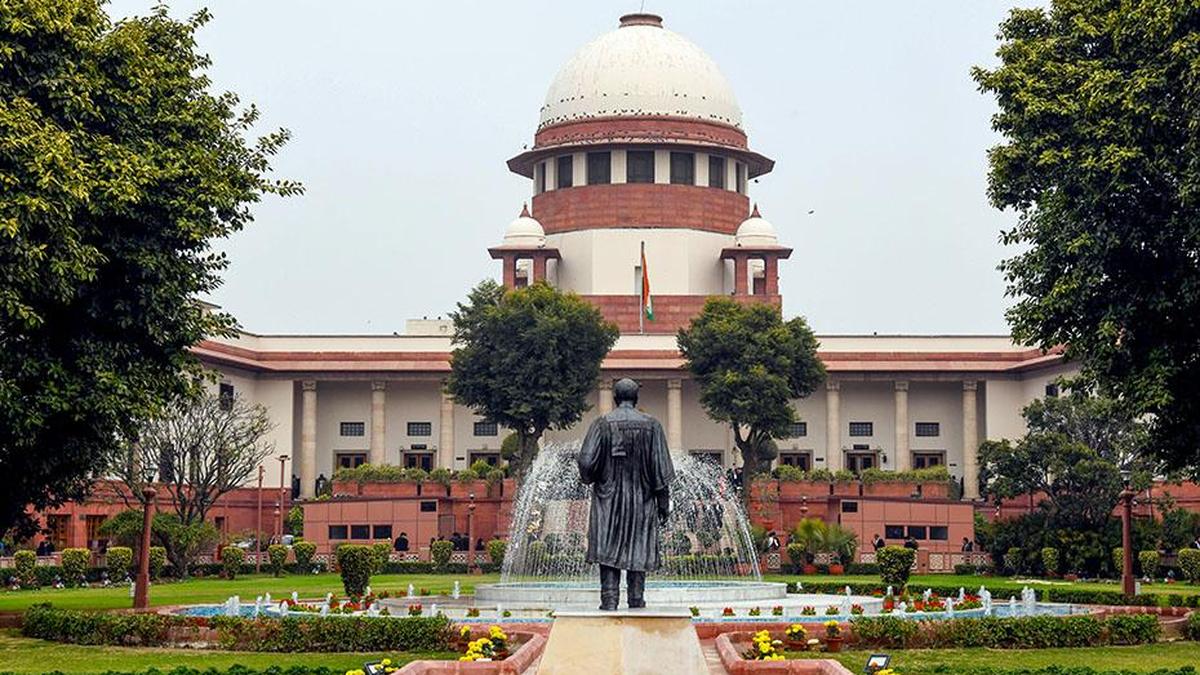
A view of the Supreme Court of India building, in New Delhi.
| Photo Credit: ANI
The petitioner side challenging the constitutionality of the Special Intensive Revision (SIR) exercise claimed in the Supreme Court on Tuesday that the Election Commission of India has morphed into a “despot” that has transformed a “suspicion” about the purity of the electoral roll into a massive countrywide survey which may not only lead to disenfranchisement but also statelessness for many.
“Can suspicion lead to not only disenfranchisement but statelessness? A doubt, a suspicion leading to statelessness. What is the basis of this power?” advocate Vrinda Grover, appearing for the petitioners, asked during her submissions before a Bench headed by Chief Justice of India Surya Kant.
She argued that the SIR frustrated the vision of the Constitution by allowing en masse scrutiny of citizenship by the Election Commission based on executive order rather than parliamentary legislation.
The Election Commission (EC), on the other hand, has asserted its authority to “assess citizenship” for the purpose of registration in electoral rolls. The poll body has maintained that its plenary power to scrutinise citizenship flows directly from Article 324, which empowers it to supervise and control the conduct of elections. It has also contended that the authority of Parliament to make laws on elections under Article 327 must align with the EC’s plenary powers.
Advocates Prashant Bhushan and Neha Rathi argued that this was the first time since the first election in 1950 that the EC was preparing the election rolls from a “clean slate”. Earlier elections were held by adding or deleting names from existing rolls. There was never an occasion when the voter list was wiped clean.
“The SIR is a de novo preparation of the voter list. This has not been done before. Why this hurry? Why create a situation in which 30 BLOs have taken their own lives?” Mr. Bhushan asked.
Mr. Bhushan said short windows have been given for filling the enumeration forms and that the lists are not available in a machine readable format.
“If you give plenary powers to the EC, it will become a despot. A lot of people in this country see the EC as a despot,” he said.
This comment led the Chief Justice to caution Mr. Bhushan to limit his submissions to his pleadings.
Earlier in the hearing, senior advocate A.M. Singhvi said the reasons given by the EC, such as rapid urbanisation and frequent migration, for holding the SIR were generic.
“India is no more rural than urban. India is rurban,” Mr. Singhvi said. He submitted that both urbanisation and migration were generic and insufficient grounds for holding a massive exercise like the SIR of electoral rolls.
Mr. Singhvi said the EC, through the SIR process, had placed citizens in a presumptive citizenship list.
“The presumption is that every citizen has to prove he really is an Indian citizen. The EC has arrogated the power to scrutinise citizenship to itself. The law is really that unless I have acquired a foreign citizenship, I should be presumed to be an Indian citizen. Here, a citizen is put on the guest list without sending him prior notice,” Mr. Singhvi submitted.
Published – December 02, 2025 08:54 pm IST