


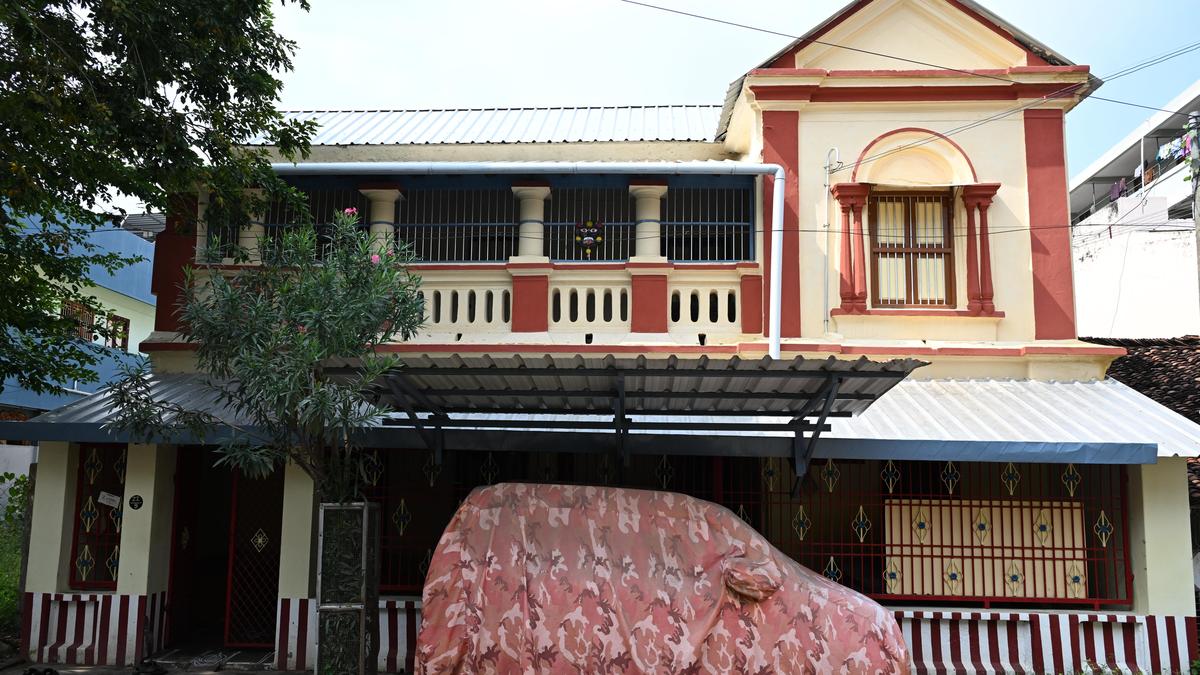

At Dubash Agraharam in Mayiladuthurai stands a beautiful house that symbolises the enduring bond between great music and fine food. Believed to be over a hundred years old, it retains its original charm. A wooden board, still preserved in the house, bears the name of the former occupant in Tamil and English: Gana Kaladhara ‘Madurai’ Mani Iyer. “When Mani Iyer decided to leave for Madras, he chose to sell the house. When my father, T.N. Agoram Iyer, wished to buy it, he agreed to sell it to him for whatever amount he could afford, though there were buyers ready to pay a higher price,” says A. Venkateswaran, son of Agoram Iyer, who was a celebrated cook in Mayiladuthurai. Mr. Venkateswaran also preserves the sale deed signed by Mani Iyer.
Special portrait
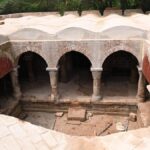
The wide veranda where Mani Iyer used to sit, the adjoining room where he practised for hours, the swing he favoured, the well in the ‘muttram’ that supplied the household’s water, the old fan and switches, and an array of photographs all turn the clock back to the days when his music filled the house. There is also a portrait of Saint Thyagaraja, which used to be carried during the Aradhana at Thiruvaiyaru. Mani Iyer lived in the house for 10 years after leaving Madras in 1939 following the evacuation during the Second World War.
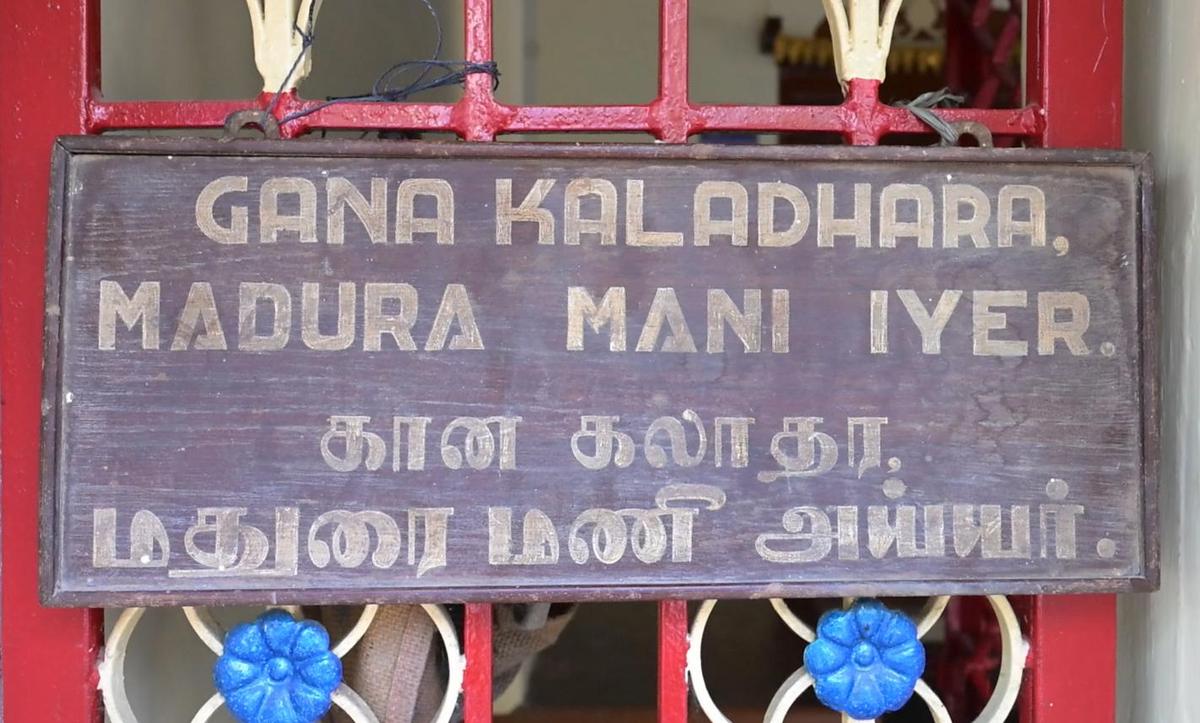
A wooden board, still preserved in the house, bears the name of the former occupant in Tamil and English: Gana Kaladhara ‘Madurai’ Mani Iyer.
| Photo Credit:
B. Jothi Ramalingam
“Many musicians left the city for Kumbakonam. Mani Iyer preferred Mayavaram, as Mayiladuthurai was also known, because it had train connections to both Madras and Madurai. He returned to Madras in 1955 and sold the house to Agoram Iyer,” said musician Vishnu Ram Prasad, who had interacted with T.V. Sankaranarayanan, Mani Iyer’s nephew, and gathered many details.
A nephew of the great musician ‘Madurai’ Pushpavanam Iyer, Mani Iyer came to Madras in 1930 after losing his father. “He had to shoulder the responsibility of caring for his mother, three sisters, and his mother’s sister. His music made a deep impact on K.V. Krishnaswami Iyer, an advocate and patron of music, who arranged for Mani Iyer and his mother to stay in his home. In those days, he was known as ‘Madurai’ Subramania Iyer. As there was also a violin vidwan with the same name, he changed his name to ‘Madurai’ Mani Iyer in 1934. By then, he had emerged as an important figure in Carnatic music,” Mr. Prasad said.
Writing about one of his concerts, writer T. Janakiraman said it was beyond the outstanding and brilliant. “We have overused the word ‘outstanding’, and it has become meaningless. But what word can describe Mani Iyer’s concert in St. Mary’s Hall?” he says.
Looking for opening
It was in Mayiladuthurai that T.S. Vembu Iyer joined Mani Iyer as a permanent accompanist and later became his brother-in-law, marrying Mani Iyer’s sister. It was in Mayavaram that T.V. Sankaranarayanan — who, like his uncle, would later receive the Sangita Kalanidhi title — was born.
The friendship between Mani Iyer and Agoram Iyer, however, dates back to a time when the budding musician was seeking an opportunity to sing at the Thyagaraja Aradhana in Thiruvaiyaru. “My father was close to Musiri Subramania Iyer, president of the Sri Thiagabrahma Mahotsava Sabha. He would take care of the arrangements, including food, for the musicians and rasikas. As my father liked Mani Iyer’s singing, he recommended him to Musiri Subramania Iyer. Mani Iyer’s music attracted him as well, and a bond was established between the two,” says Mr. Venkateswaran.
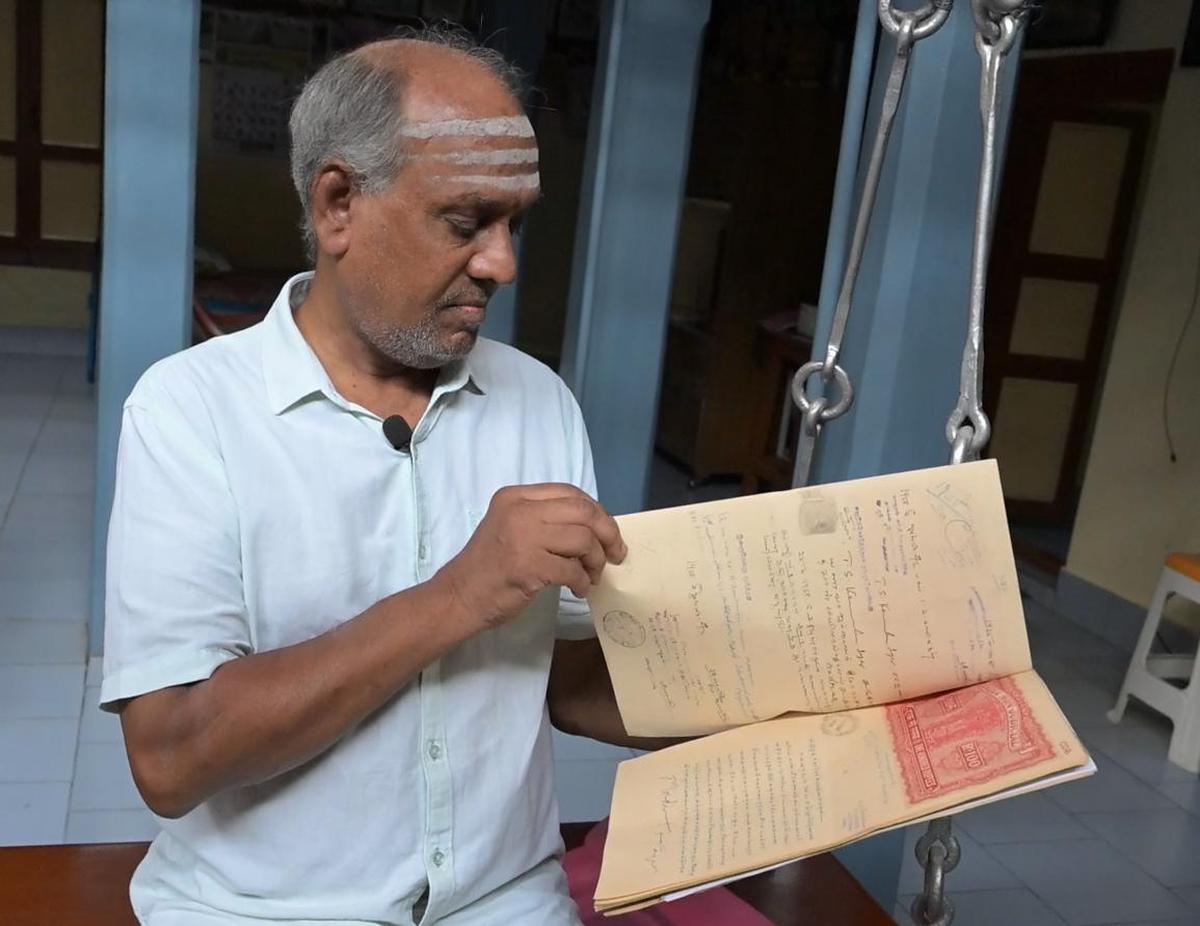
“When Mani Iyer decided to leave for Madras, he chose to sell the house. When my father, T.N. Agoram Iyer, wished to buy it, he agreed to sell it to him for whatever amount he could afford, though there were buyers ready to pay a higher price,” says A. Venkateswaran, son of Agoram Iyer, who was a celebrated cook in Mayiladuthurai. Mr. Venkateswaran also preserves the sale deed signed by Mani Iyer.
| Photo Credit:
B. Jothi Ramalingam
Mr. Prasad said Mani Iyer decided to leave Mayavaram owing to health issues (neuritis). “The education of Sankaranarayanan and his sister was also a priority, so he moved to Chennai in 1955,” he said.
When Agoram Iyer learnt that the house was to be sold, he approached Musiri Subramania Iyer. But Vembu Iyer had already been in touch with a buyer who had quoted a higher price. “Musiri Subramania Iyer told Mani Iyer about my father’s interest. Mani Iyer immediately said it would be given to my father. But my father had only around ₹17,000 and no money for the registration fee. Mani Iyer even paid the registration fee,” recalls Mr. Venkateswaran. Photographs of Agoram Iyer, his wife A. Jagathambal, Musiri Subramania Iyer, and Mani Iyer now hang side by side on the wall of the house, a testament to their great friendship. “Mani Iyer had a special bond with Agoram Iyer. There were times when he requested the great cook to make him pepper ‘rasam’, and Agoram Iyer happily obliged,” said Mr. Prasad.
Mr. Venkateswaran says his family has preserved the house without any major alteration. “We have only raised the level of the ‘muttram’ to add more space without disturbing the well, which remains full of water. We covered the verandah with a roof,” he said.
Lalitharam, author and historian of Carnatic music, says the sale of the house to Agoram Iyer shows that Mani Iyer valued the love and appreciation of his fans and friends above all other recognitions and titles. “Though he received honours, including the Sangita Kalanidhi of The Music Academy and the Isai Perarignar of the Tamil Isai Sangam, he always preferred to be called Gana Kaladhara, a title conferred on him by the rasikas of Thanjavur,” he said.
Published – December 05, 2025 05:30 am IST