




The tawny, textured walls of the exhibition hall at the Museum of Art & Photography (MAP) bear a remarkable resemblance to the fur of a ginger cat, fitting enough for an exhibition titled ‘The Many Lives of the Cat’.
This new exhibition, which opened on November 8 and will run until March 29 next year, is all about “our furry friends (who) have lingered at the edge of South Asian art, rarely in the spotlight,” as the curatorial note puts it.
Featuring cats on paintings, sculptures, textiles, matchbox covers, and postcards, ‘The Many Lives of the Cat’ is an ailurophile’s delight, with felines of every shape, size and colour greeting you as you make your way through the gallery.
“We realised that cats have made so many appearances across time periods, artists and materials,” says Khushi Bansal, the exhibition’s curator, who is giving me a walk-through. “This became the starting point of our exhibition.”
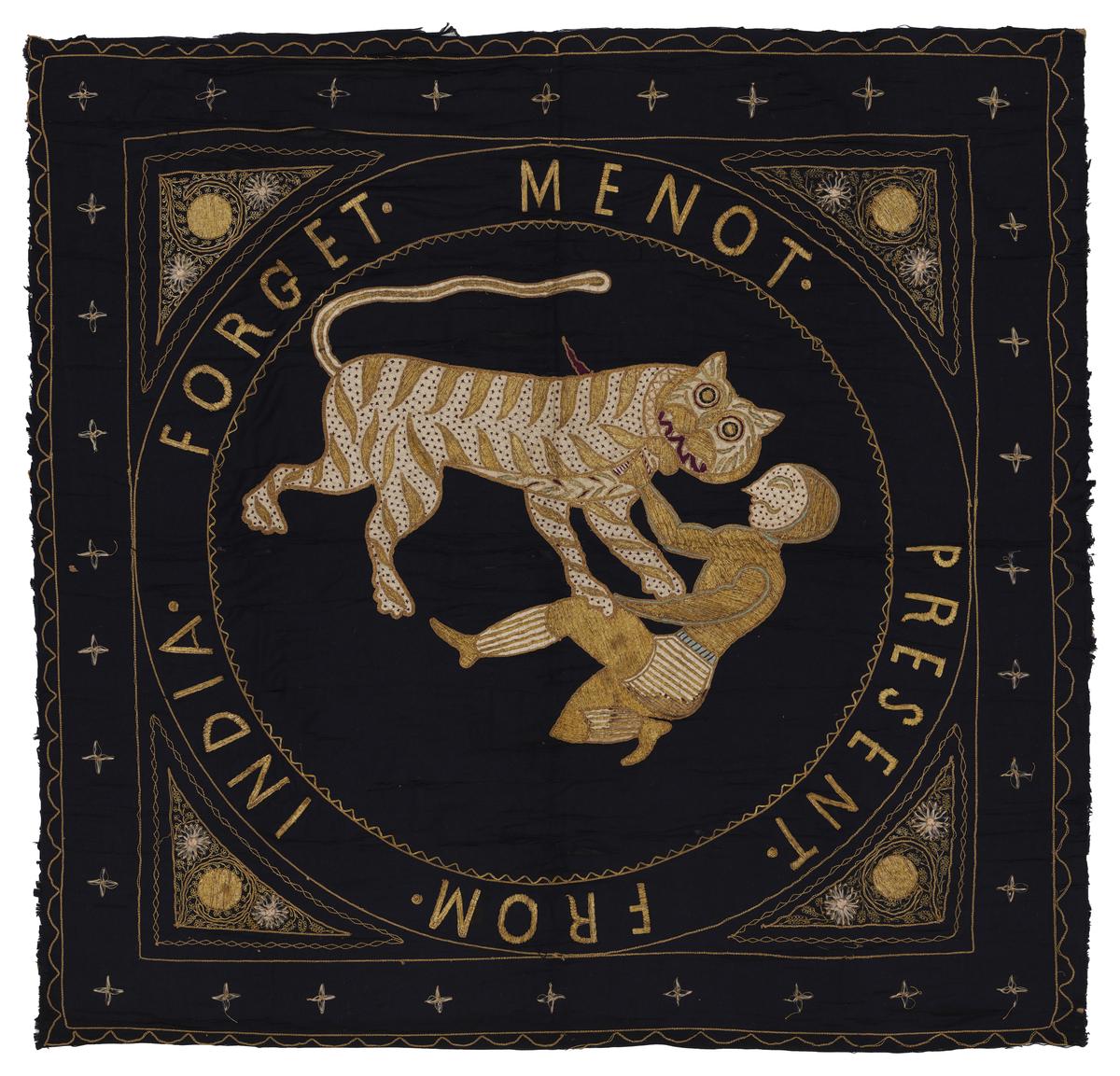
Late 19th-century wall hanging
| Photo Credit:
Special Arrangement
The first artwork we set our eyes upon is an image of a rather dapper black cat wearing a white bowtie, peering out of a white frame with a slightly startled expression in its eyes. “This is a hand-painted postcard. There is a squeaky toy in the middle, which makes a sound when pressed,” she explains.
Beside the postcard is a textile label depicting a child patting a remarkably fluffy cat, a remnant of India’s colonial past. “Textile labels were stuck onto the bales of cotton that were sent back to India in the late 19th, early 20th century,” she says. “The British would take the cotton from India, make it into a product and send it back here.”
The highlights of the exhibition, which is divided into four sections titled ‘The Lazy Companion’, ‘Thieves & Other Mischiefs’, ‘The Political Cat’ and ‘The Fierce Cat’, include an 18th century opaque watercolour on paper titled ‘Two Ladies, a Cat and a Parrot in a Palace’; a folio from a Deccan manuscript going back to the 17th century depicting two brawling cats; two highly stylised pieces by Jamini Roy, ‘Still Life with Fish’, an oil on an acrylic sheet by KG Subramanyan and an untitled image of a cat in Bhupen Khakhar’s sketchbook.
Other cultural artefacts, such as Ganjifa cards, a late 19th-century wall hanging made of wool and gilt metal, and matchbox labels with cats printed on them, intersperse the artwork, a deliberate attempt to erode art hierarchies, collapsing the boundaries between ‘high’ art and ‘low’ art. “What does it mean to place a mass-produced matchbox label alongside a miniature, for example?”
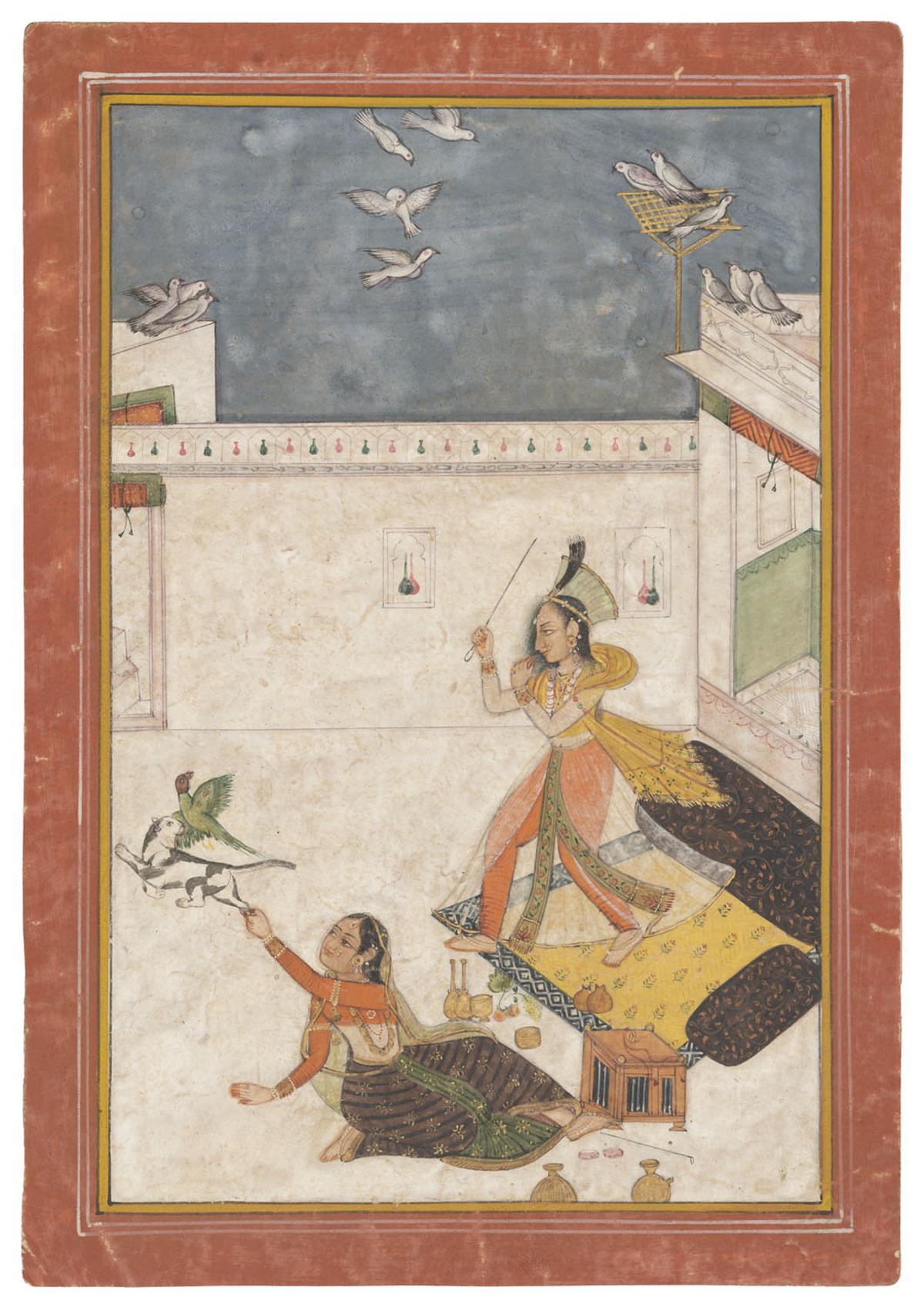
Two Ladies, a at and a Parrot in a Palace
| Photo Credit:
Special Arrangement
The exhibition has been inspired by the book The Indian Cat by art critic and historian BN Goswamy, who passed away in 2023. “BNG was a dear friend of the institution (MAP) and supported us in incredible ways. We are so grateful and lucky for that, and we wanted to honour that legacy.”
Not surprisingly, extracts from the book, which delves into how cats are an integral part of Indian literature, art and mythology, also form part of the exhibition, ranging from Goswamy’s commentary on the KG Subramanyan artwork to explanations about the symbolism behind the recurring motif of a cat carrying away a fish in Kalighat art.
“Essentially, in this painting tradition that emerged around the Kalighat Kali Temple of Bengal, the cat with the prawn, fish, lobster, or different aquatic creatures in its mouth, became a symbol of protest, a satire against the priests. It became a metaphor for corruption.”
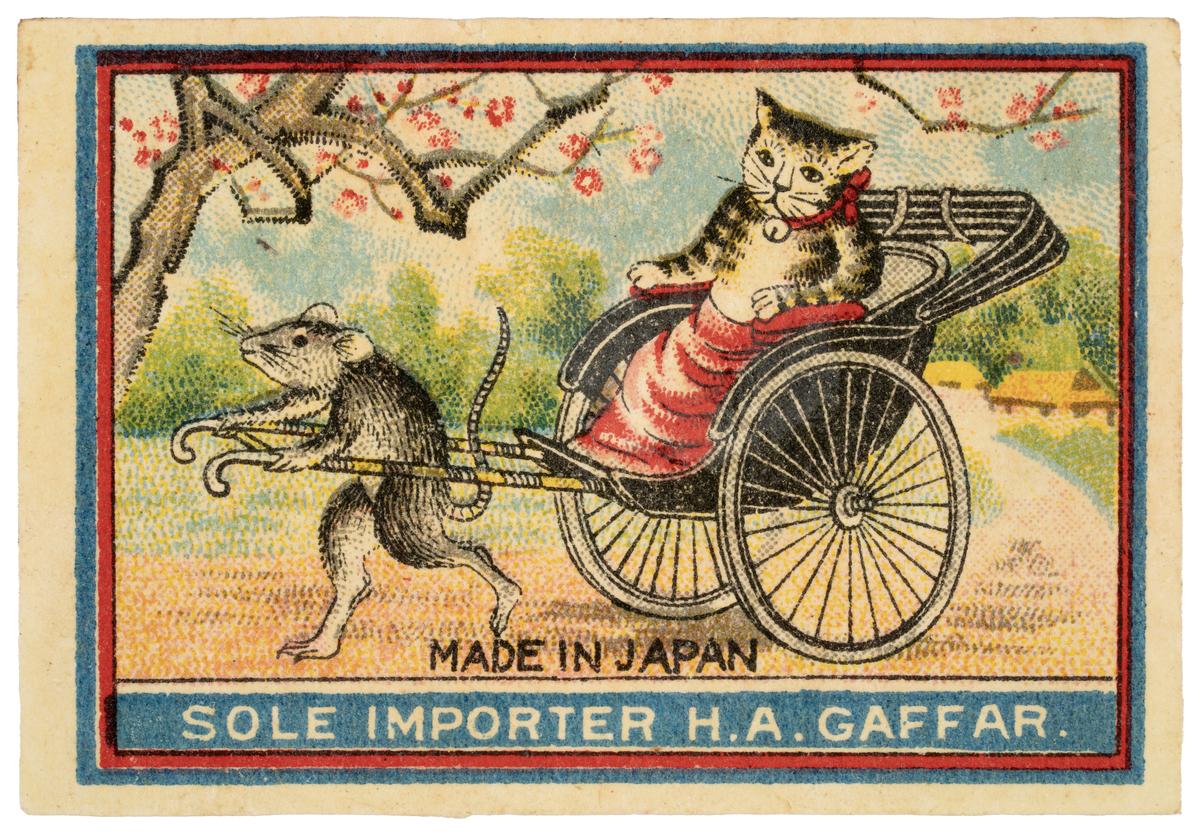
19th century matchbox label for H.A. Gaffer
| Photo Credit:
Special Arrangement
Khushi hopes that the exhibition will spark a broader conversation about the influence the cat has had on Indian art and see the types of stories it communicates.
“Sometimes they are sly. Sometimes they are a symbol of power, or loyalty, and at others they are just there. It also ties into how an artist perceives a cat and their association with it.”
Art, after all, is shaped by the social, political and cultural events of a time, and this exhibition, which “gives you a glimpse into society and all the varying movements that happened across time and history,” is no different.
While history books tend to reduce the past to facts and figures, says Khushi, it is so much more. “By working with the arts, you get a sense of what is actually happening to people at that moment in time, which is very powerful.”
The Many Lives of the Cat will be held at the Museum of Art & Photography (MAP), Bengaluru, till March 29
Published – November 14, 2025 05:48 pm IST