




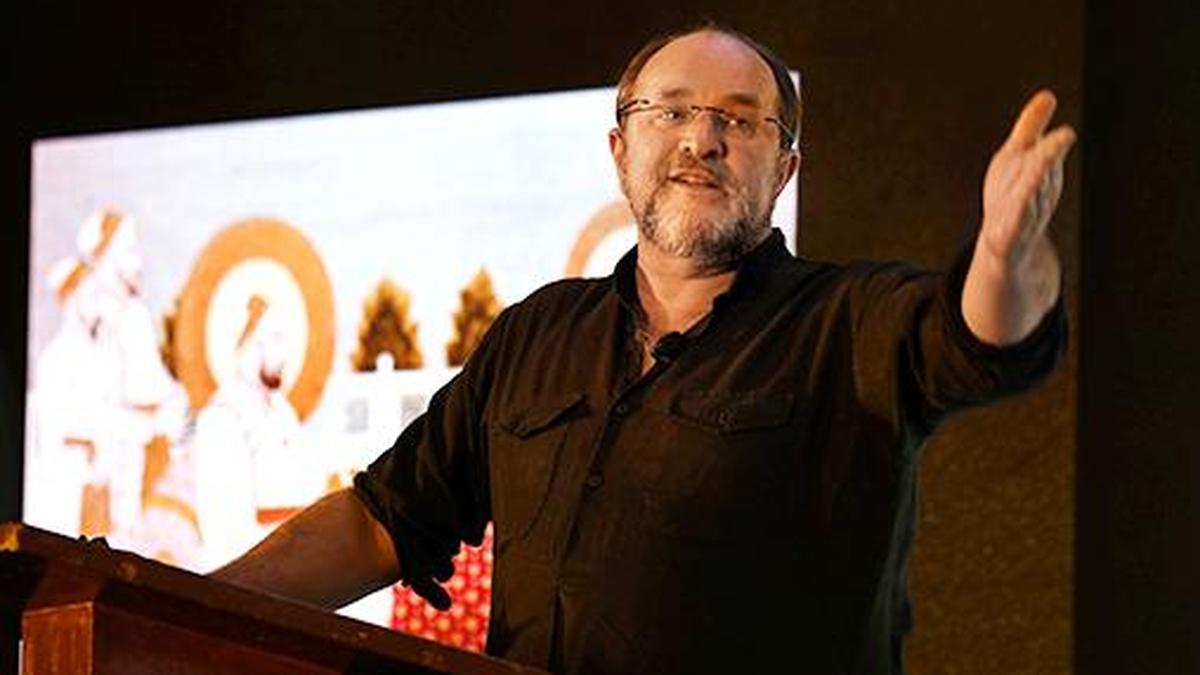

William Dalrymple, writer and historian. File
| Photo Credit: Sudhakara Jain
Scottish historian William Dalrymple wants the Maharashtra government to showcase the lesser-known sites at Ellora, India’s first UNESCO World Heritage site, including the last Ottoman Caliph’s empty tomb, Malik Ambar’s tomb, the first Peshwa’s tomb, and the Sufi and Naga traditions at the caves.
Also read | William Dalrymple: India had a much larger footprint in the world than even Indians realise
“There is a great opportunity for the Maharashtra government here because they have obviously one of the most important cultural sites in South Asia. It is an enormous site already. There are caves of three different religions over 700 years. But Khultabad on top of the hill is neglected,” he told The Hindu.
Sitting at the footsteps of Kailasa temple, the world’s largest monolithic rock excavation, Mr. Dalrymple wondered if people knew of the international significance of the Ellora campus, renowned for its Hindu, Buddhist and Jain structures. “But the same campus has an unbroken history of veneration dating before the Hindu, Buddhist, and Jain tradition. Starting from Naga veneration, up until the Sufi tradition which is as old as Islam in India,” the popular author and historian said, recounting his walk from the top of the hill of the Ellora caves, from the Khultabad side.

‘Utter neglect’
He rued that apart from the Ellora caves themselves, the other structures within the complex are lying in utter neglect, with many not having even a walkway to ease access or a signboard to signal their significance. He himself had taken a chance and walked over the hill, he recalled. “It is just a 10-minute walk from the top of the hill to the Ellora caves, and it is all in the same campus,” he stressed.
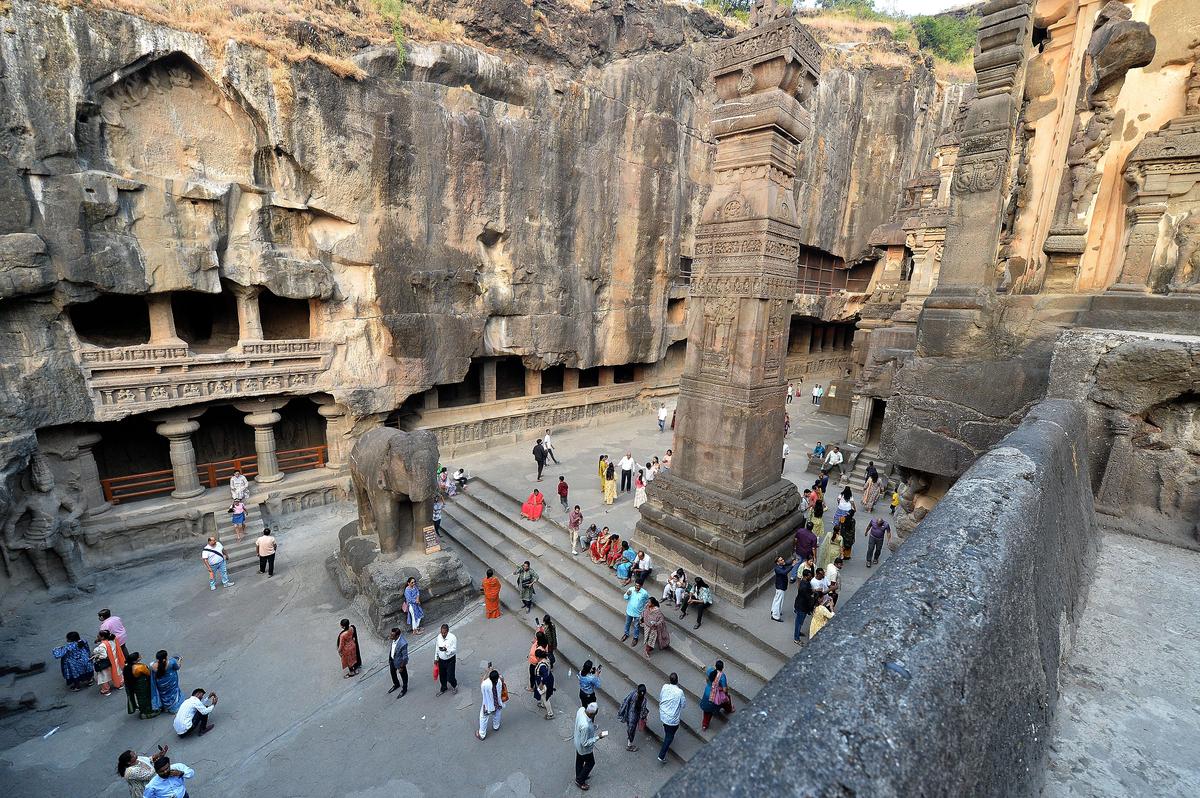
Ellora Caves, UNESCO World Heritage Site. File
| Photo Credit:
Vijay Soneji
Mr. Dalrymple was speaking on the sidelines of Aikyam 2025, an event organised by Sopaan to celebrate the 80th anniversary of the United Nations through an immersive convergence of art, heritage, diplomacy, and sustainability.
Golden quadrangle
“Malik Ambar’s tomb [in Khultabad, a few minutes away from the Ellora caves] is totally neglected, locked up. You can’t enter the gate. It can be opened by the government. People can pay tickets and visit. Around it is also the tomb of the first Peshwa. Before the Marathas, the Ahmednagar rulers also used this title. Again, totally neglected. Full of old plastic bottles, rubbish. People are missing the trick here. These are important monuments. Between Ajanta, Ellora, Daulatabad, Khultabad, it can be a golden quadrangle which can attract a lot of international tourists as well,” he said.

Drawing attention to the empty tomb of the last Ottoman Caliph within the same campus, he said: “There is also the last Caliph’s tomb. He never got buried there. His daughter, who had married the Nizam’s son, built him a tomb. He died in Paris during the Nazi occupation. Wonderful, world-class site where tourists could come from Turkey to admire. You could have a whole new chain of tourism from the Old Ottoman [empire]’s lens. There is not only no sign to it, but no road to it. There is not even a goat path. You just have to take your luck and climb a hill, which is what I did. There is a huge amount of very diverse material in this area. And this could be a spectacular world heritage site.”
The Ellora Caves are among the first UNESCO World Heritage sites, located in Chhatrapati Sambhajinagar in Maharashtra. The caves form one of the largest rock-cut cave complexes in the world, with artwork dating from 600 AD to 1,000 AD, including Hindu, Buddhist, and Jain caves. The complex is a leading example of Indian rock-cut architecture. One of the caves features the largest single monolithic rock excavation in the world, the Kailasa temple, which is a chariot-shaped monument dedicated to the god Shiva.
Published – November 29, 2025 10:52 pm IST